
Selecting the right acceleration sensor depends on the specific data requirements of your project, whether you need basic motion detection or high-precision angle measurement. The three options here cover a range of capabilities, from 6-axis modules for general prototyping to 9-axis inclinometers for industrial stability and ultra-low-power breakouts for battery-constrained devices.
Each sensor offers distinct advantages in terms of axis count, communication protocols, and power consumption. By understanding these differences, you can match the sensor to your application's needs, ensuring reliable data output and efficient integration into your Arduino, Raspberry Pi, or custom hardware setup.
Our pick: HiLetgo GY-521 MPU-6050 6-Axis Module. The HiLetgo GY-521 provides combined accelerometer and gyroscope data via IIC, suitable for basic motion tracking projects.
Our 3 picks for different needs

HiLetgo GY-521 MPU-6050 6-Axis Module
The HiLetgo GY-521 provides combined accelerometer and gyroscope data via IIC, suitable for basic motion tracking projects.
Read the details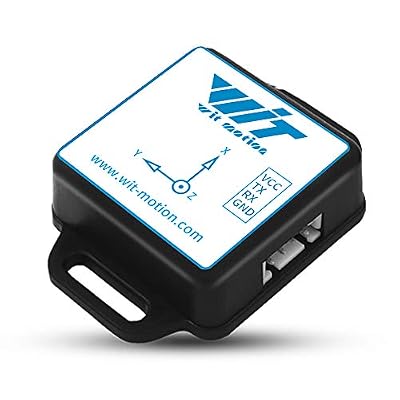
WitMotion WT901C 9-Axis Inclinometer
The WitMotion WT901C offers 9-axis data with Kalman filtering and 0.05° static accuracy for precise angle measurement.
Read the details
SparkFun BMA400 Qwiic Breakout
The SparkFun BMA400 consumes less than 14.5µA, making it a strong fit for battery-powered wearable applications.
Read the detailsAll products, in detail
HiLetgo GY-521 MPU-6050 6-Axis Module
The HiLetgo GY-521 module combines a 3-axis accelerometer and a 3-axis gyroscope into a single 6-degree-of-freedom sensor package. It utilizes the MPU-6050 chip, which features a built-in 16-bit analog-to-digital converter for precise data output. The module communicates via the standard IIC protocol, making it a straightforward addition to Arduino-based projects.
With selectable acceleration ranges from ±2g to ±16g and gyroscope ranges up to ±2000 degrees per second, this sensor suits developers building motion tracking or stabilization systems. The 3-pack configuration allows for multi-sensor setups or spare units for prototyping.
- Features a 6-axis MPU-6050 sensor with 16-bit AD converter
- Supports IIC communication protocol for microcontroller integration
- Offers selectable acceleration ranges of ±2, ±4, ±8, and ±16g
WitMotion WT901C 9-Axis Inclinometer
The WitMotion WT901C is a 9-axis vibration inclinometer that integrates acceleration, gyroscope, angle, and magnetic field data. It uses the MPU9250 sensor with a digital compass to provide pitch, roll, and yaw measurements. The device employs Kalman filtering to ensure stable data output and high bias stability, with static accuracy of 0.05 degrees on the X and Y axes.
It connects via RS232 and offers a selectable output rate from 0.2 to 200Hz. This sensor is designed for long-term measurement applications where high stability and low noise are critical, such as in industrial monitoring or advanced robotics.
- 9-axis sensor with 0.05° static accuracy on X and Y axes
- Uses Kalman filtering for stable data and low noise levels
- Connects via RS232 with selectable output rates up to 200Hz
SparkFun BMA400 Qwiic Breakout
The SparkFun BMA400 breakout features a Bosch Sensortech triple-axis accelerometer designed for ultra-low-power applications. It consumes less than 14.5 microamperes at highest performance settings, making it ideal for wearable and smart home devices. The board is Qwiic-enabled, allowing for solder-free integration into I2C systems, while also providing 0.1-inch spaced pins for traditional soldered connections.
It supports both I2C and SPI interfaces, with I2C enabled by default. The sensor offers selectable full-scale ranges of ±2, ±4, ±8, and ±16g, providing flexibility for different motion detection needs.
- Ultra-low power consumption of < 14.5µA at max performance
- Qwiic-enabled for solder-free I2C integration with 0.1" pins
- Bosch BMA400 sensor with ±2 to ±16g selectable ranges
Head-to-Head Comparisons
HiLetgo GY-521 vs WitMotion WT901C: Axis Count and Stability
The HiLetgo GY-521 is a 6-axis module combining an accelerometer and gyroscope, while the WitMotion WT901C is a 9-axis device that adds a digital compass for magnetic field data. The WitMotion sensor employs Kalman filtering to achieve 0.05° static accuracy on the X and Y axes, a level of precision not specified for the HiLetgo module.
The HiLetgo uses IIC communication, whereas the WitMotion connects via RS232. The WitMotion is better suited for applications requiring high stability and long-term measurement, such as inclinometry. The HiLetgo is more appropriate for general motion tracking where basic 6-DOF data is sufficient. The supplied data does not establish a direct performance comparison for dynamic accuracy between the two.
HiLetgo GY-521 vs SparkFun BMA400: Power and Connectivity
The HiLetgo GY-521 is a 6-axis module with a 16-bit AD converter, while the SparkFun BMA400 is a 3-axis accelerometer designed for ultra-low power consumption. The SparkFun sensor consumes less than 14.5µA at highest performance settings, a feature not highlighted for the HiLetgo module. The SparkFun board is Qwiic-enabled for solder-free I2C integration, whereas the HiLetgo uses standard IIC communication.
The SparkFun breakout is ideal for wearable and smart home applications where battery life is critical. The HiLetgo is better for projects requiring gyroscope data in addition to acceleration. The data does not specify the power consumption of the HiLetgo module for a direct comparison.
WitMotion WT901C vs SparkFun BMA400: Precision vs Power
The WitMotion WT901C is a 9-axis inclinometer with 0.05° static accuracy, while the SparkFun BMA400 is a 3-axis accelerometer with ultra-low power consumption. The WitMotion sensor uses Kalman filtering for stable data output, whereas the SparkFun sensor focuses on minimizing current draw to under 14.5µA.
The WitMotion connects via RS232, while the SparkFun uses I2C and SPI interfaces. The WitMotion is suited for high-precision angle measurement in industrial settings. The SparkFun is better for battery-powered devices where power efficiency is the primary concern. The data does not establish a direct comparison between the precision of the WitMotion and the power efficiency of the SparkFun.
Buying Guide
Matching Sensor Type to Application
For projects requiring basic motion tracking or stabilization, the HiLetgo GY-521 is a suitable choice due to its 6-axis capability and IIC interface. If your application demands high-precision angle measurement, such as in industrial monitoring or robotics, the WitMotion WT901C offers 9-axis data with Kalman filtering and 0.05° static accuracy. For battery-powered wearable or smart home devices, the SparkFun BMA400 is the preferred option because of its ultra-low power consumption of less than 14.5µA.
Each sensor addresses a specific need, so selecting the right one depends on whether you prioritize axis count, precision, or power efficiency.
The HiLetgo module is a good starting point for prototyping with Arduino, while the WitMotion sensor is designed for long-term, stable measurements. The SparkFun breakout is ideal for integrating into I2C systems without soldering, thanks to its Qwiic connector. Consider the communication protocol and power requirements of your project when making your choice.
Communication Protocol Compatibility
The HiLetgo GY-521 uses the standard IIC communication protocol, which is widely supported by microcontrollers like Arduino. The SparkFun BMA400 supports both I2C and SPI interfaces, with I2C enabled by default, offering flexibility for different system architectures. The WitMotion WT901C connects via RS232, which may require a USB-UART converter for connection to a computer or microcontroller.
Ensure that your development board or system supports the specific communication protocol of the sensor you choose to avoid compatibility issues.
Power Consumption Considerations
The SparkFun BMA400 is specifically designed for ultra-low-power applications, consuming less than 14.5µA at its highest performance settings. This makes it ideal for battery-powered devices where energy efficiency is critical. The HiLetgo GY-521 and WitMotion WT901C do not specify their power consumption in the provided data, so you should check the manufacturer's datasheets for detailed power requirements.
If your project is powered by a battery, the SparkFun sensor is the most suitable option among the three.
Accuracy and Filtering Features
The WitMotion WT901C features Kalman filtering, which helps ensure stable data output and low noise levels. It offers 0.05° static accuracy on the X and Y axes, making it suitable for precise angle measurement. The HiLetgo GY-521 and SparkFun BMA400 do not specify their accuracy or filtering capabilities in the provided data.
If your application requires high precision and stability, the WitMotion sensor is the better choice. For general motion detection, the other two sensors may be sufficient.
Frequently Asked Questions
Which sensor is best for Arduino projects?
The HiLetgo GY-521 is a popular choice for Arduino projects due to its IIC interface and 6-axis capability. The SparkFun BMA400 is also compatible with Arduino via I2C or SPI. The WitMotion WT901C requires an RS232 connection, which may need a converter. Choose based on your specific data needs.
What is the difference between 6-axis and 9-axis sensors?
A 6-axis sensor measures acceleration and gyroscope data, while a 9-axis sensor adds magnetic field data from a digital compass. The WitMotion WT901C is a 9-axis sensor, while the HiLetgo GY-521 is a 6-axis module. The 9-axis sensor provides more data for orientation and navigation.
Is the SparkFun BMA400 suitable for wearable devices?
Yes, the SparkFun BMA400 is designed for ultra-low-power applications, consuming less than 14.5µA at highest performance settings. This makes it ideal for wearable and smart home devices where battery life is a critical factor. Its Qwiic connector also simplifies integration into small form-factor projects.
Do these sensors require soldering for installation?
The SparkFun BMA400 is Qwiic-enabled, allowing for solder-free integration into I2C systems, though it also has 0.1-inch pins for soldered connections. The HiLetgo GY-521 and WitMotion WT901C typically require wiring to their communication pins. Check the specific connector types on your development board to determine if soldering is necessary.
This article is part of our complete guide Electronics — browse all our comparisons and buying guides.
Last update on 2026-11-18 / Affiliate links / Images from Amazon Product Advertising API