
Choosing the right air gun pellets depends on your specific airgun caliber, intended use, and desired performance characteristics. Whether you are plinking in the backyard, hunting small game, or practicing target shooting, the ammunition you select directly impacts your experience and results.
This comparison covers eight distinct options, ranging from standard .177 caliber lead pellets to .22 caliber hunting rounds and steel BBs. Each product offers different weights, designs, and packaging to suit various shooting scenarios and preferences.
Our 3 picks for different needs
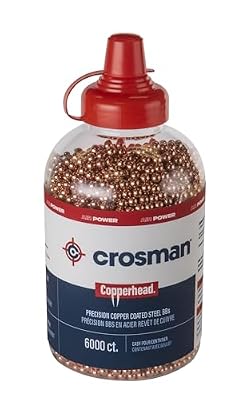
Crosman Copperhead Copper-Coated BBS
The 6,000-count bottle with a pour spout is ideal for long recreational shooting sessions.
Read the details
Gamo Red Fire .22 Caliber Pellets
The 15.59-grain polymer tip pellet is designed for expansion and energy transfer in .22 caliber guns.
Read the details
Crosman 7-P577 Pointed Pellets
The 7.4-grain pointed profile is optimized for flatter trajectory and distance performance.
Read the detailsAll products, in detail

Hawki .177 Caliber Pointed Pellets
These Hawki pellets are designed specifically for target shooting and practice sessions. The .177 caliber size is standard for many recreational airguns, making them a straightforward choice for backyard plinking. The 500-count pack provides a sufficient supply for extended training use. The pointed profile is intended to support consistent performance in controlled environments.
This option suits shooters who want a dedicated practice pellet for improving accuracy skills without the complexity of hunting-specific designs. It is a simple, functional choice for hobbyists focusing on range time and skill development.
- .177 caliber (4.5mm) pointed profile
- 500-count pack for practice
Crosman 7-P577 Pointed Pellets
Crosman offers these .177 caliber pellets with a 7.4-grain pointed profile. This specific weight and shape are optimized for increased velocity and a flatter trajectory, which benefits distance shooting. The 500-count pack is suitable for pest control and field hunting applications. The aerodynamic design aims to provide dependable, repeatable accuracy shot after shot.
This product is a strong candidate for shooters who need a standard lead pellet that performs well at longer ranges. It balances practicality with performance for general field use and small game management.
- 7.4-grain pointed profile
- .177 caliber (4.5mm) standard size
Crosman Copperhead Copper-Coated BBS
These are 4.5mm steel BBs rather than traditional lead pellets, featuring a smooth copper coating. The coating helps keep the BBs round and smooth, preventing them from snagging in the barrel to maintain accuracy. They come in a 6,000-count bottle with an easy-pour spout, making them ideal for high-volume plinking and long range sessions.
The universal fit works with any .177 caliber air rifle or pistol designed for steel BBs. This is the go-to choice for shooters who prefer the convenience of BBs over pellets for recreational shooting.
- 6,000-count bottle with pour spout
- Copper-coated steel BBs for .177 caliber

H&N Sport Hornet Pointed Pellets

H&N Sport produces these .177 caliber Hornet pellets with a 9.6-grain weight. The aerodynamic design is intended for high impact and penetration, making them suitable for hunting applications. The 225-count pack is smaller than many competitors, but the heavier weight offers different ballistics than lighter pellets.
The gray lead construction is standard for this type of ammunition. This option is best for hunters who require a heavier projectile for specific game or conditions. It provides a distinct weight class for shooters who need more mass than standard 7-grain pellets.
- 9.6-grain weight for high impact
- .177 caliber (4.5mm) lead construction

Crosman DS177 Destroyer Pellets
These .177 caliber pellets feature a hybrid design combining a pointed tip with a hollow point. The pointed tip boosts accuracy and velocity, while the hollow cavity expands on impact for deep penetration. This dual-purpose design is ideal for small-game hunting and pest control where both precision and stopping power are needed.
The 250-count pack comes in a resealable tin for protection. This product suits hunters who want the flight characteristics of a pointed pellet with the terminal performance of a hollow point in a single round.
- Hybrid pointed and hollow-point design
- 250-count resealable tin packaging
Gamo Red Fire .22 Caliber Pellets
Gamo offers these .22 caliber pellets with a 15.59-grain weight and a red polymer tip. The diamond-shaped tip initiates expansion on impact, flaring the jacket to transfer more energy into the target. This design is built for hunting and pest control, providing clean kills at typical air rifle distances.
The 125-count tin is a solid supply for a hunting outing. This is a distinct option for shooters who own .22 caliber airguns, as it is not compatible with the .177 caliber guns discussed in other entries. It offers a heavier, expanding projectile for larger game or tougher pests.
- .22 caliber (5.5mm) with 15.59-grain weight
- Red polymer tip for faster expansion

Air Venturi Steel BBS
Air Venturi provides these .177 caliber steel BBs with a 5.1-grain weight and zinc plating. The zinc coating creates a thick, even surface to prevent rust, ensuring the BBs remain usable over time. The precision grinding ensures uniformity and superb accuracy, with zero blemishes to affect flight.
The 2,500-count bottle includes a handy pour spout for easy dispensing. This is a good choice for shooters who want a rust-resistant steel BB for consistent performance in various weather conditions. It offers a middle-ground quantity between small tins and large bulk bottles.
- Zinc-plated steel for rust resistance
- 2,500-count bottle with pour spout

Crosman Premier LHP22 Hollow Point Pellets
These .22 caliber pellets feature a 14.3-grain weight and a hollow point design. The cavity at the tip initiates mushrooming on impact, increasing the projectile's diameter to transfer energy faster. This design is built for hunting and pest control where stopping power is prioritized over long-range accuracy.
The 500-count resealable tin keeps the pellets protected and ready for use. This option is ideal for .22 caliber airgun owners who need a reliable expanding pellet for close-to-mid range hunting. It provides a straightforward, effective solution for small game management.
- .22 caliber (5.5mm) with 14.3-grain weight
- Hollow point design for rapid expansion
Head-to-Head Comparisons
Crosman 7-P577 vs H&N Sport Hornet: Weight and Purpose
Both the Crosman 7-P577 and H&N Sport Hornet are .177 caliber lead pellets, but they differ significantly in weight and intended use. The Crosman 7-P577 weighs 7.4 grains and is designed for a flatter trajectory, making it suitable for distance shooting and general pest control.
In contrast, the H&N Sport Hornet weighs 9.6 grains and is designed for high impact and penetration, which is better suited for hunting. If you need a pellet that flies flat over longer distances, the lighter Crosman option is the better fit. If you require more mass for terminal performance on game, the heavier H&N Hornet is the appropriate choice.
Gamo Red Fire vs Crosman Premier LHP22: .22 Caliber Expansion
The Gamo Red Fire and Crosman Premier LHP22 are both .22 caliber pellets designed for hunting, but they use different expansion mechanisms. The Gamo Red Fire features a red polymer tip that initiates expansion by driving into the lead body, flaring the jacket outward. The Crosman Premier LHP22 uses a traditional hollow point cavity that mushrooms on impact.
Both are effective for small game, but the Gamo's polymer tip may offer a more consistent expansion profile, while the Crosman's hollow point is a proven design for rapid energy transfer. Choose the Gamo if you prefer the polymer tip design, or the Crosman if you trust the classic hollow point.
Crosman Copperhead vs Air Venturi Steel BBS: Quantity and Coating
Both the Crosman Copperhead and Air Venturi Steel BBS are .177 caliber steel BBs, but they differ in quantity and coating. The Crosman Copperhead comes in a 6,000-count bottle with a copper coating, while the Air Venturi BBs come in a 2,500-count bottle with a zinc plating.
The copper coating on the Crosman BBs is designed to keep them round and smooth, while the zinc plating on the Air Venturi BBs is specifically marketed for rust resistance. If you shoot high volumes and want the largest supply per bottle, the Crosman option is more convenient.
If you are concerned about rust in humid conditions, the Air Venturi zinc-plated BBs may offer better long-term storage stability.
Buying Guide
Caliber Compatibility
The most critical factor in choosing air gun pellets is ensuring the caliber matches your airgun. Most recreational airguns use .177 caliber (4.5mm) ammunition, which is the most common size. However, some airguns are designed for .22 caliber (5.5mm) pellets, which are heavier and more powerful.
Always verify the caliber of your specific airgun before purchasing ammunition, as using the wrong caliber can damage your gun or result in poor performance. Steel BBs are also typically .177 caliber, but not all airguns are designed to shoot them.
Pellet Weight and Ballistics
Pellet weight significantly affects trajectory and energy transfer. Lighter pellets, such as the 7.4-grain Crosman 7-P577, tend to have flatter trajectories and are better for distance shooting. Heavier pellets, like the 9.6-grain H&N Sport Hornet or 15.59-grain Gamo Red Fire, carry more energy and are better for hunting where penetration and stopping power are needed.
Consider your typical shooting distance and target type when selecting a pellet weight. Lighter pellets are generally more accurate at shorter ranges, while heavier pellets maintain energy better at longer distances.
Design and Terminal Performance
The shape of the pellet tip determines how it behaves on impact. Pointed pellets, such as the Hawki and Crosman 7-P577, are designed for accuracy and flat trajectory. Hollow point pellets, like the Crosman DS177 and Premier LHP22, expand on impact to transfer energy quickly, making them ideal for hunting.
Polymer tip pellets, such as the Gamo Red Fire, offer a different expansion mechanism that can be more consistent. Choose a pointed pellet for target shooting and a hollow point or polymer tip pellet for hunting or pest control where expansion is desired.
Packaging and Quantity
The packaging and quantity of the ammunition can affect convenience and cost-effectiveness. Small tins, such as the 125-count Gamo Red Fire or 225-count H&N Sport Hornet, are good for trying out a new pellet type or for occasional use. Larger bottles, like the 6,000-count Crosman Copperhead or 2,500-count Air Venturi Steel BBS, are more convenient for high-volume shooting and often include pour spouts for easy dispensing.
Consider how often you shoot and how much ammunition you typically use when deciding on the package size. Larger quantities are generally more convenient for regular shooters, while smaller tins are better for occasional use or testing.
Frequently Asked Questions
Can I use steel BBs in any .177 caliber airgun?
No, not all .177 caliber airguns are designed to shoot steel BBs. Some airguns, particularly those with certain barrel designs or seals, may not be compatible with steel BBs. Always check your airgun manufacturer's recommendations to ensure compatibility before using steel BBs in your gun.
What is the difference between .177 and .22 caliber pellets?
.177 caliber pellets are 4.5mm in diameter and are the most common size for recreational airguns. .22 caliber pellets are 5.5mm in diameter and are heavier, offering more energy and penetration. .22 caliber pellets are typically used for hunting larger game or for shooters who prefer the heavier feel and power of the larger caliber.
How many pellets should I buy for practice?
The number of pellets you need depends on how often you shoot and your preferred package size. For regular practice, a 500-count tin or a 2,500-count bottle of steel BBs is a good starting point. If you shoot frequently, a 6,000-count bottle of steel BBs may be more convenient.
Start with a smaller quantity to test the pellet's performance in your specific airgun before buying in bulk.
Do hollow point pellets work well for target shooting?
Hollow point pellets are primarily designed for hunting and pest control, where expansion on impact is desired. While they can be used for target shooting, they may not be as accurate or consistent as pointed pellets, which are specifically designed for precision. For target shooting, a pointed pellet is generally the better choice, as it maintains its shape and flies more predictably.
This article is part of our complete guide Sports & Outdoors — browse all our comparisons and buying guides.
Last update on 2026-11-18 / Affiliate links / Images from Amazon Product Advertising API