
Selecting the right Asian knife depends on the specific tasks you perform most often in your kitchen. Japanese-style blades like the Nakiri and Santoku offer distinct advantages for vegetable preparation and general chopping, while cleaver-style knives provide additional utility for herbs and heavier ingredients. Each knife in this comparison features high-carbon stainless steel construction and ergonomic handles designed for comfort during extended use.
The options here range from single knives to multi-piece sets, allowing you to build a collection that fits your workflow. Whether you prioritize a razor-sharp edge for precision work or a versatile blade for all-around prep, these tools are crafted to meet professional and home cooking standards. Check the live product cards for current pricing and availability before making your selection.
Our 3 picks for different needs

Sunnecko 7 Inch Nakiri Knife

The Sunnecko nakiri knife is hand-polished to a 12-degree double-bevel edge, which the listing notes is perfect for right and left-handed chefs.
Read the details
imarku 3 Piece Knife Set
The imarku 3-piece set includes an 8-inch chef knife, 7-inch nakiri, and 3.5-inch paring knife, covering a wide range of daily cooking tasks.
Read the details
SYOKAMI 7 Inch Cleaver Knife
The SYOKAMI cleaver knife comes with a 3-hole herb stripper to help quickly and effectively peel leaves from stems.
Read the detailsAll products, in detail

HOSHANHO 7 Inch Nakiri Knife
This HOSHANHO nakiri knife features a 7-inch blade crafted from Japanese 10Cr15CoMoV high carbon stainless steel. The blade reaches 60HRC hardness after vacuum heat treatment and is hand-polished to a 15-degree edge angle. It includes a pakkawood handle with a scallop-shaped hollow pit on the side to reduce sticking.
This multipurpose knife is suitable for chopping, slicing, and dicing vegetables, meat, and fruits, making it a versatile addition to a home kitchen.
- Blade made from Japanese 10Cr15CoMoV high carbon stainless steel with 60HRC hardness
- Features a 15-degree edge angle and a scallop-shaped hollow pit on the blade side

imarku 7 Inch Santoku Knife
The imarku santoku knife is a 7-inch chef knife made from Japanese high carbon stainless steel that resists rust and corrosion. It features a 2.5mm blade thickness and a hand-polished edge ranging from 15 to 18 degrees per side. The scalloped hollow edge helps prevent food from sticking during slicing and mincing.
The pakkawood handle is designed to minimize wrist tension, and the knife arrives in a high-end black gift box.
- Blade thickness is 2.5mm with a hand-polished edge of 15-18 degrees per side
- Constructed from Japanese high carbon stainless steel with a pakkawood handle
imarku 3 Piece Knife Set
This imarku set includes an 8-inch chef knife, a 7-inch nakiri knife, and a 3.5-inch paring knife. Each blade is crafted from high-carbon Japanese stainless steel and reaches 57±1 HRC hardness after vacuum heat treatment. The knives feature a 15-degree double bevel edge and 2.3mm blade thickness.
The set comes in a premium designer gift box with FSC-certified wood frames, making it a complete package for daily cooking tasks.
- Includes an 8-inch chef knife, 7-inch nakiri knife, and 3.5-inch paring knife
- Blades reach 57±1 HRC hardness with a 15-degree double bevel edge
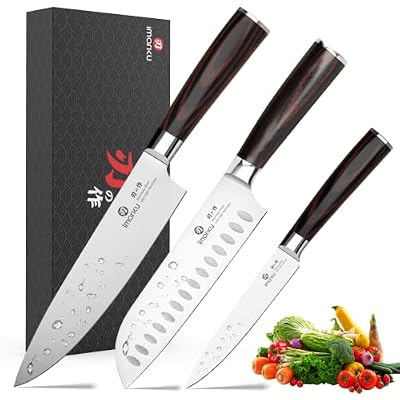
imarku 3 Piece Chef Knife Set
This imarku set provides a chef knife, a santoku knife, and a utility knife for versatile kitchen use. The knives are crafted from Japanese high carbon stainless steel engineered for rust and stain resistance. They feature full tang ergonomic pakkawood handles that offer a comfortable grip and balanced control.
The set is designed for cutting, carving, slicing, chopping, and mincing various ingredients, with a recommendation to hand wash and dry after use.
- Includes a chef knife, santoku knife, and utility knife
- Features full tang ergonomic pakkawood handles and Japanese high carbon stainless steel
Sunnecko 7 Inch Nakiri Knife
The Sunnecko nakiri knife is a 7-inch cleaver-style blade made from high-carbon stainless steel. It is hand-polished to a 12-degree double-bevel edge, which is noted for being suitable for both right and left-handed users. The knife weighs 0.48lb and includes a protective blade cover for safe storage.
The pakkawood handle provides a non-slip grip, and the wavy pattern on the blade is designed to reduce food friction.
- Hand-polished to a 12-degree double-bevel edge with a weight of 0.48lb
- Includes a protective blade cover and features a wavy pattern to reduce friction

PAUDIN 7 Inch Nakiri Knife
This PAUDIN nakiri knife is a 7-inch multipurpose Asian chef knife made from 5Cr15Mov stainless steel with 56+ hardness. The blade features a special waved pattern that decreases food friction and makes the knife easy to clean. It is designed for heavy-duty preps like slicing, dicing, chopping, and mincing.
The ergonomic pakkawood handle balances the thin blade at the pinch point, ensuring ease of movement during use.
- Blade made from 5Cr15Mov stainless steel with 56+ hardness
- Features a waved pattern to decrease food friction and an ergonomic pakkawood handle
SYOKAMI 7 Inch Cleaver Knife
The SYOKAMI cleaver knife is a 7-inch Asian kitchen knife that combines features of a Chinese chef's knife, Santoku, and Nakiri. It is made from imported high-carbon German steel with a 56+ Rockwell hardness rating and hand-polished edges at 14-16 degrees per side. The knife includes a 3-hole herb stripper to help peel leaves from stems.
The handle is made of absorbent wenge wood with a gear teeth element for a non-slip grip.
- Made from imported high-carbon German steel with 56+ Rockwell hardness
- Includes a 3-hole herb stripper and a wenge wood handle with gear teeth
Head-to-Head Comparisons
HOSHANHO Nakiri vs imarku Santoku: Blade Geometry and Steel
The HOSHANHO 7-inch Nakiri and the imarku 7-inch Santoku both use Japanese high carbon stainless steel, but they differ in blade geometry and hardness. The HOSHANHO blade is made from 10Cr15CoMoV steel with a hardness of 60HRC and a 15-degree edge angle. In contrast, the imarku Santoku features a 2.5mm blade thickness with a hand-polished edge ranging from 15 to 18 degrees per side.
The HOSHANHO includes a scallop-shaped hollow pit on the side, while the imarku uses a scalloped hollow edge to prevent sticking. Buyers who prefer a harder, sharper edge may lean toward the HOSHANHO, while those who want a slightly thicker blade for durability might prefer the imarku.
imarku 3-Piece Sets: Configuration and Steel Specifications
Both imarku 3-piece sets offer ergonomic pakkawood handles and Japanese high carbon stainless steel blades, but they differ in knife configuration and specific steel treatments. The first set includes an 8-inch chef knife, 7-inch nakiri, and 3.5-inch paring knife, with blades reaching 57±1 HRC hardness and a 2.3mm thickness.
The second set includes a chef knife, santoku, and utility knife, focusing on rust and stain resistance without specifying a hardness number in the provided text. The first set is ideal for those who want a dedicated paring knife for precision tasks, while the second set offers a utility knife that may be more versatile for general slicing.
Sunnecko vs PAUDIN Nakiri: Edge Angle and Weight
The Sunnecko and PAUDIN 7-inch Nakiri knives both feature high-carbon stainless steel blades and pakkawood handles, but they differ in edge angle and included accessories. The Sunnecko knife is hand-polished to a 12-degree double-bevel edge and weighs 0.48lb, and it includes a protective blade cover.
The PAUDIN knife uses 5Cr15Mov stainless steel with 56+ hardness and features a waved pattern to decrease food friction. The Sunnecko's sharper 12-degree angle may appeal to users who prioritize maximum sharpness, while the PAUDIN's 56+ hardness and waved pattern focus on ease of cleaning and maintenance.
The Sunnecko also includes a sheath for safe storage, which is a practical addition for shared kitchens.
Buying Guide
Understanding Blade Steel and Hardness
The type of steel and its hardness rating determine how well a knife holds its edge and resists corrosion. Japanese high carbon stainless steels, such as 10Cr15CoMoV or 5Cr15Mov, are common in these knives. Hardness is measured in HRC, with higher numbers indicating a harder blade that may retain sharpness longer.
For example, the HOSHANHO knife reaches 60HRC, while the PAUDIN knife is rated at 56+ hardness. Buyers should consider their maintenance habits, as harder steels can be more brittle and may require careful handling to avoid chipping.
Choosing the Right Edge Angle
The edge angle affects how sharp a knife feels and how it cuts through different ingredients. A smaller angle, such as the 12-degree double-bevel edge on the Sunnecko knife, generally provides a sharper cut but may be more delicate. A larger angle, like the 15-18 degrees per side on the imarku Santoku, offers more durability for tougher tasks.
The SYOKAMI cleaver features edges at 14-16 degrees per side. Consider what you cut most often; if you primarily slice soft vegetables, a sharper angle may be preferable, while heavier chopping might benefit from a more robust edge.
Handle Material and Ergonomics
Most knives in this comparison feature pakkawood handles, which are known for their stability and resistance to expansion and cracking compared to traditional wood. The SYOKAMI knife uses wenge wood with a gear teeth element for a non-slip grip, which is useful when hands are wet.
Ergonomic design helps reduce fatigue during long prep sessions. Look for handles that balance the weight of the blade and fit comfortably in your hand. The imarku sets emphasize balanced control to minimize wrist tension, which is important for extended use.
Special Features and Accessories
Some knives include additional features that enhance their utility. The SYOKAMI cleaver comes with a 3-hole herb stripper to help peel leaves from stems, saving time during meal prep. The Sunnecko knife includes a protective blade cover for safe storage, which is essential in shared kitchens.
The HOSHANHO and imarku Santoku knives feature hollow edges or pits to reduce food sticking. These accessories and design elements can make a significant difference in daily use, so consider which features align with your cooking style and kitchen setup.
Frequently Asked Questions
What is the difference between a Nakiri and a Santoku knife?
A Nakiri is a rectangular vegetable knife designed for chopping and slicing, while a Santoku is a general-purpose chef's knife with a curved blade for rocking cuts. The Nakiri is often preferred for precise vegetable work, whereas the Santoku offers versatility for meat and vegetables.
How should I clean and maintain these Asian knives?
Most of these knives are made from high carbon stainless steel, which is rust-resistant but still requires proper care. It is recommended to hand wash the knives with dishwashing soap and dry them with a towel immediately after use to maintain sharpness and prevent corrosion.
Are these knives suitable for left-handed users?
The Sunnecko Nakiri knife is specifically noted as being perfect for both right and left-handed chefs due to its 12-degree double-bevel edge. Other knives in this comparison do not explicitly state left-handed compatibility, so check individual product details for specific orientation.
Do these knives come with gift packaging?
Yes, several options include gift-ready packaging. The imarku Santoku comes in a high-end black gift box, and the imarku 3-piece set arrives in a premium designer package. The Sunnecko and PAUDIN knives also mention beautiful packing, making them suitable for housewarming or holiday gifts.
This article is part of our complete guide Home & Kitchen — browse all our comparisons and buying guides.
Last update on 2026-11-18 / Affiliate links / Images from Amazon Product Advertising API