
Selecting the correct band saw blade depends on your saw type, material, and desired cut quality. Portable saws require specific lengths and TPI counts to match the material thickness, while stationary saws often use longer blades for woodworking or heavy metal.
This comparison covers eight blades ranging from compact 30-inch options to 93-inch stationary kits. We examine material composition, tooth configuration, and compatibility to help you match the blade to your specific cutting needs.
Our pick: DEWALT 44-7/8-Inch 18 TPI Blade. The DEWALT 18 TPI blade offers a balanced tooth count for general metal cutting on 44-7/8-inch portable saws.
Our 3 picks for different needs

POWERTEC 93-1/2-Inch Woodworking Set

The POWERTEC set includes multiple TPI options for re-sawing and scroll cutting on 93-1/2-inch stationary saws.
Read the details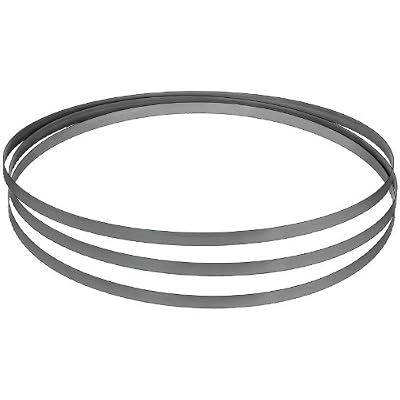
DEWALT 44-7/8-Inch 18 TPI Blade
The DEWALT 18 TPI blade offers a balanced tooth count for general metal cutting on 44-7/8-inch portable saws.
Read the details
Milwaukee 30-9/16-Inch 12/14 TPI Blade
The Milwaukee 12/14 TPI blade is optimized for clean cuts in stainless steel and extreme metals on compact saws.
Read the detailsAll products, in detail
DEWALT 44-7/8-Inch 18 TPI Blade
This DEWALT portable band saw blade features a Matrix II high-speed steel edge designed for heat and wear resistance. The 8% cobalt content adds durability, while the Rc 65-67 tooth hardness increases wear resistance. An alloy steel backer provides fatigue resistance for the blade body.
This 3-pack is suitable for users with 44-7/8-inch portable saws who need a balanced TPI for general metal cutting tasks.
- Matrix II high-speed steel edge with 8% cobalt content
- Rc 65-67 tooth hardness and alloy steel backer

FOXBC 44-7/8-Inch 10/14 TPI Blade
The FOXBC 44-7/8-inch blade is a bi-metal M42 high-speed steel option with a 10/14 TPI configuration. It is compatible with a wide range of portable saws, including Milwaukee, DeWalt, Bosch, Makita, and Wen models. This blade is designed for cutting materials between 3/16 inch and 5/16 inch thick.
The 3-pack offers a versatile tooth count for users who need to handle varying material thicknesses on their portable equipment.
- Bi-metal M42 high-speed steel construction
- Compatible with Milwaukee, DeWalt, Bosch, and Makita portable saws
POWERTEC 93-1/2-Inch Woodworking Set
This POWERTEC assortment includes three 93-1/2-inch blades for stationary band saws. The set contains a 6 TPI wood blade, a 14 TPI scroll cutting blade, and a 1/4-inch 6 TPI wood blade. Made from high-grade carbon steel, these blades are designed for re-sawing, rip cuts, and tight curves in wood and non-ferrous metals.
It fits major stationary brands like Delta, Grizzly, and Jet, making it a comprehensive kit for woodworkers.
- Includes 6 TPI and 14 TPI blades for wood and scroll work
- High-grade carbon steel construction for stationary saws

LENOX 44-7/8-Inch 14 TPI Blade
The LENOX 44-7/8-inch blade is a bi-metal option with a 14 TPI tooth count. It features high-speed steel teeth that provide a strong, long-lasting cutting edge. The design is shatter-resistant, and the bi-metal construction allows the blade to bend and resist breaking, which extends its life.
The Tuff Tooth design reinforces the teeth for durability. This 5-pack is ideal for users who prioritize blade longevity and resistance to breakage in portable applications.
- Shatter-resistant bi-metal construction
- Tuff Tooth design for reinforced durability

FOXBC 44-7/8-Inch 24 TPI Blade
This FOXBC 44-7/8-inch blade features a 24 TPI tooth count, making it suitable for finer cuts in thinner materials. It is constructed from bi-metal M42 high-speed steel with heat resistance. The blade is compatible with DeWalt DW3984 and Milwaukee 48-39-0531 portable saws, as well as other major brands.
The 3-pack provides a high-TPI option for users who need precision cuts on their portable band saws.
- 24 TPI tooth count for fine cutting
- Bi-metal M42 high-speed steel with heat resistance

DEWALT 32-7/8-Inch 24 TPI Blade
The DEWALT 32-7/8-inch blade is a compact option with a 24 TPI tooth count. It utilizes the Matrix II high-speed steel edge with 8% cobalt content for added durability. The Rc 65-67 tooth hardness and alloy steel backer are designed for heat and wear resistance.
This 3-pack is specifically sized for smaller portable band saws that require a 32-7/8-inch blade length for fine metal cutting.
- 32-7/8-inch length for compact portable saws
- Matrix II high-speed steel with 8% cobalt content
Milwaukee 30-9/16-Inch 12/14 TPI Blade
The Milwaukee 30-9/16-inch blade is a compact extreme thick metal option with a 12/14 TPI configuration. It is designed for clean cuts in stainless steel and other extreme metals. The optimized tooth design is intended to provide more cuts per charge and faster cutting in thin metals.
This 3-pack is suitable for users with compact portable saws who need to handle tough, thick metal materials efficiently.
- 30-9/16-inch length for compact saws
- Optimized for stainless steel and extreme metals

FOXBC 35-3/8-Inch 18 TPI Blade
This FOXBC 35-3/8-inch blade is designed for the Milwaukee 2829-20 compact portable band saw. It features an 18 TPI hook teeth profile for precision sharpening. The blade is made from bi-metal M42 high-speed steel with heat resistance. The 3-pack is ideal for users who own this specific Milwaukee model and need a blade that can cut fine, intricate shapes cleanly.
- 18 TPI hook teeth profile
- Compatible with Milwaukee 2829-20 compact saw
Head-to-Head Comparisons
DEWALT 18 TPI vs FOXBC 24 TPI
Both the DEWALT and FOXBC blades are 44-7/8-inch portable options, but they serve different cutting needs. The DEWALT 18 TPI blade is a general-purpose choice for medium-thickness metals, utilizing a Matrix II high-speed steel edge with 8% cobalt. The FOXBC 24 TPI blade offers a finer tooth count, which is better suited for thinner materials or when a smoother finish is required.
If you are cutting standard stock, the DEWALT provides a robust general-purpose solution. If you need finer cuts on thinner sheet metal, the FOXBC 24 TPI is the more appropriate selection.
DEWALT 32-7/8-Inch vs Milwaukee 30-9/16-Inch
These two blades are designed for compact portable saws but differ in length and intended material. The DEWALT 32-7/8-inch blade is a 24 TPI option, suitable for fine cuts on smaller saws. The Milwaukee 30-9/16-inch blade is a 12/14 TPI option specifically optimized for stainless steel and extreme metals.
The DEWALT is a general fine-cutting blade, while the Milwaukee is engineered for tough, thick materials. Choose the DEWALT for general fine work on a 32-7/8-inch saw, or the Milwaukee if you are tackling extreme metals on a 30-9/16-inch saw.
POWERTEC Stationary Set vs LENOX Portable Pack
The POWERTEC and LENOX products serve fundamentally different saw types. The POWERTEC is a 93-1/2-inch assortment for stationary band saws, including 6 TPI and 14 TPI blades for woodworking and scroll cutting. The LENOX is a 44-7/8-inch 5-pack for portable saws, featuring a 14 TPI bi-metal blade with a shatter-resistant design.
The POWERTEC is for shop-based woodworkers needing a variety of cuts, while the LENOX is for field or portable metal cutting. Your choice depends entirely on whether you are using a stationary or portable band saw.
Buying Guide
Match Blade Length to Your Saw
The most critical factor is ensuring the blade length matches your saw's specifications. Portable saws typically use blades between 30 and 45 inches, while stationary saws often use blades over 90 inches. Check your saw's manual for the exact required length. Using a blade that is too short or too long will not fit the saw's wheel system and can be dangerous.
Always verify the length before purchasing, as even a fraction of an inch difference can prevent installation.
Select TPI for Material Thickness
Teeth Per Inch (TPI) determines the cut quality and speed. Lower TPI blades, such as 6 or 10 TPI, are for thick materials and faster rough cuts. Higher TPI blades, such as 18, 24, or 30 TPI, are for thinner materials and finer, smoother cuts.
A general rule is to have at least three teeth engaged in the material at all times. If you are cutting a variety of thicknesses, consider a set with multiple TPI options or a dual-TPI blade.
Consider Material Composition
Blades are made from different materials to handle specific tasks. High-speed steel (HSS) and bi-metal blades are common for metal cutting, offering heat resistance and durability. Carbon steel blades are often used for woodworking, providing flexibility for curves. For extreme metals like stainless steel, look for blades specifically optimized for these materials, which may have unique tooth designs or coatings.
Matching the blade material to your workpiece ensures longer blade life and better cut quality.
Check Compatibility and Brand Fit
While many blades are universal, some are designed for specific saw models. Check the compatibility list provided by the manufacturer to ensure the blade fits your specific saw. Some brands, like Milwaukee and DeWalt, have specific blade sizes for their portable saws. Using a blade from a different brand is often possible if the dimensions match, but verifying compatibility ensures the blade will track correctly and cut cleanly.
Always confirm the width and thickness as well as the length.
Frequently Asked Questions
What is the difference between bi-metal and high-speed steel blades?
Bi-metal blades combine a high-speed steel cutting edge with a flexible alloy steel backer, offering durability and resistance to breaking. High-speed steel blades are made entirely of HSS, providing excellent heat resistance. Bi-metal is generally more common for portable saws due to its flexibility, while HSS is often used for stationary saws or heavy-duty applications.
How do I know which TPI to use for my material?
Choose a TPI that ensures at least three teeth are engaged in the material. For thick materials, use a lower TPI like 6 or 10. For thin materials, use a higher TPI like 18, 24, or 30. If you are cutting a variety of thicknesses, a dual-TPI blade or a set with multiple TPI options is ideal.
Can I use a blade from a different brand on my saw?
Yes, provided the dimensions match. The length, width, and thickness must be identical to your saw's requirements. While some blades are marketed for specific brands, they are often compatible with other saws of the same size. Always verify the dimensions and check the compatibility list to ensure a proper fit.
How often should I replace my band saw blade?
Replace the blade when it becomes dull, damaged, or no longer tracks correctly. The frequency depends on the material being cut and the blade's quality. Harder materials like stainless steel will wear a blade faster than wood or mild steel. Regularly inspect the teeth for wear and ensure the blade is tracking properly to extend its life.
This article is part of our complete guide Tools & Home Improvement — browse all our comparisons and buying guides.
Last update on 2026-11-20 / Affiliate links / Images from Amazon Product Advertising API