
Selecting the right batting cage depends on your available space, the materials you prefer, and how you plan to use the enclosure. Whether you are training with a pitching machine, live pitching, or solo drills, the frame material and netting durability are critical factors for long-term performance.
This comparison examines eight portable options, ranging from compact 12ft units to full-sized 35ft enclosures. We look at frame construction, netting specifications, and assembly requirements to help you find a setup that fits your backyard or field.
Our 3 picks for different needs

VEVOR Baseball Batting Cage 35ft x 10.5ft x 10.2ft

The 35ft length and high-carbon steel construction suit buyers needing a large, robust enclosure for professional or amateur training.
Read the details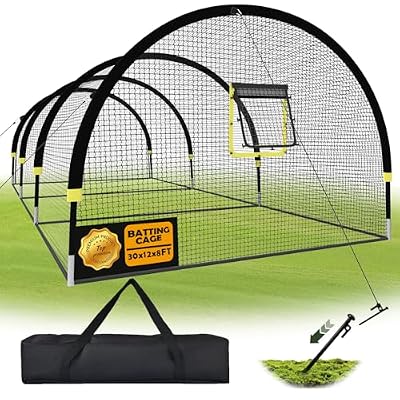
IDEATRY Baseball Batting Cage 30ft x 12ft x 8ft
The included spare pole, iron stakes, and U-shaped anchors provide a complete setup for families wanting a durable 30ft practice area.
Read the details
VEVOR Baseball Batting Cage 12.0 x 10.2 x 7.6 FT
The 12ft length and 4-ply knotless netting offer a contained space for athletes and coaches practicing in smaller outdoor areas.
Read the detailsAll products, in detail

Portable Batting Cage 22ft x 12ft x 8ft
This 22ft x 12ft x 8ft cage uses 3-ply Oxford netting and 14mm fiberglass poles for a sturdy, weather-ready setup. The bright blue netting improves ball tracking, while the 3.3ft x 1.6ft pitching machine opening and detachable door support solo or partner drills. It assembles in about an hour with two to three people and packs into a carry bag for easy transport.
- Features 14mm fiberglass poles and 16-strand braided ground ropes
- Includes a 3.3ft x 1.6ft pitching machine opening

ZivPlay Baseball Batting Cage 22ft x 12ft x 8ft
The ZivPlay 22ft x 12ft x 8ft cage features 12.7mm fiberglass poles and a 20" x 40" pitching hole for machine practice. It includes eight supporting ropes with ground pegs to maintain stability in wind. Assembly requires two people and no tools, guided by a step-by-step visual manual.
The detachable door allows for live pitching sessions.
- Uses 12.7mm fiberglass poles for the frame
- Includes 8 supporting ropes with ground pegs
VEVOR Baseball Batting Cage 35ft x 10.5ft x 10.2ft
This full-sized VEVOR cage measures 35.0 x 10.5 x 10.2 ft, offering ample space for professional or amateur training. It is constructed with powder-coated high-carbon steel tubes and thick HDPE netting with 48mm mesh. The square frame includes strengthened connections and a removable entry door with hook-and-loop closure.
It assembles in minutes with two people using included carabiner hooks.
- Dimensions are 35.0 x 10.5 x 10.2 ft
- Constructed with powder-coated high-carbon steel tubes
IDEATRY Baseball Batting Cage 30ft x 12ft x 8ft
The IDEATRY 30ft x 12ft x 8ft cage features 12.7mm fiberglass poles and 1.25-inch mesh with 4-strand high-strength polyethylene. It includes ten solid iron stakes, ten U-shaped anchors, and a spare pole in the kit. The button-closure side locks tight for fully enclosed practice, and the dedicated pitching machine hole allows for equipment training.
Assembly takes about 30 minutes with illustrated instructions.
- Includes 10 solid iron stakes and 10 U-shaped anchors
- Features 1.25-inch mesh with 4-strand polyethylene

ZivPlay Baseball Batting Cage 30ft x 12ft x 8ft
This ZivPlay 30ft x 12ft x 8ft cage uses 12.7mm fiberglass poles and a 20" x 40" pitching hole for machine practice. It includes eight supporting ropes with ground pegs to prevent falling in heavy winds. The detachable door supports batting practice with a pitcher.
Assembly requires two people and no tools, with a clear step-by-step visual manual provided.
- Dimensions are 30ft x 12ft x 8ft
- Includes 8 supporting ropes with ground pegs

PLAYAPUT Portable Batting Cage 22ft x 12ft x 8ft
The PLAYAPUT 22ft x 12ft x 8ft cage is made of nylon mesh and steel poles, with a sturdy frame for most weather conditions. It includes a guide rope and 12 ground stakes for extra stability. The 18 in. x 48 in. pitching holes and removable door support hitter or pitcher training.
Red target areas help improve reaction time and accuracy for batters and pitchers.
- Made of nylon mesh and steel poles
- Includes 12 ground stakes and a guide rope

RIIFRILY Baseball Batting Cage 20/30/40FT
The RIIFRILY cage features a heavy-duty 1.26inch steel tubing frame and 30# PE net for year-round outdoor use. The isosceles T-frame design maximizes stability and reduces tipping risk in windy conditions. Available in 20FT, 30FT, or 40FT lengths, all sizes share the same height and depth.
It includes an integrated gate net for convenient access and repair net patches.
- Built with 1.26inch steel tubing frame
- Available in 20FT, 30FT, or 40FT lengths
VEVOR Baseball Batting Cage 12.0 x 10.2 x 7.6 FT
This compact VEVOR cage measures 12.0 x 10.2 x 7.6 ft, offering a spacious training zone for athletes and coaches. It features 4-ply knotless polyester netting and high-heat cured fiberglass rods. The fully enclosed design keeps balls contained, with a removable cage door and pitching machine opening.
One end has a large zippered entry, while the other allows pitches from outside.
- Dimensions are 12.0 x 10.2 x 7.6 ft
- Features 4-ply knotless polyester netting
Head-to-Head Comparisons
VEVOR 35ft Steel Cage vs RIIFRILY Steel Cage
Both the VEVOR 35ft cage and the RIIFRILY cage use steel frames, but they differ in dimensions and design. The VEVOR model measures 35.0 x 10.5 x 10.2 ft and uses a square frame with strengthened connections. The RIIFRILY cage offers 20FT, 30FT, or 40FT lengths and features an isosceles T-frame design intended to reduce tipping.
The VEVOR uses HDPE netting with 48mm mesh, while the RIIFRILY uses 30# PE net. Buyers needing a specific 35ft square footprint may prefer the VEVOR, while those wanting a T-frame stability design might choose the RIIFRILY.
ZivPlay 22ft vs ZivPlay 30ft
The ZivPlay 22ft and 30ft cages share the same 12ft width and 8ft height, as well as 12.7mm fiberglass poles. Both include a 20" x 40" pitching hole and eight supporting ropes with ground pegs. The primary difference is the length, with the 30ft model offering more room for full swing motion.
Assembly for both requires two people and no tools, using the same step-by-step visual manual. If your space is limited, the 22ft model fits; if you have a longer yard, the 30ft model provides additional practice distance.
Portable 22ft Cage vs PLAYAPUT 22ft Cage
Both the unnamed 22ft cage and the PLAYAPUT 22ft cage measure 22ft x 12ft x 8ft. The unnamed cage uses 14mm fiberglass poles and 3-ply Oxford netting, while the PLAYAPUT uses steel poles and nylon mesh. The unnamed cage includes 16-strand braided ground ropes, whereas the PLAYAPUT includes 12 ground stakes and a guide rope.
The PLAYAPUT features red target areas for accuracy training, while the unnamed cage highlights bright blue netting for ball tracking. Both support pitching machine use with different opening dimensions.
Buying Guide
Frame Material and Stability
Fiberglass poles, such as those in the ZivPlay and IDEATRY cages, offer lightweight portability and flexibility. Steel frames, like those in the VEVOR and RIIFRILY cages, provide heavy-duty strength and stability. Consider your local weather conditions; steel may be better for harsh winds, while fiberglass is easier to transport.
Check the pole diameter and reinforcement details in each listing to match your durability needs.
Netting Durability and Visibility
Netting materials vary from 3-ply Oxford to 4-ply knotless polyester. Thicker mesh, such as the 48mm HDPE in the VEVOR 35ft cage, offers high abrasion resistance. Color also matters; bright blue netting in the unnamed 22ft cage improves ball tracking, while red targets in the PLAYAPUT cage aid accuracy.
Ensure the netting type matches your practice intensity and visibility preferences.
Pitching Machine Compatibility
Most cages include a pitching machine opening, but dimensions vary. x 48 in. openings. The unnamed 22ft cage has a 3.3ft x 1.6ft opening. Verify that your specific pitching machine fits the opening size before purchasing. Detachable doors are also important for live pitching sessions.
Assembly and Storage
Assembly times range from 30 minutes to an hour, typically requiring two people. The IDEATRY cage includes a spare pole and iron stakes, while the ZivPlay includes ground pegs. Check if the kit includes all necessary anchors and hooks. A clear instruction manual or video tutorial can simplify the setup process for first-time users.
Frequently Asked Questions
What is the difference between fiberglass and steel frames?
Fiberglass frames are lighter and more flexible, making them easier to transport. Steel frames are heavier and provide rigid stability. The choice depends on whether you prioritize portability or heavy-duty strength for your specific practice environment.
Do these cages work with pitching machines?
Yes, most listed cages include a dedicated pitching machine opening. Dimensions vary by model, so you must check the specific hole size in the product details to ensure your machine fits. Detachable doors also allow for live pitching practice.
How long does it take to assemble a batting cage?
Assembly typically takes between 30 minutes and an hour, depending on the model. Most cages require two people and no special tools. Following the included step-by-step manual or video tutorial will help you complete the setup efficiently.
Can I use these cages indoors?
The VEVOR 35ft cage is noted as ideal for both indoor and outdoor practice. Other cages are designed for backyard or field use. Check the specific dimensions and netting type to ensure the cage fits your indoor space and meets your training needs.
This article is part of our complete guide Sports & Outdoors — browse all our comparisons and buying guides.
Last update on 2026-11-22 / Affiliate links / Images from Amazon Product Advertising API