
Selecting the right brass wire depends on the specific requirements of your project, whether you need the precision of a square profile or the flexibility of a round, dead-soft temper. The gauge, or thickness, determines the wire's strength and workability, while the finish affects its appearance and resistance to tarnishing.
This comparison examines eight distinct options, ranging from fine 24-gauge wires for delicate jewelry to heavy 10-gauge wires for structural applications. By understanding the differences in temper, material composition, and packaging, you can choose the wire that best fits your crafting, metalworking, or DIY needs.
Our 3 picks for different needs

Square Brass Wire 18 Gauge 1.0×1.0mm
The 1.0mm square profile with tight tolerance is ideal for watch components and structural frameworks requiring defined edges.
Read the details
24 Gauge 0.5mm 850FT Spool Brass Wire
The 850-foot spool of 24-gauge wire provides a large quantity for extensive beading or intricate wire wrapping projects.
Read the details
BENECREAT 12 Gauge Soft Brass Wire 65 Feet
The 12-gauge 2mm diameter wire offers high tensile strength and malleability for complex jewelry winding and sculptures.
Read the detailsAll products, in detail

Artistic Wire 20 Gauge Tarnish Resistant Brass
This 20-gauge wire features a tarnish-resistant enamel coat that resists flaking, making it suitable for jewelry that requires a reliable, repeatable shine during daily wear. The dead-soft temper allows for smooth bending during wire wrapping, then work-hardens to hold the final form, reducing hand strain and the need for do-overs.
It is part of a broader 10-34 gauge range, offering a wide selection of stiffness levels for various structural and weaving needs. The consistent spooling minimizes kinks and memory, ensuring the wire feeds straight for batch runs and matching sets. This option is ideal for crafters who prioritize a polished, professional finish and need a wire that maintains its appearance over time.
- 20 gauge wire with a tarnish-resistant enamel coat
- Dead soft temper that work-hardens to hold form
Square Brass Wire 18 Gauge 1.0×1.0mm
This 18-gauge square profile wire measures 1.0mm by 1.0mm with a tight tolerance of ±0.02mm, providing precision for professional applications. Made from C26000 brass alloy, it offers a natural metallic luster and is RoHS compliant. The annealed treatment ensures optimal flexibility, allowing the wire to retain its shape after bending.
The 30-foot continuous length is packaged on an anti-tangle spool, making it convenient for jewelry findings, watch components, and structural frameworks. This specific square geometry is distinct from round wires, offering defined edges that are useful for metal weaving and precise mechanical assemblies where a flat profile is required.
- 1.0mm x 1.0mm square profile with ±0.02mm tolerance
- C26000 brass alloy, RoHS compliant, annealed

YEJJET 20 Gauge Square Brass Wire 0.8×0.8mm
This 20-gauge square wire measures 0.8mm by 0.8mm, balancing strength and workability for mid-gauge projects. The uncoated, oxide-free surface accepts soldering and plating immediately, making it ready for use without extensive preparation. Its semi-hard temper maintains crisp 90-degree angles when formed, which is beneficial for projects requiring defined edges and structural integrity.
The 30-foot spool includes an end-securing clip to prevent tangling. This wire is suitable for keychain loops, miniature sculptures, and electronic connections where a precise square cross-section is needed for alignment or aesthetic purposes.
- 0.8mm x 0.8mm square profile, semi-hard temper
- Oxide-free surface ready for soldering or plating
BENECREAT 12 Gauge Soft Brass Wire 65 Feet
This 12-gauge bare brass wire has a 2mm diameter and comes in a 65.62-foot roll, providing a large quantity for larger craft projects. The unplated material features a bright golden appearance with an even, glossy color. It is malleable and abrasion-resistant, with high tensile strength, making it easy to wind into complex shapes for jewelry, sculptures, and decorative hangings.
The soft temper allows for easy shaping, though the seller notes that rust and oxidation can occur with prolonged use, suggesting the use of protective film to reduce this phenomenon. This option is well-suited for users who need a substantial length of thick, workable wire for structural or decorative applications.
- 12 gauge, 2mm diameter, 65.62 feet per roll
- Unplated bare brass, malleable and abrasion-resistant
24 Gauge 0.5mm 850FT Spool Brass Wire
This 24-gauge round wire measures 0.5mm in diameter and is supplied on a 1-pound, 850-foot spool, offering a very long continuous length for extensive projects. The dead-soft temper makes it easy to shape, while the brass material provides strong wear resistance, high strength, and chemical resistance.
It is described as perfect for electrical use, art and craft, and jewelry making. The large spool size allows users to cut the wire to any length needed without running out of material quickly. This option is ideal for high-volume crafting or projects that require a significant amount of fine-gauge wire, such as intricate beading or detailed wire wrapping.
- 24 gauge, 0.5mm diameter, 850-foot spool
- Dead soft temper, high strength and chemical resistance

BENECREAT 5 Roll Brass Wire Assortment
This assortment includes five rolls of bare solid brass wire, totaling 164 feet. The set contains four different sizes: two rolls of 32 gauge (0.2mm) and one roll each of 28 gauge (0.3mm), 26 gauge (0.4mm), and 24 gauge (0.5mm). The wire is not conductive, making it suitable for jewelry components, scrapbooking, and papercrafts rather than electrical circuits.
The variety of gauges allows for endless design options when combining with pendants and other components. This kit is a convenient addition to a jewelry making setup, providing a range of thicknesses for different parts of a project, from delicate wraps to sturdier frames.
- 5 rolls totaling 164 feet, gauges 24, 26, 28, 32
- Bare solid brass, not conductive

Artistic Wire 24 Gauge Tarnish Resistant Brass
This 24-gauge wire features a protective enamel coat that helps pieces keep their shine in storage and wear. The dead-soft temper shapes without springback, making it beginner-friendly for wire wrapping loops, coils, and prongs that hold after light work-hardening. It is part of a broad 18-34 gauge lineup, covering frames, ear wires, and delicate weaves.
The colored craft wire offers clear color naming to prevent mismatch, and smooth spooling supports tidy coils. This option is ideal for jewelry makers who need a fine-gauge wire that maintains a polished appearance and is easy to manipulate for detailed work.
- 24 gauge wire with tarnish-resistant enamel
- Dead soft temper, beginner-friendly for wrapping
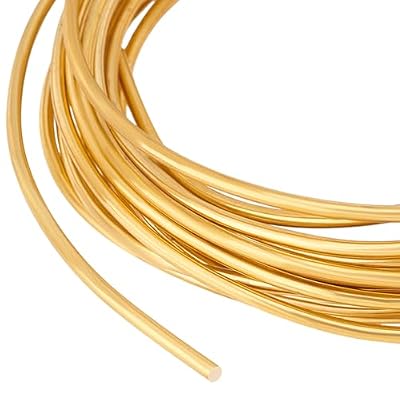
BENECREAT 10 Gauge Solid Brass Wire 16.4FT
This 10-gauge solid brass wire measures 2.6mm in width and is 16.4 feet long. It is described as soft and tough with strong stability, suitable for long-term use. The wire is not conductive, making it appropriate for jewelry components, scrapbooking, and other non-electrical crafts. Its thick gauge provides substantial strength for structural elements in jewelry or larger DIY projects.
The soft temper allows for easy bending and shaping, while the solid brass construction ensures durability. This option is well-suited for users who need a heavy-gauge wire for robust frames or decorative pieces that require significant structural support.
- 10 gauge, 2.6mm width, 16.4 feet long
- Solid brass, soft and tough, not conductive
Head-to-Head Comparisons
Square Profile Precision: 18 Gauge vs 20 Gauge
Both the 18-gauge and 20-gauge square wires offer defined edges suitable for structural and jewelry applications. The 18-gauge wire measures 1.0mm by 1.0mm with a ±0.02mm tolerance, providing a larger, more robust profile for watch components and frameworks. The 20-gauge wire measures 0.8mm by 0.8mm and features a semi-hard temper that maintains crisp 90-degree angles.
The 18-gauge option is annealed for flexibility, while the 20-gauge is semi-hard for shape retention. Choose the 18-gauge for larger structural elements and the 20-gauge for finer, more rigid details.
Tarnish Resistant Finishes: 20 Gauge vs 24 Gauge
Artistic Wire offers tarnish-resistant options in both 20-gauge and 24-gauge sizes. The 20-gauge wire is thicker and better suited for structural frames and heavier jewelry components, while the 24-gauge is finer and ideal for delicate weaves and ear wires. Both feature an enamel coat that resists flaking and helps maintain shine during wear.
The 20-gauge is dead soft and work-hardens to hold form, whereas the 24-gauge is also dead soft but shapes without springback. Select the gauge based on the required strength and detail level of your project.
Heavy Gauge Options: 12 Gauge vs 10 Gauge
For projects requiring significant structural support, the 12-gauge and 10-gauge wires are suitable choices. The 12-gauge wire has a 2mm diameter and comes in a 65.62-foot roll, offering a large quantity for extensive use. Both are soft and malleable, but the 10-gauge provides greater thickness for heavier frames.
The 12-gauge is unplated bare brass, while the 10-gauge is also solid brass. Choose the 10-gauge for maximum thickness and the 12-gauge for a balance of strength and length.
Buying Guide
Understanding Gauge and Diameter
Gauge refers to the thickness of the wire, with lower numbers indicating thicker wire. For example, 10-gauge wire is 2.6mm in diameter, while 24-gauge is 0.5mm. Thicker wires provide more strength for structural elements, while thinner wires are easier to manipulate for detailed work. Always check the specific diameter listed for each product, as gauge standards can vary slightly between manufacturers.
Selecting the correct gauge ensures your wire can support the intended load and detail level of your project.
Temper and Workability
Temper describes the hardness of the wire. Dead-soft wire is easy to bend and shape, making it ideal for beginners and complex designs. Semi-hard wire holds its shape better after bending, which is useful for structural components that need to maintain their form. Work-hardening occurs as you bend the wire, making it stiffer over time.
Choose dead-soft for intricate wrapping and semi-hard for frames that need to stay rigid. The temper affects how much force is required to shape the wire and how well it retains its form.
Finish and Tarnish Resistance
The finish of the wire affects its appearance and durability. Bare brass has a natural golden color but can oxidize and tarnish over time. Tarnish-resistant wires feature an enamel or protective coat that helps maintain shine and prevents flaking. If your project requires a long-lasting polished look, choose a tarnish-resistant option.
For projects where you plan to plate or solder the wire, an uncoated, oxide-free surface may be preferable. Consider the final appearance and maintenance requirements when selecting a finish.
Application-Specific Considerations
Different applications require different wire properties. Jewelry making often benefits from fine-gauge, dead-soft wire for detailed wrapping. Metalworking and structural projects may require thicker, semi-hard wire for strength. Check the product description for specific use cases and material composition.
Frequently Asked Questions
Is brass wire conductive?
Some brass wires are conductive, while others are not. The BENECREAT 5-roll assortment and 10-gauge wire are explicitly noted as not conductive. Always check the product description for conductivity specifications if you plan to use the wire in electrical applications.
What is the difference between square and round wire?
Square wire has a flat profile with defined edges, making it suitable for structural frameworks and precise alignment. Round wire is more traditional for jewelry and wrapping, offering a smooth surface. The choice depends on your project's aesthetic and functional requirements.
How do I prevent brass wire from tarnishing?
Tarnish-resistant wires with enamel coats help maintain shine. For bare brass, you can apply a protective film or coating to reduce oxidation. Proper storage in a dry environment also helps prevent tarnishing over time.
Can I cut the wire to any length?
Yes, most brass wires can be cut to any length using wire cutters. The spool size determines how much wire you have available, but you can cut it as needed for your project. Ensure you have the appropriate tools for the gauge you are using.
This article is part of our complete guide Industrial & Scientific — browse all our comparisons and buying guides.
Last update on 2026-11-18 / Affiliate links / Images from Amazon Product Advertising API