
Selecting the right compression elbow fitting depends on the specific tubing size, thread type, and pressure requirements of your system. These eight options range from standard brass adapters for general fluid lines to high-pressure stainless steel components for industrial applications.
Whether you are repairing an automotive air brake system or building a pneumatic circuit, matching the fitting material and dimensions to your tubing is essential. The following comparison highlights the key differences in construction, pressure ratings, and intended use for each product.
Our 3 picks for different needs

HASAOMOI 5-Pack DOT Brass 1/4" OD x 1/4" NPT Elbow
DOT-approved brass fittings designed specifically for SAE J1131 air brake and suspension systems.
Read the details
Pysrych 2-Pack 304 Stainless 1/2" OD Elbow
304 stainless steel twin ferrule design rated for 2900 PSI in demanding environments.
Read the details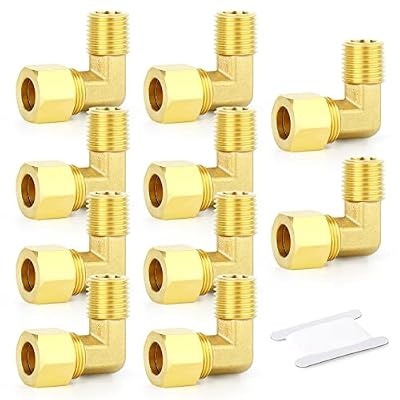
GASHER 10-Pack Brass 1/4" OD x 1/4" NPT Elbow
Ten-pack of 1/4-inch brass elbows suitable for general fuel, air, and liquid lines.
Read the detailsAll products, in detail

Litorange 4-Pack Brass 1/4" OD x 1/8" NPT Elbow
This four-pack of brass compression elbows connects 1/4-inch tubing to an 1/8-inch NPT male thread. The single ferrule design offers a simpler seal path compared to twin ferrule systems. It is suitable for copper, brass, aluminum, or plastic tubing in water, gasoline, oil, or vacuum lines.
The heavy-duty brass construction provides corrosion resistance and low magnetic permeability. This option is ideal for buyers needing a small quantity of mixed-size adapters for general fluid transfer tasks.
- Single ferrule compression design
- Connects 1/4" Tube OD to 1/8" NPT Male
GASHER 10-Pack Brass 1/4" OD x 1/4" NPT Elbow
The GASHER ten-pack provides a high-volume supply of 1/4-inch brass compression elbows. These fittings are designed for fuel, air, liquid, oil, gas, and vacuum lines. The brass material offers ductility at high temperatures and good airtightness. With a maximum working pressure of 150 PSI and a temperature range from -65°F to +250°F, these fittings suit standard pneumatic and fluid applications.
This bulk pack is useful for projects requiring multiple identical connections.
- 10-piece bulk pack
- Max working pressure 150 PSI
Pysrych 2-Pack 304 Stainless 1/2" OD Elbow
This two-pack of 304 stainless steel elbows features a twin ferrule compression design for high-pressure applications. The 1/2-inch OD tubing connection provides a leak-resistant seal with good repeatability. The stainless construction offers higher strength and greater corrosion resistance than standard brass. It supports a working pressure of 2900 PSI and temperatures up to 450°C.
This fitting is appropriate for demanding industrial environments where durability and high pressure resistance are priorities.
- Twin ferrule compression design
- Working pressure 2900 PSI
HASAOMOI 5-Pack DOT Brass 1/4" OD x 1/4" NPT Elbow
These DOT-approved brass elbows are specifically designed for automotive air brake systems. Made from solid CA360 brass with red sealant coating, they meet FMVSS 571.106 and SAE J1131 requirements. The fittings are suitable for air suspension kits, brake air lines, and conventional nylon air lines.
They operate from vacuum to 250 PSI and temperatures from -40°F to +200°F. This option is best for automotive technicians repairing or building air brake systems.
- DOT approved for air brake systems
- Solid CA360 brass with red sealant

LTWFITTING 5-Pack Brass 1/2" OD Compression Union Elbow
The LTWFITTING five-pack offers 1/2-inch OD brass compression union elbows. Each fitting includes a nut and ferrule for easy installation. The brass material provides standard durability for fluid and gas lines. The union design allows for disassembly and maintenance without cutting the tubing. This product is suitable for general industrial and plumbing applications where a 1/2-inch connection is required.
The pack size is moderate, offering a balance between single units and bulk quantities.
- Includes nut and ferrule
- 1/2-inch OD tube size

Thrifco 4401391 Lead-Free Brass 1/4" FIP 90 Elbow
This Thrifco lead-free brass compression fitting is a 1/4-inch FIP 90-degree elbow. The lead-free brass construction is suitable for applications where material composition is a concern. The FIP thread type is a specific standard for fluid power applications. While detailed pressure and temperature specifications are not listed in the provided data, the lead-free designation is a key feature for certain industrial and plumbing uses.
This fitting is appropriate for buyers specifically requiring lead-free brass components.
- Lead-free brass construction
- FIP thread type

Pysrych 2-Pack 304 Stainless 3/8" OD Elbow
This two-pack of 304 stainless steel elbows is sized for 3/8-inch OD tubing. Like its 1/2-inch counterpart, it uses a twin ferrule compression design for a leak-resistant seal. The stainless steel material provides high strength and corrosion resistance. It supports a working pressure of 2900 PSI and a wide temperature range.
This fitting is ideal for high-pressure industrial systems using 3/8-inch tubing where stainless durability is required.
- 3/8-inch OD tube size
- Twin ferrule compression design

ChillWaves 2-Pack Brass 3/8" OD x 1/2" NPT Elbow
The ChillWaves two-pack features brass compression elbows that connect 3/8-inch tubing to a 1/2-inch NPT male thread. The design uses a 24-degree tapered hole and a sharp-edged ferrule for sealing. It is suitable for oil, gas, water, and non-corrosive pipeline systems. The fittings support a maximum working pressure of 1200 PSI and temperatures up to +250°F.
This mixed-size adapter is useful for transitioning between different tubing and pipe diameters.
- Connects 3/8" OD to 1/2" NPT
- Max working pressure 1200 PSI
Head-to-Head Comparisons
Pysrych Stainless vs GASHER Brass: Pressure and Material
The Pysrych 1/2-inch stainless steel elbow and the GASHER 1/4-inch brass elbow serve different pressure and material needs. The Pysrych fitting uses a twin ferrule design and 304 stainless steel, supporting a working pressure of 2900 PSI. In contrast, the GASHER fitting is made of brass with a maximum working pressure of 150 PSI.
If your application involves high-pressure hydraulic or industrial gas lines, the stainless steel Pysrych fitting is the appropriate choice. For standard low-pressure pneumatic or fluid lines, the GASHER brass fitting is a suitable and common option.
HASAOMOI DOT vs GASHER General: Application Specificity
Both the HASAOMOI and GASHER fittings are brass 1/4-inch OD elbows, but they target different applications. The HASAOMOI fitting is DOT-approved and meets FMVSS 571.106 and SAE J1131 requirements, making it specifically designed for automotive air brake and suspension systems. The GASHER fitting is a general-purpose connector for fuel, air, liquid, oil, gas, and vacuum lines.
If you are working on a vehicle's air brake system, the HASAOMOI fitting is the correct choice due to its specific approval. For general workshop or industrial pneumatic projects, the GASHER fitting is a versatile alternative.
Litorange vs ChillWaves: Mixed Size Adapters
The Litorange and ChillWaves fittings both function as mixed-size adapters, connecting different tubing and thread sizes. The Litorange fitting connects 1/4-inch tubing to an 1/8-inch NPT male thread, while the ChillWaves fitting connects 3/8-inch tubing to a 1/2-inch NPT male thread. The Litorange fitting uses a single ferrule design, whereas the ChillWaves fitting uses a tapered hole and sharp-edged ferrule.
The ChillWaves fitting also has a higher maximum working pressure of 1200 PSI compared to the unspecified pressure rating of the Litorange fitting. Choose based on the specific size transition required for your project.
Buying Guide
Material Selection: Brass vs Stainless Steel
Brass is a common material for compression fittings due to its corrosion resistance and ease of machining. It is suitable for most general fluid and gas applications. Stainless steel, particularly 304 grade, offers higher strength and greater corrosion resistance, making it ideal for high-pressure or harsh chemical environments.
When selecting a material, consider the fluid being transported and the environmental conditions. For standard pneumatic lines, brass is often sufficient. For high-pressure hydraulic or corrosive industrial applications, stainless steel is the preferred choice. See our guide to industrial tube fittings for more material options.
Thread Type and Size Compatibility
Compression fittings come in various thread types, including NPT (National Pipe Taper) and FIP (Fluid Instrumentation Power). NPT is a common standard for general plumbing and industrial piping, while FIP is often used in fluid power applications. It is crucial to match the thread type of the fitting to the component it is connecting.
Additionally, ensure the tubing OD (Outer Diameter) matches the fitting's specified size. Mismatched sizes can lead to leaks or fitting failure. Always verify the thread type and size before purchasing to ensure compatibility with your existing system. For more on thread standards, see industrial pipe fittings.
Pressure and Temperature Ratings
Each fitting has a maximum working pressure and temperature range. Exceeding these limits can cause leaks or fitting failure. For example, the Pysrych stainless steel fittings are rated for 2900 PSI, while the GASHER brass fittings are rated for 150 PSI. Always select a fitting with a pressure rating that exceeds the maximum operating pressure of your system.
Similarly, consider the temperature range of the fluid and the environment. Some fittings are designed for high-temperature applications, while others are suitable for standard room temperature use. Check the specifications of each fitting to ensure it meets your system's requirements.
Ferrule Design: Single vs Twin
Compression fittings use ferrules to create a seal. Single ferrule designs are simpler and have fewer potential leak paths, making them suitable for many general applications. Twin ferrule designs provide a more secure seal and are often used in high-pressure applications where leak resistance is critical.
The choice between single and twin ferrule designs depends on the pressure and reliability requirements of your system. For low-pressure pneumatic lines, a single ferrule fitting is often sufficient. For high-pressure hydraulic or critical industrial applications, a twin ferrule fitting may be necessary to ensure a reliable seal.
Frequently Asked Questions
What is the difference between NPT and FIP threads?
NPT (National Pipe Taper) is a common standard for general plumbing and industrial piping, featuring a tapered thread. FIP (Fluid Instrumentation Power) is a standard often used in fluid power applications, with specific thread dimensions. The two are not interchangeable, so it is essential to match the thread type of the fitting to the component it is connecting to ensure a proper seal and prevent leaks.
Can I use brass fittings in high-pressure hydraulic systems?
Brass fittings can be used in some hydraulic systems, but their pressure rating must be sufficient for the application. For example, the ChillWaves brass fitting is rated for 1200 PSI, while the GASHER brass fitting is rated for 150 PSI. For high-pressure hydraulic systems, stainless steel fittings with higher pressure ratings, such as the Pysrych 2900 PSI fitting, are often preferred for their greater strength and durability.
How do I choose the right tubing size for a compression fitting?
The tubing size must match the fitting's specified OD (Outer Diameter). For example, a 1/4-inch OD fitting is designed for 1/4-inch OD tubing. Using the wrong tubing size can lead to leaks or fitting failure. Always verify the tubing OD and the fitting's specified size before purchasing.
Additionally, ensure the tubing material is compatible with the fluid being transported and the fitting material.
Are DOT-approved fittings necessary for all automotive applications?
DOT-approved fittings are necessary for applications that are part of a vehicle's safety-critical systems, such as air brake systems. These fittings meet specific standards, such as FMVSS 571.106 and SAE J1131, to ensure reliability and safety. For non-safety-critical automotive applications, such as general fluid transfer, standard brass or stainless steel fittings may be sufficient.
Always check the specific requirements of your application to determine if DOT approval is necessary.
This article is part of our complete guide Industrial & Scientific — browse all our comparisons and buying guides.
Last update on 2026-11-25 / Affiliate links / Images from Amazon Product Advertising API