
The market for freezerless refrigerators and compact cooling solutions offers a diverse range of options tailored to specific storage needs, from personal skincare coolers to large-capacity beverage merchandisers. These appliances are designed to fit into smaller spaces such as dormitories, offices, cars, and apartments, providing efficient cooling without the bulk of a traditional full-size unit. The available models vary significantly in capacity, ranging from small 6-liter personal coolers to expansive 8.5 cubic foot commercial display units. Key considerations when selecting a unit include the intended use case, such as storing beverages, wine, or perishable food items, as well as the power source requirements. Some units are designed for countertop use with portable power options, while others are built for under-counter installation or freestanding placement. Understanding the specific cooling technology, noise levels, and interior layout features is essential for choosing a refrigerator that aligns with your lifestyle and space constraints.
All products, in detail




Buying Guide
Capacity and Interior Layout
Storage capacity is a primary factor in selecting a freezerless refrigerator, with options ranging from 6 liters to 8.5 cubic feet. Smaller units, such as the Frigidaire Mini Personal Fridge Cooler, hold up to 15 cans or 10 liters, making them suitable for individual use in cars or offices. Larger models, like the BEYOU Beverage Refrigerator, offer 8.5 cubic feet of space with four adjustable shelves, ideal for commercial or high-volume home use. Interior flexibility varies by model; some feature removable glass shelves to accommodate taller items, while others include wire wooden-faced shelves for wine storage. The Minorfun 18-Inch Beverage Refrigerator holds up to 160 cans with four adjustable shelves, providing customizable organization for various beverage containers.
Cooling Technology and Temperature Control
Different models utilize distinct cooling technologies to maintain optimal temperatures. Compressor-based systems, found in units like the Borcolo and Rosmena refrigerators, offer precise temperature control with ranges from -4°F to 50°F. These units often feature 7-level adjustable thermostats, allowing users to tailor settings for specific food requirements. In contrast, thermoelectric cooling systems, used in some Frigidaire mini coolers, operate quietly and cool items 26-28 degrees below ambient room temperature, though performance may vary based on the surrounding environment. Digital touch controls and LED displays are common in larger beverage coolers, providing precise electronic temperature management for storing beer, juice, or wine between 32°F and 50°F.
Noise Levels and Energy Efficiency
Operational noise and energy consumption are critical for units placed in living spaces or offices. Many compact refrigerators are engineered for quiet operation, with noise levels as low as 38 decibels, ensuring minimal disturbance during use. The BEYOU Beverage Refrigerator utilizes noise-reducing air blades to keep noise below 40 dB. Energy efficiency is also a key feature, with some models consuming as little as 1.04 kWh per day. R600 high-efficiency compressors are commonly used to ensure fast cooling while minimizing energy usage. LED interior lighting is frequently included to provide visibility while maintaining energy savings, and some units feature Low-E technology in glass doors to prevent frost buildup and improve cooling efficiency.
Portability and Installation Options
The design of freezerless refrigerators caters to both stationary and portable needs. Portable units, such as the Frigidaire Retro Mini Personal Fridge Cooler, weigh as little as 3 pounds and include carrying handles, making them easy to transport. These models often come with both 12V car adapters and 110V home outlet cords for versatile power options. For stationary installations, beverage refrigerators like the Minorfun and Whynter models support both built-in and freestanding setups. Front ventilation designs allow for under-counter installation, while adjustable leveling feet ensure stability on uneven surfaces. Some units also feature reversible door swings and safety locks to enhance security and fit within specific cabinetry configurations.
Frequently Asked Questions
What is the temperature range for freezerless refrigerators?
Temperature ranges vary by model and cooling technology. Compressor-based units typically offer a wide range, such as -4°F to 50°F, allowing for both freezing and refrigeration. Beverage coolers often maintain temperatures between 32°F and 50°F to keep drinks cold without freezing. Thermoelectric coolers generally cool items 26-28 degrees below ambient room temperature, which may vary based on the surrounding environment.
Can these refrigerators be used in a car?
Yes, several models are designed for portable use in vehicles. Units like the Frigidaire Mini Personal Fridge Cooler and the Retro Mini Personal Fridge Cooler include 12V DC cords for car adapter use, in addition to 110V AC cords for home outlets. These portable units are lightweight, weighing between 3 and 6 pounds, and feature secure locking latches to keep items safe during transport.
How much noise do these refrigerators make?
Noise levels vary by model, but many are designed for quiet operation. Compact refrigerators with R600 compressors often operate at around 38 decibels, which is considered whisper-quiet. Beverage refrigerators may use noise-reducing air blades to keep levels below 40 dB. Thermoelectric coolers also operate quietly, making them suitable for bedrooms, offices, and dormitories.
Are there options for storing wine specifically?
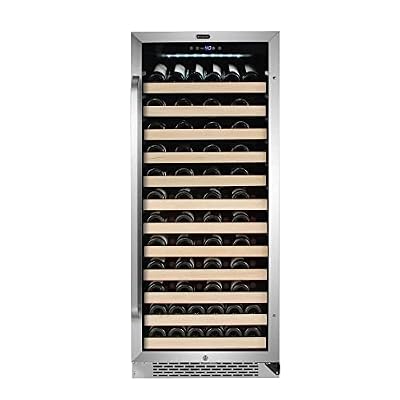
Yes, specialized wine refrigerators are available. The Whynter BWR-1002SD is designed to hold up to 100 standard 750ml wine bottles and features a temperature range of 40°F to 65°F. It includes a display shelf for open bottles, UV-protective tempered glass, and internal fan-forced circulation for even temperature distribution. Other beverage coolers also support wine storage with adjustable shelves and precise temperature controls.
Do these units require special installation?
Installation requirements vary by model. Portable countertop units simply require a power source and can be placed on any flat surface. Larger beverage refrigerators and wine coolers often support both built-in and freestanding installation. Models with front ventilation can be installed under counters, while those with rear ventilation may require more clearance. Adjustable feet are commonly included to ensure stability on uneven floors.
This article is part of our complete guide Appliances — browse all our comparisons and buying guides.
Last update on 2026-11-18 / Affiliate links / Images from Amazon Product Advertising API