
Choosing the right frequency counter depends on whether you need a portable field tool or a precise benchtop meter. Handheld devices are designed for testing two-way radios in the field, while benchtop units offer higher precision for electronics repair.
This comparison covers eight options, ranging from specialized radio testers to high-resolution digital meters. Each product serves a different workflow, from verifying walkie-talkie frequencies to measuring low-level signals in a lab.
Our pick: Mcbazel Surecom SF401 Plus. The Mcbazel Surecom SF401 Plus is a portable meter with included antennas for testing walkie-talkie frequencies in the field.
Our 3 picks for different needs

Mcbazel Surecom SF401 Plus
The Mcbazel Surecom SF401 Plus is a portable meter with included antennas for testing walkie-talkie frequencies in the field.
Read the details
VQP TFC2700L
The VQP TFC2700L offers an 8-digit display and multiple measurement functions for detailed electronics repair work.
Read the details
Fumei UHF/VHF Counter
The Fumei counter includes a DCS and CTCSS decoder for testing specific radio tone settings.
Read the detailsAll products, in detail
Mcbazel Surecom SF401 Plus
The Mcbazel Surecom SF401 Plus is a portable meter designed specifically for measuring continuous carrier signals from walkie-talkies. It covers a range of 27MHz to 3000MHz and includes a signal strength indicator. The device uses a TCXO oscillator for stability and comes with VHF and UHF antennas.
It is a compact option for field technicians who need to verify radio frequencies on the go.
- Measures frequencies from 27MHz to 3000MHz
- Includes VHF and UHF antennas in the package

Anysecu SF-103
The Anysecu SF-103 is a portable frequency counter designed for two-way radio signals, covering a range of 2MHz to 2.8GHz. It is described as an upgrade version of the SF401 and features a four-button control interface for easy operation. The device is lightweight and designed for portability, making it suitable for technicians who need to test DMR radio signals in the field.
- Frequency range of 2MHz to 2.8GHz
- Features a four-button control interface
VQP TFC2700L
The VQP TFC2700L is a high-precision benchtop frequency counter with an 8-digit LED display. It measures frequencies from 10Hz to 2.7GHz and supports both direct and proportional counting. The unit includes functions for period measurement and cumulative counting, with selectable gate times for different measurement durations.
It is a robust option for electronics repair and laboratory use.
- Features an 8-digit LED display
- Supports direct counting up to 10MHz
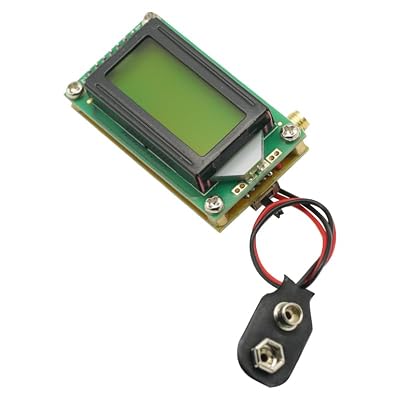
GODIYMODULES 1MHz-500MHz Board
This GODIYMODULES frequency counter board is a low-power component designed for ham radio kits. It covers a frequency range of 1MHz to 500MHz and includes an LCD display. As a board-level component, it is intended for integration into custom projects or repairs rather than standalone use.
It is a specific option for hobbyists working on VHF and UHF radio equipment.
- Frequency range of 1MHz to 500MHz
- Includes an LCD display

TFC2700L Digital Counter
The TFC2700L is a lightweight digital frequency counter designed for electronics repair. It measures frequencies from 10Hz to 2.7GHz and features a novel style form factor. The device supports cycle cumulative measurement and has a high input sensitivity of 20mVrms. It is a compact benchtop tool for technicians who need reliable frequency readings in a small package.
- Input sensitivity of 20mVrms
- Measures frequencies from 10Hz to 2.7GHz

Mcbazel Surecom SF-103
The Mcbazel Surecom SF-103 is a handheld frequency counter for walkie-talkies, covering 2MHz to 2.8GHz. It includes a GUI battery level indicator and uses a TCXO oscillator for accuracy. The device is designed for testing 2m HAM radio and VHF/UHF signals. It is a portable option for field use, with a warning to avoid direct connection to radio antenna outputs.
- Frequency range of 2MHz to 2.8GHz
- Includes a GUI battery level indicator
Fumei UHF/VHF Counter
The Fumei portable frequency counter is designed for VHF and UHF radio testing, covering 136-174MHz and 400-470MHz. It includes a DCS and CTCSS decoder and is powered by a 9V battery. The device is compact, measuring 9×5.5x2cm, and is designed for measuring radio frequencies within a 1-meter range.
It is a specific tool for testing sub-audible tones in two-way radios.
- Includes DCS and CTCSS decoder
- Powered by a 9V battery

Delta DFC100
The Delta DFC100 is a 6-digit frequency counter designed for CB radio use. It can be used wirelessly or inline and includes an AC adapter. The device is a specialized tool for testing CB radio frequencies and is a compact option for technicians working with commercial band equipment.
It is a straightforward meter for specific frequency verification tasks.
- 6-digit frequency counter
- Includes an AC adapter
Head-to-Head Comparisons
Mcbazel SF401 Plus vs Anysecu SF-103
The Mcbazel SF401 Plus and Anysecu SF-103 are both portable counters for two-way radios. The Mcbazel model covers 27MHz to 3000MHz and includes a signal strength indicator. The Anysecu model covers 2MHz to 2.8GHz and is described as an upgrade version. Both use four-button controls and are designed for portability.
The choice depends on whether you need the signal strength indicator or the slightly lower frequency start point of the Anysecu.
VQP TFC2700L vs TFC2700L Digital Counter
The VQP TFC2700L and the TFC2700L Digital Counter are both benchtop meters with similar frequency ranges of 10Hz to 2.7GHz. The VQP model features an 8-digit LED display and selectable gate times. The other model is described as lightweight with a novel style. Both have a high input sensitivity of 20mVrms.
The VQP model offers more detailed display options, while the other emphasizes a compact form factor.
Fumei UHF/VHF vs Delta DFC100
The Fumei counter and Delta DFC100 are both specialized radio testers. The Fumei model covers VHF and UHF bands and includes a DCS/CTCSS decoder. The Delta model is a 6-digit counter for CB radio use. The Fumei is battery-powered and compact, while the Delta includes an AC adapter.
The Fumei is better for testing sub-audible tones, while the Delta is a straightforward CB frequency meter.
Buying Guide
Frequency Range
Check the frequency range to ensure it covers your specific application. Handheld radio testers typically cover VHF and UHF bands, while benchtop meters may cover a wider range from low Hz to GHz. Ensure the meter's range matches the signals you need to measure. Some portable units are designed specifically for two-way radio continuous wave signals, so verify the lower and upper limits against your equipment.
For example, a meter covering 27MHz to 3000MHz will not measure signals below that threshold. Conversely, a benchtop unit starting at 10Hz can handle very low frequency signals that handheld radio testers might ignore. Always confirm the exact range listed in the product details before purchasing to avoid compatibility issues with your specific radio bands or electronic components.
Portability vs Precision
Decide if you need a portable field tool or a benchtop meter. Handheld devices are compact and battery-powered for field use. Benchtop meters offer higher precision and more functions but are less portable. Choose based on where you will be doing your testing. Portable counters often feature small form factors and simple button controls, making them easy to carry in a tool bag.
These devices are ideal for technicians who need to verify frequencies at a job site or in a vehicle. Benchtop units, on the other hand, are designed for stable environments where power is available. They often include more complex displays and measurement functions, such as period measurement or cumulative counting, which are useful for detailed diagnostic work in a workshop or laboratory setting.
Display and Functions
Consider the display type and available functions. LED displays are easy to read in bright conditions, while LCDs may offer more information. Check for functions like period measurement, cumulative counting, or tone decoding that are relevant to your work. Some counters include specific decoders for CTCSS and DCS tones, which is essential for testing sub-audible settings on two-way radios.
Other models focus on basic frequency and period measurements, which may be sufficient for general electronics repair. The number of digits on the display also matters; an 8-digit display provides higher resolution for precise readings, while a 6-digit display is standard for many handheld radio testers.
Select the display and function set that aligns with the complexity of your measurement tasks.
Power and Accessories
Check the power source and included accessories. Some meters use batteries, while others include AC adapters. Ensure the package includes the necessary antennas or cables for your specific testing needs. This can save you from buying extra components later. For instance, some portable counters come with specific VHF and UHF antennas, while others may require you to supply your own.
Verify if the device uses a standard 9V battery or a proprietary power source. Also, check if the package includes a USB cable for data transfer or a user manual. Having the correct accessories ready ensures you can start testing immediately without waiting for additional parts to arrive, which is crucial for time-sensitive repair jobs or field deployments.
Frequently Asked Questions
What is the difference between a handheld and benchtop frequency counter?
Handheld counters are portable and designed for field testing of radios. Benchtop counters are larger, offer higher precision, and are used in labs or repair shops for detailed measurements. Handheld units often prioritize ease of use and battery life, featuring simple interfaces for quick frequency checks.
They are typically designed to measure continuous wave signals from two-way radios. Benchtop models, such as those with 8-digit displays, provide more detailed data and stability for complex electronic components. The choice depends on whether you need to move around a job site or perform stationary, high-precision measurements in a controlled environment.
Can I use a frequency counter for any radio?
No, you must ensure the counter's frequency range covers your radio's band. Some counters are specialized for specific bands like CB or VHF/UHF and may not work with other frequencies. For example, a meter designed for 27MHz to 3000MHz will not measure signals outside that specific range.
Similarly, a board-level component covering 1MHz to 500MHz is intended for ham radio kits and may not handle higher UHF frequencies. Always verify the minimum and maximum frequency limits listed in the product description to ensure compatibility with your specific equipment before making a purchase.
What does CTCSS/DCS decoding mean?
It means the counter can detect and display sub-audible tones used in two-way radios for privacy. This is useful for testing and programming radio settings. Some portable frequency counters include specific decoders for CTCSS and DCS tones, allowing technicians to verify that the correct tone is being transmitted.
This feature is particularly relevant for users working with professional two-way radio systems where privacy codes are standard. Without this decoding capability, a standard frequency counter would only show the carrier frequency, not the associated tone settings.
How accurate are these frequency counters?
Accuracy varies by model. Some handhelds use TCXO oscillators for stability, while benchtop meters may offer higher precision. Check the specific accuracy rating for your needs. For instance, some portable units specify accuracy in parts per million (ppm) over a certain temperature range. Benchtop counters often list stability in scientific notation, such as ±3 x 10^-9s.
Understanding these specifications helps you determine if the meter is precise enough for your application, whether it is verifying radio frequencies or measuring low-level signals in electronics repair.
This article is part of our complete guide Industrial & Scientific — browse all our comparisons and buying guides.
Last update on 2026-11-18 / Affiliate links / Images from Amazon Product Advertising API