
Choosing the right front derailleur requires matching the component to your specific frame geometry, drivetrain speed, and cable routing. The options in this comparison vary by swing type, clamp size, and material, ensuring there is a fit for different bike styles.
Whether you are replacing a worn part or upgrading your setup, verifying the compatibility of the derailleur with your chainrings and seat tube diameter is essential. This guide breaks down the key features of eight distinct models to help you make an informed decision.
Our pick: Shimano FD-M310 Aultus Front Derailleur. The Shimano FD-M310 Aultus offers dual pull compatibility for top or bottom routing in a low-clamp design.
Our 3 picks for different needs

Shimano FD-M310 Aultus Front Derailleur
The Shimano FD-M310 Aultus offers dual pull compatibility for top or bottom routing in a low-clamp design.
Read the details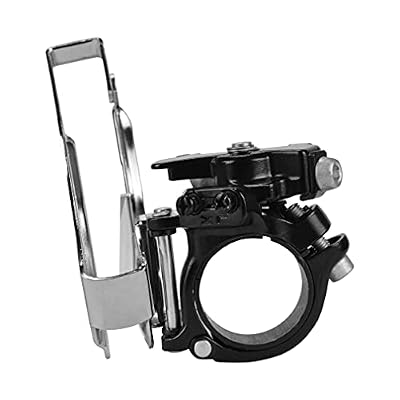
Universal 3-Speed Clamp-On Front Derailleur
This forged aluminum derailleur supports both 31.8mm and 34.9mm tubes with a bidirectional cable arm.
Read the details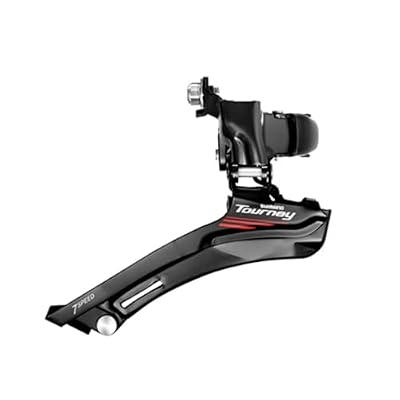
Shimano FD-A070 Band-Type Front Derailleur
The Shimano FD-A070 is a band-type derailleur with Dual SIS indexing for 7-speed drivetrains.
Read the detailsAll products, in detail
Shimano FD-M310 Aultus Front Derailleur
The Shimano FD-M310 Aultus is a low-clamp front derailleur designed for mountain double or triple setups. It features a dual pull design that allows compatibility with both top and bottom cable routing, offering flexibility for different frame configurations. This model is suitable for riders using 3×7 or 8-speed drivetrains who need a reliable, indexed shifting solution.
The low-clamp design positions the derailleur lower on the seat tube, which can improve chain clearance and aesthetics on certain mountain bike frames. Riders should verify their specific chainring sizes and frame diameter to ensure a proper fit before purchasing.
- Dual Pull Design compatible with top or bottom routing
- Designed for mountain double or triple configurations
Universal 3-Speed Clamp-On Front Derailleur
This universal front derailleur is built for 3-speed cranksets with 42-34-24 teeth configurations. It features a clamp-on mount with a conversion clip ring that supports both 31.8mm and 34.9mm seat tube diameters, making it adaptable to a wide range of frames. The bidirectional cable arm supports both up and down trace routing, ensuring compatibility with various shifter setups.
Constructed from forged aluminum, it aims to reduce weight while maintaining durability. It is suitable for mountain bikes, BMX, cruisers, and hybrid bikes, offering a versatile option for riders needing a replacement or upgrade for triple-speed drivetrains.
- Supports 31.8mm and 34.9mm tube diameters via conversion ring
- Forged aluminum construction for lightweight durability

BIYDOO FD-TY300 Up Swing Front Derailleur
The BIYDOO FD-TY300 is an up-swing front derailleur designed for 3×6 or 3×7-speed drivetrains. It is compatible with Dual SIS index shifting and features a clamp band mount for 34.9mm seat tubes. Made from high-strength aluminum alloy, it is designed to be lightweight and durable.
The up-swing design moves the derailleur upward during shifting, which can help with chain clearance in certain situations. It is a suitable choice for riders with mountain or road bikes who require a specific up-swing configuration and 34.9mm clamp size. The simple design allows for straightforward installation and adjustment.
- Up-swing design with 34.9mm clamp band mount
- Compatible with Dual SIS index shifting

Tookie Steel TZ 30 Pull Up Front Derailleur
The Tookie TZ 30 is a steel front derailleur designed for pull-up cable routing. It features a narrow anti-skid plate design intended to reduce the chance of damage to the lower fork after collisions. Made from hard steel, it is described as durable and rust-proof.
The multi-clamp band allows for quick assembly and adjustment. This model is suitable for a wide range of bikes, including BMX, cruisers, electric bikes, and mountain bikes. It is a practical option for riders who need a robust, steel-constructed derailleur with pull-up compatibility and a design that protects the frame from chain abrasion.
- Hard steel construction with rust-proof properties
- Narrow anti-skid plate design for fork protection

Universal Steel TZ 30 Pull Down Front Derailleur
This universal steel front derailleur is configured for pull-down cable routing. Like its pull-up counterpart, it features a narrow anti-skid plate design to minimize damage to the lower fork. The hard steel material is described as durable and easy to install. It is compact and lightweight, aiming to add minimal burden to the bike.
The surface is smooth without burrs, making it convenient to clean and maintain. It is suitable for BMX, cruisers, electric, folding, hybrid, and mountain bikes. Riders should select this variant if their shifter and frame setup require a pull-down cable routing configuration.
- Pull-down cable routing configuration
- Compact and lightweight steel design
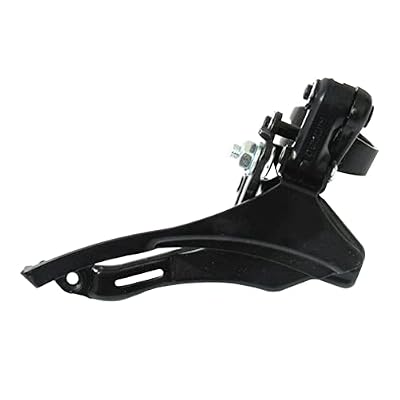
SYCOOVEN Steel TZ 30 Pull Up Front Derailleur
The SYCOOVEN TZ 30 is a steel front derailleur designed for pull-up routing. It features a narrow anti-skid plate design that helps reduce the chance of damage to the lower fork. The hard steel construction is described as durable and rust-proof. It offers light operation and smooth shifting with a multi-clamp band for quick assembly.
This model is suitable for a variety of bike types, including BMX, cruisers, electric bikes, and mountain bikes. It is a straightforward option for riders needing a steel derailleur with pull-up compatibility and a protective plate design.
- Pull-up routing with multi-clamp band assembly
- Hard steel material with rust-proof finish
Shimano FD-A070 Band-Type Front Derailleur
The Shimano FD-A070 is a band-type front derailleur designed for 7-speed drivetrains. It is compatible with 50T chainrings and SG-X chainrings. It features Dual SIS front index shifting for precise gear changes. The band-type mount is designed for 34.9mm seat tubes, and the title indicates compatibility with 31.8mm.
This model is suitable for riders with 7-speed setups who require a specific band-mount configuration. It is a reliable option for those looking for a Shimano-branded derailleur with indexed shifting capabilities for their specific drivetrain.
- Band-type mount for 34.9mm with 31.8mm compatibility noted in title
- Dual SIS front index shifting for 7-speed
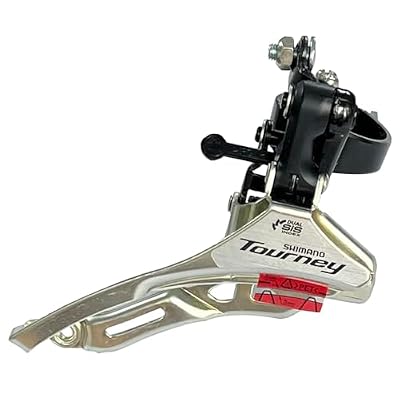
BIYDOO FD-TY300 Down Swing Front Derailleur
The BIYDOO FD-TY300 down-swing variant is designed for 3×6 or 3×7-speed drivetrains. It is compatible with Dual SIS index shifting and features a clamp band mount for 34.9mm seat tubes. Made from high-strength aluminum alloy, it is lightweight and durable. The down-swing design moves the derailleur downward during shifting, which is a common configuration for many modern drivetrains.
It is a suitable choice for riders with mountain or road bikes who require a down-swing configuration and 34.9mm clamp size. The simple design allows for straightforward installation and adjustment.
- Down-swing design with 34.9mm clamp band mount
- High-strength aluminum alloy construction
Head-to-Head Comparisons
BIYDOO Up Swing vs Down Swing
The BIYDOO FD-TY300 is available in both up-swing and down-swing configurations. The up-swing model moves the derailleur upward during shifting, while the down-swing model moves it downward. Both are made from high-strength aluminum alloy and are compatible with Dual SIS index shifting for 3×6 or 3×7-speed drivetrains.
They both feature a 34.9mm clamp band mount. The choice between the two depends on your frame's clearance and your personal preference for shifting feel. Riders should check their frame's geometry to ensure the chosen swing type does not interfere with other components.
Tookie Pull Up vs Pull Down
The Tookie TZ 30 and the Universal Steel TZ 30 are both made from hard steel and feature a narrow anti-skid plate design. The primary difference is their cable routing configuration. The Tookie model is designed for pull-up routing, while the Universal model is designed for pull-down routing.
Both are suitable for a wide range of bike types, including BMX and mountain bikes. Riders must select the variant that matches their shifter's cable exit direction. The steel construction in both models is described as durable and rust-proof, offering a robust option for various riding conditions.
Shimano Aultus vs Shimano A070
Both Shimano models offer indexed shifting but differ in their mounting and speed compatibility. The Shimano FD-M310 Aultus is a low-clamp derailleur designed for mountain double or triple setups, compatible with 3×7 or 8-speed drivetrains. It features a dual pull design for top or bottom routing.
The Shimano FD-A070 is a band-type derailleur designed for 7-speed drivetrains, compatible with 50T chainrings. It uses a band mount for 34.9mm tubes, with the title noting 31.8mm compatibility. Riders should choose based on their specific drivetrain speed and frame mount type.
Buying Guide
Clamp Size and Mount Type
The most critical factor in choosing a front derailleur is the mount type and clamp size. Most modern mountain bikes use a 34.9mm seat tube diameter, while older or specific models may use 31.8mm. Some derailleurs come with conversion rings to support both sizes. Verify your frame's diameter and whether it requires a band mount or a clamp-on mount.
Ensuring the correct mount type prevents installation issues and ensures the derailleur sits at the correct height relative to the chainrings.
Swing Type: Up vs Down
Front derailleurs come in up-swing and down-swing designs. Up-swing derailleurs move upward when shifting to the larger chainring, while down-swing derailleurs move downward. The choice often depends on frame clearance and personal preference. Some frames have specific clearances that favor one type over the other.
Check your frame's geometry and any manufacturer recommendations to ensure the chosen swing type will not interfere with the seat tube or other components during shifting.
Cable Routing Compatibility
Cable routing can be top-pull, bottom-pull, or dual-pull. Top-pull derailleurs have the cable entering from the top, while bottom-pull derailleurs have the cable entering from the bottom. Dual-pull derailleurs are compatible with both. Your shifter and frame determine the required routing. If your frame has internal cable routing, you may need a specific derailleur type.
Ensure the derailleur's cable arm direction matches your shifter's cable exit to avoid tension issues and poor shifting performance.
Material and Durability
Front derailleurs are typically made from aluminum or steel. Aluminum derailleurs are lighter and often used in performance-oriented setups. Steel derailleurs are generally more durable and resistant to impact, making them suitable for rugged riding conditions. Some steel models feature anti-skid plates to protect the frame from chain abrasion.
Consider your riding style and the level of protection you need for your frame when choosing between aluminum and steel constructions.
Frequently Asked Questions
What is the difference between up-swing and down-swing derailleurs?
Up-swing derailleurs move upward when shifting to the larger chainring, while down-swing derailleurs move downward. The choice depends on frame clearance and personal preference. Check your frame's geometry to ensure compatibility.
How do I know which clamp size I need?
Measure your seat tube diameter. Most modern bikes use 34.9mm, while older models may use 31.8mm. Some derailleurs come with conversion rings to support both sizes. Verify your frame's specifications before purchasing.
Can I use a dual-pull derailleur with any shifter?
Dual-pull derailleurs are compatible with both top and bottom cable routing. However, you must ensure the cable arm direction matches your shifter's cable exit. Check your shifter's specifications to confirm compatibility.
Is steel better than aluminum for front derailleurs?
Steel is generally more durable and resistant to impact, making it suitable for rugged riding. Aluminum is lighter and often used in performance setups. Choose based on your riding style and the level of protection you need for your frame.
This article is part of our complete guide Automotive — browse all our comparisons and buying guides.
Last update on 2026-11-21 / Affiliate links / Images from Amazon Product Advertising API