
Selecting the correct gas tube arrestor depends on whether you are protecting RF equipment or gas lines. For radio frequency applications, the key factors are frequency range, impedance, and connector type. For welding and cutting, the priority is preventing flashback in fuel and oxygen lines.
This comparison covers seven options, including complete arrestor units and replacement gas discharge tubes. We distinguish between 3 GHz and 6 GHz RF systems, as well as specific voltage ratings like 90V and 230V. Understanding these specifications ensures you choose a component that fits your existing hardware and safety requirements.
Our 3 picks for different needs

Sarora 2pcs Pipe Flashback Arrestors (8mm/10mm)
Includes separate arrestors for fuel gas and oxygen lines, essential for preventing flashback in torch operations.
Read the details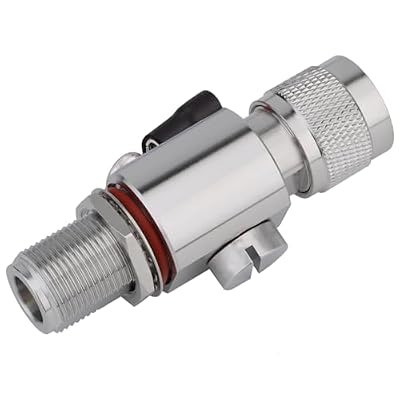
N Type 6 GHz Male to Female Arrestor
A complete N-type arrestor covering 0-6 GHz with a replaceable 90V tube, suitable for modern cellular and ham radio setups.
Read the details
CYANTEKOMS 10pcs N Type Gas Tubes
A 10-pack of N-type gas tubes for 6 GHz arrestors, providing a cost-effective stock of replacements for maintenance.
Read the detailsAll products, in detail

Proxicast 230V Gas Discharge Tubes (4 Pack)
This four-pack of 230V gas discharge tubes is designed specifically for Proxicast 0-3 GHz lightning arresters. The tubes measure 6mm in length and 8mm in diameter, a size that may also fit other brands of lightning arresters. They support DC to 3 GHz operation with a maximum power rating of 200W.
This option is ideal for users maintaining existing Proxicast systems who need to replace the internal surge protection elements without buying a new arretor unit.
- 230V rating with 200W maximum power
- 6L x 8D mm physical dimensions
Sarora 2pcs Pipe Flashback Arrestors (8mm/10mm)
The Sarora set includes two flashback arrestors designed for gas welding and cutting applications. One unit is intended for fuel gases like acetylene, propane, and liquefied gas, while the other is dedicated to oxygen lines. These arrestors prevent flame travel in the event of a flashback, a critical safety feature for torch operations.
Available in 8mm or 10mm pipe versions, this basic style kit provides essential protection for standard welding setups.
- Separate units for fuel gas and oxygen
- Available in 8mm or 10mm pipe versions
CYANTEKOMS 10pcs N Type Gas Tubes
This package contains ten N-type gas tube replacements for lightning arrestors, offering a bulk option for maintenance. The tubes feature a wide frequency range from DC to 6 GHz with 50 Ohm impedance. They are constructed from brass and stainless steel for corrosion resistance and include bi-directional protection capabilities.
These replacements are suitable for satellite, wireless, and radar systems, allowing users to stock up on spare elements for their 6 GHz arrestor units.
- 10-piece bulk package of N-type tubes
- DC to 6 GHz frequency range

RFetomax N Male to Female Bulkhead Arrestor
The RFetomax unit is a complete N-type male to female bulkhead lightning arrestor designed for DC to 3 GHz applications. It features a 90V replaceable gas discharge element and offers bi-directional protection with low insertion loss. This device is compatible with 50 Ohm cellular boosters and satellite TV systems, requiring an additional ground cable for proper function.
It is designed to be installed at the point where coaxial cable enters a building to protect indoor equipment.
- 90V replaceable gas discharge element
- DC to 3 GHz bandwidth with 50 Ohm impedance

World Products 6pcs 470V Mini Gas Tubes
This six-pack of World Products gas discharge tubes is part of their Mini Series, featuring a compact 5mm diameter and 5mm length. The tubes are rated for 470V and include two electrodes. This small form factor is suitable for specific arrestor models that require miniaturized components.
The package provides six units per order, allowing for easy replacement of these specific 470V elements in compatible surge protection devices.
- 470V rating with 5mm x 5mm size
- Two-electrode mini series design
N Type 6 GHz Male to Female Arrestor
This N-type male to female lightning arrestor supports a wide bandwidth from 0 to 6 GHz with 50 Ohm impedance. It includes a 90V replaceable gas discharge tube with multi-strike capability and bi-directional protection. The unit features low insertion loss and DC pass-through, making it suitable for both indoor and outdoor applications.
It is a practical choice for ham radio setups or LTE cellular antennas where minimum signal loss is required.
- 0 to 6 GHz wide-band performance
- 90V replaceable gas discharge tube

Proxicast 230V Gas Discharge Tubes (6 GHz)
This four-pack of 230V gas discharge tubes is designed for Proxicast 0-6 GHz coaxial lightning arresters. The tubes measure 8mm in length and 6mm in diameter, distinguishing them from the 3 GHz variant. They support DC to 6 GHz operation with a 200W maximum power rating.
This option is for users with higher-frequency Proxicast systems who need to replace the internal surge elements to maintain protection for their antenna feeder lines.
- 230V rating with 200W maximum power
- 8L x 6D mm physical dimensions
Head-to-Head Comparisons
Proxicast 3 GHz vs 6 GHz Replacement Tubes
Both Proxicast options are 230V gas discharge tubes sold in four-packs, but they serve different frequency bands. The 3 GHz variant measures 6mm in length and 8mm in diameter, while the 6 GHz variant is 8mm long and 6mm in diameter. This physical difference means they are not interchangeable.
If your arretor is rated for 0-3 GHz, you need the first option. If your system operates up to 6 GHz, you must select the second. Both support 200W maximum power, so the decision rests entirely on the frequency rating of your existing arretor unit.
RFetomax 3 GHz vs 6 GHz Complete Arrestors
These two N-type male to female arrestors differ primarily in bandwidth. The RFetomax unit covers DC to 3 GHz, while the other unit covers 0 to 6 GHz. Both feature 90V replaceable gas discharge elements and 50 Ohm impedance. The 6 GHz option is suitable for ham radio, LTE cellular antennas, or yagi wireless antennas.
The 3 GHz option covers 2G, 3G, and 4G LTE cellular standards as well as Satellite TV. Both require a ground cable for proper operation, but the 6 GHz unit offers broader frequency coverage.
Welding Flashback Arrestors vs Mini Gas Tubes
These products serve entirely different functions. The Sarora set consists of complete flashback arrestors for gas welding, with separate units for fuel and oxygen. The World Products item is a pack of mini gas discharge tubes for electrical surge protection. A buyer should choose the Sarora set if they are setting up a welding torch and need flame prevention.
They should choose the World Products tubes if they are maintaining a specific electrical arretor that uses 470V mini components. These are not comparable as substitutes; they address different safety hazards in different industries.
Buying Guide
Determine Your Application Type
First, identify if you need RF protection or gas line safety. RF arrestors protect antennas and boosters from lightning surges. Gas flashback arrestors protect welders from flame travel. These are distinct categories. If you are working with coaxial cables and antennas, look for N-type or BNC connectors and frequency ratings.
If you are using a torch, look for flashback arrestors rated for specific gases like acetylene or oxygen. Mixing these up can lead to equipment failure or safety hazards.
Match Frequency and Impedance
For RF applications, ensure the arrestor's frequency range covers your operating band. A 3 GHz arrestor will not protect equipment operating at 5 GHz. Also, check the impedance, which is typically 50 Ohm for most cellular and satellite systems. Mismatched impedance can cause signal reflection and loss.
Verify that the connector type, such as N-type male to female, matches your existing cabling. This ensures a secure physical connection and proper electrical performance.
Check Voltage and Power Ratings
Gas discharge tubes have specific voltage ratings, such as 90V, 230V, or 470V. This rating must match the specifications of the arretor housing you are using. A 90V tube in a 230V arretor may fail prematurely. Similarly, check the maximum power rating, often 200W for RF tubes.
This indicates the surge energy the tube can handle. For gas lines, ensure the flashback arrestor is rated for the specific gas you are using, as oxygen and fuel gases require different internal mechanisms.
Consider Replacement Availability
Gas discharge tubes are consumable components that degrade after a surge event. It is wise to have replacements on hand. Some products are sold as complete units with replaceable tubes, while others are just the tubes. If you buy a complete unit, check if the tubes are easy to replace.
Buying a bulk pack of tubes, such as a 10-pack, can be more economical for long-term maintenance. Ensure the replacement tubes have the same voltage and physical dimensions as the original.
Frequently Asked Questions
Can I use a 3 GHz arrestor for 5 GHz equipment?
No, a 3 GHz arrestor is not designed to protect equipment operating at 5 GHz. The frequency range must cover your operating band to provide effective surge protection. Using a lower-frequency arrestor may result in inadequate protection or signal loss at higher frequencies.
What is the difference between a flashback arrestor and a gas discharge tube?
A flashback arrestor is a mechanical device for gas lines that prevents flame travel. A gas discharge tube is an electrical component used in RF arrestors to shunt lightning surges to ground. They serve different safety functions in different systems and are not interchangeable.
Do I need a ground cable for an RF arrestor?
Yes, most RF lightning arrestors require a separate ground cable connected to a proper earth ground. The arrestor shunts surge energy to ground, but without a low-impedance path to earth, the protection is ineffective. Check the product instructions for specific grounding requirements.
How often should I replace gas discharge tubes?
Gas discharge tubes should be replaced after any significant surge event or if they show signs of damage. Regular inspection is recommended, especially in areas with frequent lightning. If you are unsure, replacing them periodically ensures your protection system remains reliable.
This article is part of our complete guide Industrial & Scientific — browse all our comparisons and buying guides.
Last update on 2026-11-23 / Affiliate links / Images from Amazon Product Advertising API