
Choosing the right graph computation data pad depends on your specific drafting needs, from grid density to paper weight. This comparison looks at eight options that vary in pack size, sheet count, and grid configuration.
Whether you need a single pad for a quick project or a bulk supply for a busy office, these engineering notebooks offer different configurations to match your workflow. Check the live product cards for current pricing and availability.
Our 3 picks for different needs

suituts Engineering Paper, 6 Pack, 600 Sheets
The 600-sheet bulk pack is suitable for teams that need a large supply of 80 GSM engineering paper.
Read the details
Graph Paper Pads, 4×4 Quad Ruled, 3 Pack

The 4x4 grid density on white paper offers a larger square size for broader layout planning.
Read the details
TOPS Engineering Computation Pad, 200 Sheets
The 200-sheet pad with front-printed frame margins is a good fit for users who want a thicker single unit.
Read the detailsAll products, in detail

TOPS Engineering Computation Pad, 100 Sheets
This single-pad option from TOPS features 8.5 by 11 inch sheets with a green tint and 5×5 grid lines printed on the back. The paper is 3-hole punched and bound with a glue top, making it suitable for standard binders. It is a straightforward choice for professionals who need a reliable, single-unit supply of engineering paper for drafting or calculation tasks.
- 100 sheets of 8.5 x 11 inch green tint paper
- 5×5 grid rule printed on the back

TOPS Engineering Notebooks, 3 Pack
This 3-pack from TOPS provides 300 total sheets of 8.5 by 11 inch engineering paper. Each pad contains 100 sheets with a green tint and 5×5 grid lines on the back. The pads are 3-hole punched and feature a glue-top binding with a cardboard back.
This multi-pack format is useful for teams or students who want a larger supply of consistent engineering paper.
- 3-pack containing 300 total sheets
- Green tint paper with 5×5 grid on back
Graph Paper Pads, 4×4 Quad Ruled, 3 Pack
This 3-pack of graph paper pads uses white paper with a 4×4 grid density, offering a different visual scale than the 5×5 options. Each pad contains 30 sheets, totaling 90 sheets. The paper is 70 GSM and double-sided, with perforations for easy tearing. It is a good fit for users who prefer a larger grid square for broader planning or artistic layouts.
- 4×4 grid density on white paper
- 3-pack with 30 sheets per pad
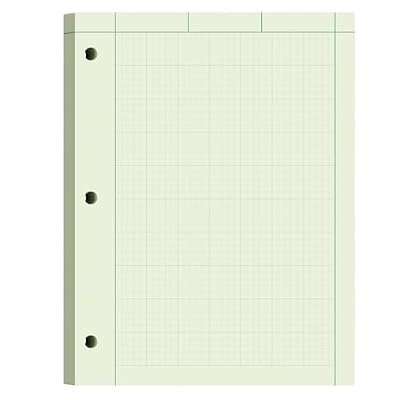
Engineering Paper, 5×5 Quad Ruled, 1 Pack
This single-pad engineering notebook features 100 sheets of 8.5 by 11 inch green tint paper. The 5×5 grid is printed on the back and subtly visible from the front. The 70 GSM paper resists ink bleed-through, and the pad is 3-hole punched with a glue-top binding.
It is a standard choice for engineers and students needing a single unit of precision paper.
- 100 sheets of 70 GSM green tint paper
- 5×5 grid printed on the back

Engineering Paper, 5×5 Quad Ruled, 3 Pack
This 3-pack from Aidunmis offers 300 total sheets of 8.5 by 11 inch engineering paper. Each pad has 100 sheets of 70 GSM green tint paper with a 5×5 grid on the back. The pads are 3-hole punched and feature a glue-top binding. This multi-pack is suitable for users who want a larger supply of standard engineering paper for ongoing projects.
- 3-pack containing 300 total sheets
- 70 GSM green tint paper with 5×5 grid
suituts Engineering Paper, 6 Pack, 600 Sheets
This bulk 6-pack from suituts provides 600 total sheets of 8.5 by 11 inch engineering paper. Each pad contains 100 sheets of 80 GSM paper with a 5×5 grid on the back. The pads are 3-hole punched and end-glued with a heavy cardboard back. This large quantity is ideal for offices or classrooms that consume a high volume of engineering paper.
- 6-pack containing 600 total sheets
- 80 GSM paper with 5×5 grid on back

Seajan Engineering Paper, 5 Pack, 500 Sheets
This 5-pack from Seajan offers 500 total sheets of 8.5 by 11 inch green engineering paper. Each pad has 100 sheets with a 5×5 grid on the back. The pads feature a backing board for support and are designed for smooth writing. This mid-range quantity is a practical choice for teams or students who need a substantial supply of engineering paper.
- 5-pack containing 500 total sheets
- Green paper with 5×5 grid on back
TOPS Engineering Computation Pad, 200 Sheets
This single-pad option from TOPS contains 200 sheets of 8.5 by 11 inch green tint paper. The cross-section ruling is printed on the back to faintly show through to the front, and the front is printed with frame margins. It is 3-hole punched and suitable for standard binders.
This higher sheet count in a single pad is useful for users who prefer a thicker, longer-lasting pad.
- 200 sheets of 8.5 x 11 inch green tint paper
- Front printed with frame margins
Head-to-Head Comparisons
TOPS 100-Sheet vs 200-Sheet Pads
Both TOPS pads use 8.5 by 11 inch green tint paper with a 5×5 grid on the back and 3-hole punching. The main difference is the sheet count: the 100-sheet pad is a standard single unit, while the 200-sheet pad offers double the paper in one binding.
The 200-sheet pad also features front-printed frame margins, which can help with consistent formatting. If you prefer a thinner pad that is easier to carry, the 100-sheet version is a good fit. If you want a thicker pad that lasts longer between replacements, the 200-sheet option is the better choice.
4×4 White Grid vs 5×5 Green Grid
These two pads offer different grid densities and paper colors. The 4×4 pad uses white paper with a larger grid square, which is useful for broader planning or artistic layouts. The 5×5 pad uses green tint paper with a smaller grid square, which is standard for engineering and technical drawing.
The 4×4 pad is a 3-pack of 30 sheets, while the 5×5 pad is a single 100-sheet pad. If you need a larger grid for general planning, the 4×4 white pad is a good fit. If you need standard engineering grid density, the 5×5 green pad is the better choice.
TOPS 3-Pack vs Aidunmis 3-Pack
Both of these 3-packs offer 300 total sheets of 8.5 by 11 inch engineering paper with a 5×5 grid on the back. The TOPS pads use green tint paper, while the Aidunmis pads also use green tint paper with 70 GSM weight. Both are 3-hole punched and feature a glue-top binding.
The main difference is the brand and the specific paper weight, which is explicitly stated for the Aidunmis pads. If you prefer the TOPS brand, the 3-pack is a reliable choice. If you want a 3-pack with explicitly stated 70 GSM paper, the Aidunmis option is a good fit.
Buying Guide
Grid Density and Paper Color
The grid density determines the size of each square on the page. A 5×5 grid offers smaller squares, which is standard for engineering and technical drawing. A 4×4 grid offers larger squares, which is useful for broader planning or artistic layouts. Paper color also matters: green tint paper is common for engineering work and may reduce eye strain, while white paper is a neutral choice for general use.
Choose the grid density and color that match your specific drafting needs.
Pack Size and Sheet Count
Pads are available in single units, 3-packs, 5-packs, and 6-packs. The sheet count per pad also varies, with most options offering 100 sheets per pad, though some offer 30 or 200 sheets. A single pad is a good fit for occasional use, while a multi-pack is useful for teams or students who need a larger supply.
Consider how often you use engineering paper and how much storage space you have before choosing a pack size.
Paper Weight and Binding
Paper weight affects how the paper feels and how it handles ink. Most options use 70 GSM or 80 GSM paper, which is standard for engineering work. The binding type also matters: glue-top bindings allow for easy tear-off, while 3-hole punching allows the sheets to be placed in standard binders.
Some pads also feature a cardboard back for support. Choose a paper weight and binding type that match your writing and organization habits.
Related Office Supplies
If you are setting up a drafting station, you may also want to consider other office supplies. For example, Strip Chart Recorders are useful for continuous data logging, while Stationery Notepads are a good fit for general note-taking. These related products can complement your engineering paper and help you organize your workspace.
Check the live product cards for current pricing and availability of these related items.
Frequently Asked Questions
What is the difference between 4×4 and 5×5 grid paper?
A 4×4 grid has four squares per inch, resulting in larger squares. A 5×5 grid has five squares per inch, resulting in smaller squares. The 5×5 grid is standard for engineering work, while the 4×4 grid is useful for broader planning.
Are these pads 3-hole punched?
Most of the pads in this comparison are 3-hole punched, which allows them to fit in standard binders. The 4×4 white grid pad is not described as 3-hole punched in the supplied data, so check the product details for that specific option.
What paper weight is best for engineering work?
Most options in this comparison use 70 GSM or 80 GSM paper, which is standard for engineering work. Heavier paper may resist ink bleed-through better, but the supplied data does not establish a clear winner between these weights.
Can I use these pads for general note-taking?
Yes, these pads can be used for general note-taking, though they are designed for engineering and technical drawing. The grid lines may be useful for organizing notes, but if you prefer blank paper, you may want to look at other notepad options.
This article is part of our complete guide Office Products — browse all our comparisons and buying guides.
Last update on 2026-11-18 / Affiliate links / Images from Amazon Product Advertising API