
Selecting the right hydraulic tank depends on the specific demands of your equipment, from the fluid volume required to the material durability needed for your environment. Steel tanks offer robust protection for heavy machinery, while polyethylene options provide lightweight, corrosion-resistant storage for varied applications.
This comparison examines eight reservoirs ranging from 6-quart plastic units to 15-gallon steel tanks. We look at capacity, port configurations, and material properties to help you match a tank to your tractor, truck, log splitter, or lift system.
Our 3 picks for different needs
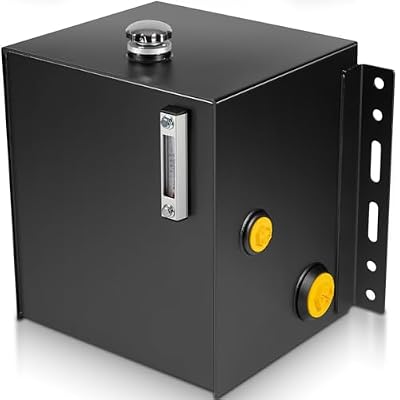
15 Gallon Steel Hydraulic Reservoir
The 15-gallon capacity with dual 2-inch NPT ports suits heavy-duty tractors and trucks needing maximum fluid volume.
Read the details
LEAPTREND 14L Lift Oil Reservoir
The 14-liter plastic reservoir is a direct fit for Rotary, Forward, Direct, and Hanmecson 2-post and pad lifts.
Read the details
6 Quart Polyethylene Hydraulic Reservoir
The 6-quart polyethylene tank offers a lightweight, corrosion-resistant option for RVs, boats, and trailers.
Read the detailsAll products, in detail

VEVOR 10 Gallon Steel Hydraulic Tank

This 10-gallon reservoir is fabricated from high-strength cold-rolled steel plates with a black powder-coated exterior and phosphate-coated interior. It includes an oil level indicator, tank gauge, oil return filter, and breather cap. The unit features a 2-inch NPT inlet port and 3/4-inch and 1-1/2-inch NPT outlet ports.
Mounting brackets are included to assist with installation. This steel construction suits heavy-duty applications for tractors and trucks requiring robust fluid storage.
- 10-gallon capacity with 2-inch NPT inlet and 3/4-inch and 1-1/2-inch NPT outlets
- Constructed from cold-rolled steel with black powder-coated finish
6 Quart Polyethylene Hydraulic Reservoir
A compact 6-quart reservoir made from heavy-duty polyethylene, designed for flat-bottom utility fluid storage. It features a 4-11/16-inch round opening and 4-inch square bolt style mounting. The translucent color and surface min/max scales allow for easy visual checking of liquid capacity. Plug and breather caps are included for convenience.
This plastic construction is corrosion-resistant and chemically stable, making it suitable for dump trucks, trailers, RVs, and boats.
- 6-quart capacity with translucent polyethylene body for visual level checking
- Flat bottom design with 4-inch square bolt style mounting

5 Gallon 14-Gauge Steel Reservoir
This 5-gallon tank is constructed from 14-gauge steel with a black powder-coated surface for rust and corrosion resistance. It features a 1-1/2-inch FNPT inlet port with a strainer and a 3/4-inch FNPT outlet port. Welded-on mounting brackets are located on each end for secure placement.
The tank includes a breather cap to allow air and moisture to escape. It is designed for use with log splitters and other hydraulic equipment requiring moderate fluid storage.
- 5-gallon capacity with 1-1/2-inch FNPT inlet and 3/4-inch FNPT outlet
- 14-gauge steel construction with welded-on mounting brackets

Field Tuff 10 Gallon Steel Reservoir
The Field Tuff 10-gallon reservoir is made from 14-gauge welded steel. It features a 2-inch NPT suction port, 0.75-inch NPT return port, and 0.75-inch NPT drain port. A breather cover on the input port prevents particles from entering while allowing moisture to leave. The tank includes a filter with a 150-micron pore size to help eliminate hazardous components.
Dimensions are 19.9 inches long, 11.7 inches wide, and 10.3 inches high, suitable for wood splitters and portable machinery.
- 10-gallon capacity with 2-inch NPT suction and 0.75-inch NPT return/drain ports
- Includes 150-micron pore size filter and 14-gauge welded steel construction

13 Quart Polyethylene Hydraulic Reservoir
This 13-quart reservoir is made from heavy-duty polyethylene with a flat bottom design. It measures 7 inches long, 8 inches wide, and 21.5 inches high, featuring a 4-11/16-inch round opening and 4-inch square bolt style. The translucent body with min/max scales allows for easy capacity monitoring.
Plug and breather caps are included. The chemically stable plastic material is corrosion-resistant, making it a durable option for hydraulic systems in trucks, RVs, and boats.
- 13-quart capacity with 21.5-inch height and flat bottom design
- Translucent polyethylene construction with min/max level scales

Besttruck 5 Gallon Steel Reservoir
This 5-gallon reservoir is constructed from 14-gauge black powder-coated steel, hardened for durability. It features a 1.5-inch FNPT inlet port with a strainer and a 0.75-inch FNPT outlet port. A breather cap is included to ensure consistent flow by allowing air and moisture to escape.
The tank is designed for hydraulic pump setups, including log splitters. The powder-plated surface provides rust and corrosion resistance for long-term use in various hydraulic applications.
- 5-gallon capacity with 1.5-inch FNPT inlet and 0.75-inch FNPT outlet
- 14-gauge steel construction with black powder-coated finish
LEAPTREND 14L Lift Oil Reservoir
This 14-liter reservoir is made from reinforced black plastic designed to resist temperature extremes and UV exposure. It is compatible with hydraulic power units on 2-post and pad lifts from brands like Rotary, Forward, Direct, and Hanmecson. The tank serves as a direct replacement for older style tanks, including 19-inch long versions.
The 14-liter capacity is larger than common 10L tanks, reducing the need for frequent refills in high-frequency lift usage. The opening, bolt holes, and flange design match the original equipment.
- 14-liter capacity compatible with Rotary, Forward, Direct, and Hanmecson lifts
- Reinforced black plastic construction resistant to UV and temperature changes
15 Gallon Steel Hydraulic Reservoir
This 15-gallon tank is constructed from 14-gauge heavy-duty steel with a black powder-coated surface. It features dual 2-inch NPT ports and dual 1.25-inch NPT ports for secure connections. The tank includes a built-in sight gauge with temperature gauge combo, an internally baffled design to minimize sloshing, and a magnetic drain plug.
Dimensions are 20.25 inches wide, 13-5/8 inches long, and 17.5 inches high. It is suitable for tractors, trucks, and log splitters requiring large fluid storage.
- 15-gallon capacity with dual 2-inch and dual 1.25-inch NPT ports
- Includes built-in sight gauge, temperature gauge, and magnetic drain plug
Head-to-Head Comparisons
VEVOR vs Field Tuff: 10-Gallon Steel Options
Both the VEVOR and Field Tuff tanks offer 10-gallon capacities in steel construction, but they differ in port configuration and filtration details. The VEVOR tank features a 2-inch NPT inlet and 3/4-inch and 1-1/2-inch NPT outlets, while the Field Tuff model specifies a 2-inch NPT suction port, 0.75-inch NPT return port, and 0.75-inch NPT drain port.
The Field Tuff tank explicitly includes a 150-micron pore size filter, whereas the VEVOR listing mentions an oil return filter without specifying micron rating. If you require a specific drain port configuration, the Field Tuff tank documents this clearly. For those needing a larger 1-1/2-inch outlet, the VEVOR tank provides that option.
Both are suitable for tractors and trucks, but the specific port sizes should be matched to your existing hydraulic lines.
5-Gallon Steel Tanks: Port and Mounting Differences
The 5-gallon steel reservoirs from the first and sixth listings share similar 14-gauge steel construction and 1.5-inch FNPT inlet ports. However, their mounting and outlet details differ slightly in presentation. The first tank lists a 3/4-inch FNPT outlet and welded-on mounting brackets on each end.
The second tank, identified as Besttruck, also lists a 0.75-inch FNPT outlet and emphasizes the powder-plated surface for corrosion resistance. Both are designed for log splitters and hydraulic pump setups. The primary distinction lies in the specific branding and warranty terms, with the first offering a 12-month warranty and the second offering a 30-day return policy.
Buyers should verify the exact mounting bracket dimensions against their equipment frame to ensure a secure fit, as both use welded-on feet.
6-Quart vs 13-Quart Polyethylene Reservoirs
These two polyethylene tanks share the same material properties, including heavy-duty polyethylene construction, flat bottom design, and translucent bodies with min/max scales. The key difference is capacity and height. The 6-quart tank is 13 inches high, while the 13-quart tank is 21.5 inches high. Both feature a 4-11/16-inch round opening and 4-inch square bolt style mounting.
If your application requires a smaller footprint, the 6-quart unit is more compact. If you need more fluid storage without the weight of steel, the 13-quart tank provides nearly double the capacity. Both are suitable for dump trucks, trailers, RVs, and boats, offering corrosion resistance and chemical stability.
Choose based on the available space and required fluid volume.
Buying Guide
Match Capacity to System Demand
Determine the fluid volume your hydraulic system requires for continuous operation. Smaller tanks like the 6-quart polyethylene unit suit compact systems or those with frequent refill access. Larger steel tanks, such as the 15-gallon model, are better for heavy-duty tractors or trucks where downtime for refilling is costly.
Consider the size of your hydraulic cylinders and the frequency of operation when selecting capacity. A larger tank reduces the need for frequent refills but may require more space and weigh more.
Select Material Based on Environment
Steel tanks offer high durability and resistance to physical impact, making them ideal for rugged environments like construction sites or farms. Polyethylene tanks are lightweight, corrosion-resistant, and chemically stable, which is beneficial for marine or chemical exposure applications. Steel tanks typically require powder-coating for rust protection, while plastic tanks resist corrosion naturally.
Choose steel for heavy mechanical loads and plastic for weight-sensitive or corrosive environments. Ensure the material choice aligns with the fluids you are storing.
Verify Port Sizes and Standards
Check the inlet and outlet port sizes and thread types (NPT or FNPT) to ensure compatibility with your existing hydraulic lines and fittings. For example, a 2-inch NPT suction port is common for larger systems, while 3/4-inch or 1-1/2-inch outlets vary by design. If your current setup uses different thread standards, you may need to use hydraulic adapters to connect the tank.
Always verify the port locations and orientations to ensure proper flow and installation. Mismatched ports can lead to leaks or inefficient fluid transfer.
Consider Mounting and Installation
Review the mounting options provided with the tank, such as welded-on brackets, integral mounting feet, or bolt holes. Ensure the mounting points align with your vehicle frame or equipment structure. Some tanks, like the polyethylene units, use square bolt styles, while steel tanks may use welded brackets.
Check the overall dimensions, including height and width, to ensure the tank fits in the designated space. Proper mounting is crucial for stability and preventing stress on the tank body during operation.
Frequently Asked Questions
What is the difference between NPT and FNPT ports?
NPT stands for National Pipe Taper, and FNPT stands for Female National Pipe Taper. NPT ports are typically male threads, while FNPT ports are female threads. When connecting hoses or fittings, ensure the thread type matches. For example, a male NPT fitting connects to a female FNPT port.
Always verify the thread direction and size to prevent leaks.
Can I use a polyethylene tank for high-pressure systems?
Polyethylene tanks are generally designed for low to medium pressure applications and are often used for fluid storage rather than high-pressure power units. They are chemically stable and corrosion-resistant. For high-pressure hydraulic systems, steel tanks are typically preferred due to their structural strength. Check the specific pressure rating of the tank if it is intended for high-pressure use.
How do I maintain a steel hydraulic tank?
Regularly inspect the powder-coated surface for chips or rust, and touch up as needed. Check the breather cap and filters for clogs or damage. Ensure the drain plug is secure and clean the magnetic drain plug if present to remove metal particles. Monitor fluid levels and temperature using the gauges if available.
Proper maintenance extends the life of the tank and protects the hydraulic system.
Are these tanks compatible with all hydraulic fluids?
Most hydraulic tanks are compatible with standard hydraulic oils, but you should verify the material compatibility with your specific fluid. Polyethylene tanks are chemically stable and resistant to many fluids, while steel tanks are generally compatible with most hydraulic oils. Avoid using aggressive chemicals that may degrade the tank material or seals.
Always follow the manufacturer's recommendations for fluid type and maintenance.
This article is part of our complete guide Automotive — browse all our comparisons and buying guides.
Last update on 2026-11-25 / Affiliate links / Images from Amazon Product Advertising API