
Choosing the right instrument cable involves balancing connector style, shielding type, and conductor gauge. Whether you are setting up a home studio or preparing for a live gig, the physical build of the cable affects how it handles on stage and how it transmits your signal.
This comparison looks at eight listed options, ranging from standard straight-to-straight designs to right-angle configurations and braided jackets. By examining the specific materials and connector types, you can select a cable that matches your instrument's jacks and your playing environment.
Our 3 picks for different needs

Cable Matters 2-Pack 1/4 Inch TS Cable 6ft
The 6-foot length and two-pack format are ideal for keeping short, spare cables handy in a practice space.
Read the details
Sovvid 10FT 2 Pack Right Angle Cable
The right-angle connectors help protect instrument jacks from stress and accidental unplugging during performances.
Read the details
Guitar Cable 10ft 2 Pack Dual Shielded
The 20AWG conductors offer a larger cross-sectional area for players who prefer thicker copper wiring.
Read the detailsAll products, in detail
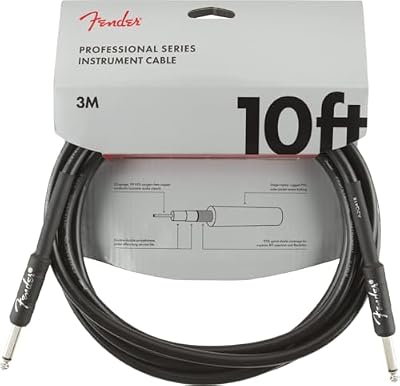
Fender Professional Instrument Cable 10ft

This Fender cable features a 10-foot length with a black finish and straight connectors. It uses 95% oxygen-free spiral shielding and an 8mm PVC jacket to resist kinking and handling noise. The 22-gauge conductor and nickel-plated connectors are designed for durability. It is a suitable choice for players who prefer a standard straight-to-straight configuration for electric guitars or basses.
- 10-foot length with straight connectors
- 95% oxygen-free spiral shielding
Cable Matters 2-Pack 1/4 Inch TS Cable 6ft
Sold as a two-pack, these 6-foot cables feature straight-to-straight connectors with gold-plated tips. The flexible PVC jacket resists kinks and lays flat for easy setup. Inside, braid shielding and heavy-gauge oxygen-free copper conductors aim to minimize EMI noise. This option is practical for musicians who need spare cables for practice or to connect two instruments to a mixer simultaneously.
- Two-pack of 6-foot cables
- Gold-plated straight connectors

Ernie Ball Braided Instrument Cable 10ft
The Ernie Ball cable offers a 10-foot length with a braided exterior jacket that is tangle-resistant. It utilizes 99.95% oxygen-free copper and dual shielding with dual conductors for durability. The construction is described as roadworthy, making it a solid option for gigging musicians who need a cable that withstands frequent handling and storage in a gig bag.
- Braided exterior jacket
- 99.95% oxygen-free copper

New Bee Guitar Cable 10ft
This 10-foot cable features 22AWG oxygen-free copper conductors and high-density stranded copper double shielding. It includes both straight and right-angle metal connectors, which is useful for guitar stands where an L-shaped connector prevents snagging. The flexible design allows for easy disassembly and repair, catering to players who want a versatile connection for amps and pedals.
- Straight and right-angle connectors
- 22AWG oxygen-free copper
Guitar Cable 10ft 2 Pack Dual Shielded
This two-pack of 10-foot cables uses 20AWG 99.99% OFC conductors, which offers a larger cross-sectional area than standard 22AWG cables. The nylon braided jacket is designed to be elastic and tangle-free. Internal heat-shrink tubes protect the solder joints for strain relief. This is a good fit for players who prioritize conductor thickness and braided durability in a multi-cable purchase.
- 20AWG 99.99% OFC conductors
- Nylon braided jacket
Sovvid 10FT 2 Pack Right Angle Cable
The Sovvid cable comes in a two-pack with straight-to-right-angle connectors in black and blue. The right-angle heads are designed to protect guitar sockets from stress. It features 22AWG oxygen-free copper and high-density OFC braided shielding with TPE insulation. This configuration is ideal for players who want to reduce the risk of unplugging their instrument on stage.
- Straight-to-right-angle connectors
- TPE material insulation

Elebase 1/4 Inch TRS Instrument Cable 10FT 2Pack
This two-pack of 10-foot TRS cables features a solid aluminum shell and nylon braided jacket. It includes a Velcro strap for managing excess length. The TRS gold-plated connectors and two-layer shielding are designed for precision signal transmission. Available in multiple colors, this cable is suitable for players who want a robust, style-conscious option for guitars, basses, or keyboards.
- TRS gold-plated connectors
- Aluminum shell and nylon braid

Amazon Basics TS 1/4 Inch Tweed Cable 10ft
This Amazon Basics cable features a distinctive yellow and brown tweed-cloth jacket. It uses 23 AWG oxygen-free copper and a spiral shield to block interference. The connectors are straight-to-right-angle, which helps with stability on stage. The braided cloth exterior provides flexibility and a vintage aesthetic, making it a good choice for players who value a unique look alongside standard functionality.
- Tweed-cloth outer jacket
- 23 AWG oxygen-free copper
Head-to-Head Comparisons
Fender vs Ernie Ball: Shielding and Jacket Style
The Fender Professional cable uses a PVC jacket with 95% oxygen-free spiral shielding, while the Ernie Ball cable features a braided exterior with 99.95% oxygen-free copper. The Fender design emphasizes kink resistance and handling noise reduction through its spiral construction. In contrast, the Ernie Ball braided jacket is marketed for tangle resistance and roadworthy durability.
If you prefer a smooth, flexible PVC feel, the Fender is a strong candidate. If you prioritize a braided texture that resists tangling in a gig bag, the Ernie Ball is the better fit.
New Bee vs Sovvid: Connector Configuration
Both the New Bee and Sovvid cables offer right-angle connectors, but they differ in packaging and insulation. The New Bee cable is sold as a single unit with straight and right-angle ends, using PVC insulation. The Sovvid cable is a two-pack with straight-to-right-angle ends and TPE insulation.
The Sovvid's right-angle heads are specifically noted for protecting guitar sockets from stress. The New Bee's mixed connector setup is useful for guitar stands. Choose Sovvid for a dual-cable stage setup with socket protection, or New Bee for a single versatile cable with an L-shape end.
20AWG vs 23AWG: Conductor Gauge Differences
The 10ft 2 Pack cable uses 20AWG 99.99% OFC conductors, which provides a larger cross-sectional area than the 23 AWG OFC found in the Amazon Basics cable. The Amazon Basics cable features a distinctive tweed-cloth jacket and straight-to-right-angle connectors. The 20AWG cable uses a nylon braid and dual-layer shielding.
The difference in gauge may affect signal transmission characteristics, though both are designed for standard 1/4 inch connections. Players who prioritize conductor thickness should look at the 20AWG option, while those who prefer a vintage aesthetic might choose the Amazon Basics tweed cable.
Buying Guide
Connector Angle and Instrument Safety
The angle of the connector affects how the cable exits the instrument jack. Straight connectors are standard but can be pulled out if the cable is snagged. Right-angle connectors, like those on the Sovvid and Amazon Basics cables, direct the cable downward or sideways, reducing stress on the jack.
This is particularly useful for electric guitar players who move around on stage. Consider your playing style and stage layout when choosing between straight and angled ends.
Conductor Gauge and Signal Path
Conductor gauge, measured in AWG, indicates the thickness of the copper wire. Lower AWG numbers, such as 20AWG, represent thicker wires with more cross-sectional area. Higher numbers, like 22AWG or 23AWG, are thinner. Thicker conductors can offer different signal transmission properties. Check the AWG rating on the product listing to understand the physical construction.
The choice often comes down to personal preference for flexibility versus conductor mass.
Jacket Material and Durability
The outer jacket determines how the cable feels and how it resists wear. PVC jackets, found on the Fender and Cable Matters cables, are smooth and flexible. Braided jackets, seen on the Ernie Ball and Elebase cables, are tangle-resistant and durable. Tweed cloth, like on the Amazon Basics cable, offers a unique aesthetic and flexibility.
Think about how you store your cables. Braided jackets are often preferred for gig bags because they do not tangle as easily as smooth PVC.
Shielding Type for Noise Rejection
Shielding protects the signal from external electromagnetic interference. Spiral shielding, used by Fender, is flexible and resists kinking. Braided shielding, used by Cable Matters and Sovvid, provides high-density coverage. Dual-layer shielding, found on the 10ft 2 Pack and Elebase cables, adds an extra layer of protection.
The type of shielding can affect how the cable handles in noisy environments. Look for descriptions of the shielding construction to match your needs for noise rejection.
Frequently Asked Questions
What is the difference between TS and TRS cables?
TS cables are unbalanced and typically used for electric guitars and basses. TRS cables are balanced and often used for keyboards or active basses. Check your instrument's jack type to ensure compatibility. Most standard guitar cables are TS, while some professional setups use TRS.
How long should an instrument cable be?
Cable length depends on your stage or studio layout. 6-foot cables are good for practice rooms. 10-foot cables are standard for stage use. Longer cables may introduce more signal loss or noise. Choose a length that allows you to move freely without excess slack.
Do braided cables last longer than PVC?
Braided jackets are generally more resistant to tangling and physical wear. PVC jackets are smoother and may be easier to clean. Durability depends on how the cable is stored and handled. Both materials can last for years with proper care.
Can I use a guitar cable for a keyboard?
Yes, if the keyboard uses a 1/4 inch jack. Many keyboards have 1/4 inch outputs. Ensure the cable type (TS or TRS) matches the keyboard's output requirements. Standard guitar cables are often compatible with keyboard inputs and outputs.
This article is part of our complete guide Musical Instruments — browse all our comparisons and buying guides.
Last update on 2026-11-18 / Affiliate links / Images from Amazon Product Advertising API