
Selecting the right lever hoist depends on the specific weight of your loads and the physical constraints of your workspace. Manual lever hoists, often called come-alongs, provide precise control for lifting, pulling, or positioning heavy objects without the need for electrical power.
This comparison examines eight options ranging from 1/4-ton to 1-ton capacities. We look at chain materials, brake mechanisms, and body construction to help you match the tool to your specific lifting needs, whether in a tight garage or an open construction site.
Our pick: JET 1/4-Ton Mini-Puller Lever Hoist. The compact JET 1/4-ton design is ideal for low headroom applications where a smaller body is required.
Our 3 picks for different needs

JET 1/4-Ton Mini-Puller Lever Hoist
The compact JET 1/4-ton design is ideal for low headroom applications where a smaller body is required.
Read the details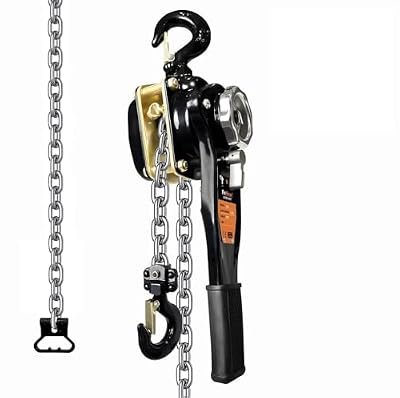
FITHOIST 1-Ton Chain Hoist
The FITHOIST 1-ton hoist uses 6mm G80 galvanized chain, suitable for harsh outdoor conditions and heavy loads.
Read the details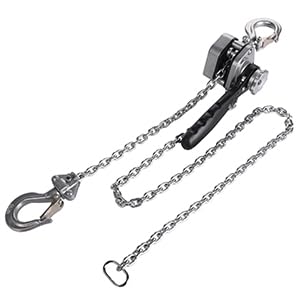
Amarite 1/2-Ton Mini Chain Come Along

The Amarite 1/2-ton hoist features an aluminum alloy body, reducing the tool's own weight for easier handling.
Read the detailsAll products, in detail
JET 1/4-Ton Mini-Puller Lever Hoist
This compact JET hoist is designed for low headroom and confined areas. It features a Weston-style double pawl brake that splits the load across the ratchet gear for security. The industrial-rated alloy steel hooks rotate 360 degrees, and the all-steel construction is impact-resistant. It is a suitable choice for lighter lifting tasks in tight spaces.
- 1/4-ton capacity with 10-foot lift
- Weston-style double pawl brake design

JET 3/4-Ton Lever Hoist
The JET 3/4-ton model includes a patented brake wear indicator to alert users when friction disks need replacement. It complies with ANSI/ASME B30.21 and HST-3 standards. Like its smaller sibling, it uses a double pawl brake and 360-degree rotating alloy steel hooks. This option is well-suited for mid-range industrial lifting where standard compliance is a priority.
- 3/4-ton capacity with 10-foot lift
- Complies with ANSI/ASME B30.21 and HST-3 standards

FITHOIST 1/4-Ton Mini Chain Hoist
This FITHOIST mini hoist features a single-step reduction gear for load holding and a non-slip rubber handle for ergonomic control. It uses G80 alloy steel chain and includes a storage bag for portability. The compact design is advantageous for installing machinery in narrow spaces without power supply.
It is a practical tool for short-distance hoisting of small equipment.
- 1/4-ton capacity with 10-foot lift
- Includes a handy storage bag
FITHOIST 1-Ton Chain Hoist
Built for heavy loads, this 1-ton FITHOIST hoist uses 6mm G80 galvanized manganese steel chain. It features bolt-on swivel hooks with nylon lock nuts for quick attachment and inspection. The double-pawl brake mechanism and high-efficiency bearing system provide stable performance. It is designed for both indoor and outdoor settings, including factories and construction sites.
- 1-ton capacity with 10-foot lift
- 6mm G80 galvanized manganese steel chain

JET 1/2-Ton Mini-Puller Lever Hoist
This JET 1/2-ton mini-puller offers a compact, lightweight body ideal for low headroom applications. It utilizes a Weston-style double pawl brake and needle bearings for smooth operation. The hooks are made of industrial-rated alloy steel and rotate 360 degrees. It provides a middle-ground capacity for users who need more power than the 1/4-ton model but less than the 3/4-ton.
- 1/2-ton capacity with 10-foot lift
- Needle bearing design for smooth operation
Amarite 1/2-Ton Mini Chain Come Along
The Amarite hoist features an aluminum alloy body, making it lightweight while holding up to 1100 lbs. It uses 800Mpa high-strength G80 chain and forging-type hooks to prevent overload. The design complies with CE safety standards. It is suitable for transport, construction, and dragging loads in workshops and garages.
- 1/2-ton capacity with 10-foot lift
- Aluminum alloy body material

VEVOR 1-Ton Manual Lever Chain Hoist
This VEVOR 1-ton hoist includes a three-position selector for lifting, neutral, and lowering modes. It features a 360-degree rotating ergonomic handle with a non-slip grip and a Weston dual pawl brake. The 6mm G80 alloy chain is galvanized for corrosion resistance. It is designed for heavy-duty tasks like dragging trees or lifting steel beams in warehouses.
- 1-ton capacity with 10-foot lift
- Three-position selector for lifting, neutral, and lowering

FITHOIST 3/4-Ton Lever Chain Hoist
This FITHOIST 3/4-ton hoist uses 5mm G80 galvanized manganese steel chain. It features bolt-on swivel hooks with nylon lock nuts for easy inspection and repair. The double pawl brake assembly ensures secure load engagement. It is designed for open-air and unpowered operations in factories, docks, and warehouses.
- 3/4-ton capacity with 10-foot lift
- 5mm G80 galvanized manganese steel chain
Head-to-Head Comparisons
JET 3/4-Ton vs FITHOIST 3/4-Ton: Compliance vs Chain Specs
Both the JET and FITHOIST 3/4-ton hoists offer 10-foot lift capabilities, but they differ in their documented features. The JET model explicitly states compliance with ANSI/ASME B30.21 and HST-3 standards and includes a patented brake wear indicator. The FITHOIST model highlights its 5mm G80 galvanized manganese steel chain and bolt-on swivel hooks with nylon lock nuts for easy inspection.
If standard compliance is a priority for your site, the JET is the documented choice. If you prefer the specific chain diameter and bolt-on hook design for maintenance, the FITHOIST is a strong alternative.
FITHOIST 1-Ton vs VEVOR 1-Ton: Handle and Brake Features
These two 1-ton hoists both use 6mm G80 chain and double-pawl brakes, but they offer different operational controls. The VEVOR model includes a three-position selector that switches between lifting, neutral, and lowering modes, along with a 360-degree rotating ergonomic handle. The FITHOIST model emphasizes its bolt-on swivel hooks with nylon lock nuts for quick attachment and detachment.
The VEVOR may appeal to users who want distinct mode selection, while the FITHOIST focuses on the ease of hook maintenance and quick swivel positioning.
JET 1/2-Ton vs Amarite 1/2-Ton: Steel vs Aluminum Body
For 1/2-ton lifting, the JET and Amarite hoists take different approaches to body construction. The JET features an impact-resistant all-steel construction, which is durable for industrial environments. The Amarite uses an aluminum alloy body, which is lighter and holds more than 100 times its own weight.
The Amarite also notes compliance with CE safety standards. If you need a lighter tool for frequent carrying, the Amarite's aluminum body is a distinct advantage. If you prioritize all-steel durability for impact resistance, the JET is the better fit.
Buying Guide
Matching Capacity to Load Weight
Always select a hoist with a capacity rating higher than your heaviest load. The options here range from 1/4-ton (550 lbs) to 1-ton (2200 lbs). For light garage tasks, a 1/4-ton or 1/2-ton hoist is sufficient. For heavy machinery or steel beams, a 1-ton model is required.
Check the specific load weight before purchasing to ensure the hoist's rated capacity covers your needs with a safety margin.
Understanding Chain Materials and Diameter
Chain quality affects durability and corrosion resistance. Most listed hoists use G80 grade chain, which is high-strength. Some models specify the diameter, such as 5mm or 6mm, and mention galvanization or zinc plating for outdoor use. If you work in wet or harsh environments, look for galvanized chain.
For indoor use, standard G80 chain is typically adequate. Consider the environment when choosing between plain and galvanized options.
Brake Mechanisms and Safety Indicators
The brake system holds the load when the lever is released. A double-pawl brake, found in many of these models, splits the load across the ratchet gear for security. Some JET models include a brake wear indicator to alert you when friction disks need replacement.
This feature adds a layer of safety by prompting maintenance before failure. Look for models with clear brake designs and wear indicators if you are using the hoist in a high-stakes industrial setting.
Hook Design and Rigging Ease
Hooks that rotate 360 degrees make rigging easier by allowing you to position the hoist without twisting the chain. Some models use bolt-on hooks with nylon lock nuts, which allow for quick disassembly for inspection. Others use forging-type hooks designed to prevent overload. If you frequently change attachment points, swivel hooks are beneficial.
If you need to inspect the hook block regularly, bolt-on designs offer easier access.
Frequently Asked Questions
What is the difference between a lever hoist and a chain hoist?
In this context, the terms are often used interchangeably. Lever hoists use a manual lever to drive a ratchet mechanism that pulls a chain. They are also known as come-alongs. The key feature is the manual operation, which allows for precise control in tight spaces without power.
Can I use a lever hoist for pulling as well as lifting?
Yes, lever hoists are versatile tools that can be used for both lifting and pulling. They are often used to drag heavy objects, such as fallen trees or machinery, across the ground. The chain and hook design allows for tension in multiple directions, making them suitable for dragging loads in construction or transport.
How do I know when to replace the chain?
Inspect the chain regularly for signs of wear, such as stretching, kinking, or corrosion. If the chain shows significant deformation or if the links are worn down, it should be replaced. Some hooks are designed to stretch slightly to indicate overload, which is a safety feature to alert you to stop using the tool.
Are these hoists suitable for outdoor use?
Many of the listed hoists are designed for outdoor use, particularly those with galvanized or zinc-plated G80 chain. This coating provides protection against corrosion in harsh conditions. If you plan to use the hoist frequently outdoors, choose a model with a galvanized chain and a durable body construction to ensure longevity.
This article is part of our complete guide Tools & Home Improvement — browse all our comparisons and buying guides.
Last update on 2026-11-18 / Affiliate links / Images from Amazon Product Advertising API