
Selecting the right tee fitting depends on the material of your fluid lines, the required port size, and the environmental conditions of your system. Luer lock adapters and barbed tees serve different purposes, with the former often used for precise, low-volume connections and the latter for larger hose assemblies.
This comparison examines four distinct options, ranging from small-diameter brass and stainless steel fittings to larger plastic tees. Each product addresses specific needs, from chemical resistance in laboratory settings to high-temperature durability in industrial manufacturing. Reviewing these documented features will help you match the fitting to your specific application requirements.
Our pick: PP T-Shape Female Luer Lock Adapter. The polypropylene construction and luer lock design suit applications requiring resistance to acids and solvents.
Our 3 picks for different needs
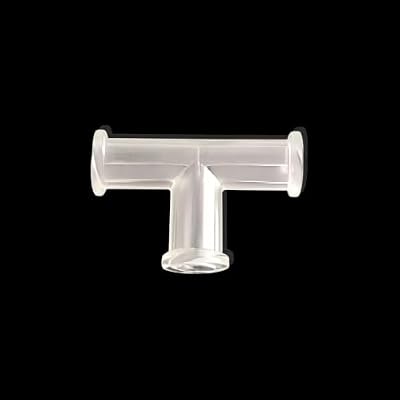
PP T-Shape Female Luer Lock Adapter
The polypropylene construction and luer lock design suit applications requiring resistance to acids and solvents.
Read the details
Beduan 1/4" Stainless Steel 3-Way Tee
304 stainless steel provides durability and corrosion resistance for high-temperature industrial systems.
Read the details
Metaland 1" Plastic Hose Barb Tee
The 1-inch size and 150 psi rating fit larger hose systems for water or oil transfer.
Read the detailsAll products, in detail
PP T-Shape Female Luer Lock Adapter
This polypropylene adapter features a T-shape with female luer lock threads on all ends. It is designed for multi-channel fluid distribution, offering resistance to acids, alkalis, and organic solvents. The precision molding ensures a burr-free interior for balanced flow. This option suits buyers needing to split or mix fluids in laboratory or medical settings where chemical compatibility is a priority.
The luer lock mechanism provides a secure connection for syringes and male luer ports.
- Constructed from premium-grade polypropylene with chemical resistance to acids and solvents.
- Features female luer lock threads on all ends for secure multi-port connections.
Beduan 1/4" Stainless Steel 3-Way Tee
Made from 304 stainless steel, this 1/4-inch barbed tee is built for durability and corrosion resistance at high temperatures. It connects to hose on all three ends, creating a tight seal when used with a hose clamp or crimp sleeve. The low magnetic permeability makes it suitable for specific industrial applications.
This fitting is ideal for systems involving air compressors, brewing, or manufacturing where metal construction is required. It is sold in a pack of two.
- Fabricated from 304 stainless steel with corrosion resistance and low magnetic permeability.
- 1/4-inch barbed size suitable for flexible and semi-rigid hoses with clamps.

Vis 3/16" Brass Hose Barb Tee
This brass tee fitting features 3/16-inch barbs on all three ports, designed to connect hoses in a T-configuration. The listing notes that customized orders, including OEM services, are available for this product. It is sold in a pack of five, making it suitable for projects requiring multiple small-diameter connections.
The brass material provides a standard industrial solution for fluid or gas transfer. Buyers should verify specific pressure ratings and compatibility with their hose materials before installation.
- 3/16-inch barbed tee sold in a pack of five.
- Brass construction with availability for customized OEM orders.
Metaland 1" Plastic Hose Barb Tee
This 1-inch barbed tee is made from 100% PP polypropylene plastic, described as lead-free and safe for potable drinking water. It is suitable for 1-inch ID hoses or tubing and can handle temperatures from -120 to +280 degrees Fahrenheit. The maximum working pressure is listed at 150 psi.
This fitting is appropriate for ozone, water, or oil systems where plastic construction is preferred over metal. It is sold in a pack of three, offering a bulk option for larger installations.
- 1-inch barbed size made from lead-free PP polypropylene plastic.
- Rated for temperatures up to 280°F and a maximum working pressure of 150 psi.
Head-to-Head Comparisons
PP Luer Lock vs Stainless Steel Barb
The PP T-Shape Female Luer Lock Adapter and the Beduan Stainless Steel Tee serve different connection types. The PP adapter uses luer lock threads, which are standard for syringes and medical devices, and offers specific resistance to acids and organic solvents. In contrast, the Beduan fitting uses 1/4-inch barbs, which require a hose clamp to secure the connection.
The stainless steel version is noted for high-temperature resistance and low magnetic permeability, with applications including aircraft controls and aviation. Choose the PP adapter for chemical compatibility in fluid distribution and the steel tee for robust, high-heat hose connections.
Stainless Steel vs Brass Barbed Tees
Both the Beduan and Vis tees are barbed fittings, but they differ in material and size. The Beduan model is made of 304 stainless steel and features 1/4-inch barbs, offering corrosion resistance and low magnetic permeability. The Vis model is made of brass with 3/16-inch barbs, which is a smaller diameter suitable for finer lines.
The Vis listing also mentions the availability of customized OEM orders. If your system requires non-magnetic properties or higher temperature tolerance, the stainless steel option is the documented choice. For smaller diameter applications where brass is acceptable, the Vis tee is a compact alternative.
Small Brass vs Large Plastic Tee
The Vis 3/16-inch brass tee and the Metaland 1-inch plastic tee represent opposite ends of the size spectrum. The Vis fitting is compact and made of brass, suitable for small-scale connections where metal is preferred. The Metaland fitting is significantly larger at 1 inch and made of lead-free PP polypropylene.
It is rated for a maximum working pressure of 150 psi and temperatures up to 280°F. The plastic material is described as safe for potable drinking water. Select the brass tee for small, precise lines and the plastic tee for larger, high-capacity fluid transfer.
Buying Guide
Material Compatibility
The material of the fitting must be compatible with the fluid it carries. Polypropylene, as seen in the PP Luer Lock and Metaland tees, offers resistance to many chemicals and is lead-free. Stainless steel, like the Beduan tee, provides durability and corrosion resistance but may not be suitable for all aggressive solvents.
Brass, found in the Vis tee, is a standard industrial material but can react with certain fluids. Always verify that the fitting material will not degrade or contaminate the fluid in your specific system.
Connection Type and Size
Determine whether your system uses luer locks or barbed hose connections. Luer locks provide a secure, threaded connection often used in medical and lab settings, while barbed tees require a hose clamp to prevent leaks. Size is critical; a 3/16-inch barb will not fit a 1/4-inch hose.
Check the inner diameter of your tubing and match it to the barb size or luer standard. Mismatched sizes will result in leaks or inability to connect the fitting to your existing lines.
Pressure and Temperature Ratings
Industrial systems often operate under specific pressure and temperature conditions. The Metaland plastic tee is documented with a maximum working pressure of 150 psi and a temperature range up to 280°F. The stainless steel Beduan tee is noted for corrosion resistance at high temperatures, though specific pressure limits are not detailed in the provided data.
Ensure the fitting's rated limits exceed your system's operating parameters to prevent failure. For systems with unknown or variable pressures, choose a material with a known safety margin.
Related Industrial Fittings
When building a complete fluid system, you may need other components beyond tees. Exploring industrial tube fittings can help you find compatible connectors for different line types. Similarly, reviewing industrial pipe fittings ensures that your main lines are properly sized and connected. These related components often work in tandem with tee fittings to create a robust distribution network.
Consider the entire assembly when selecting your primary tee to ensure all parts are compatible and meet your system's requirements.
Frequently Asked Questions
What is the difference between a luer lock and a barbed tee?
A luer lock tee uses threaded ports to secure connections, common in medical and lab applications. A barbed tee uses ridged ports that grip flexible hoses, requiring a clamp for a seal. Luer locks are for precise, low-volume lines, while barbs are for larger hose assemblies.
Can I use a plastic tee for high-pressure systems?
It depends on the specific rating. The Metaland plastic tee is rated for 150 psi. Always check the manufacturer's specifications for your specific fitting. Plastic can be suitable for high pressure if rated for it, but metal is often preferred for extreme conditions.
Do barbed fittings require a hose clamp?
Yes, barbed fittings typically require a hose clamp, crimp sleeve, or ferrule to create a tight seal on flexible or semi-rigid hoses. The barb alone may not be sufficient to prevent leaks under pressure, so a securing mechanism is necessary.
Is stainless steel magnetic?
The Beduan 304 stainless steel tee is described as having low magnetic permeability. This property can be important in certain industrial applications where magnetic interference must be minimized. Standard stainless steel is generally non-magnetic or weakly magnetic.
This article is part of our complete guide Industrial & Scientific — browse all our comparisons and buying guides.
Last update on 2026-11-26 / Affiliate links / Images from Amazon Product Advertising API