
Selecting the right mesh and wire cloth depends on whether you need a durable outdoor barrier, a fine industrial filter, or a reusable kitchen cleaning tool. These products vary significantly in material, aperture size, and intended application, so matching the specification to your task is essential for success.
This comparison covers eight distinct options, from galvanized hardware cloth for animal fencing to fine stainless steel screens for filtration. We examine the documented features of each product to help you identify the best fit for your specific project, whether it involves protecting a garden, excluding pests, or maintaining clean cookware.
Our 3 picks for different needs

Pterying 1/2 inch x 48 inch Hardware Cloth
The 100-foot roll length and 19-gauge wire provide a durable barrier for large poultry enclosures or garden perimeters.
Read the details
5 inch x 30 ft Stainless Steel Rodent Mesh
The 5-inch width and flexible 304 stainless steel construction make it ideal for stuffing into small gaps to exclude mice.
Read the details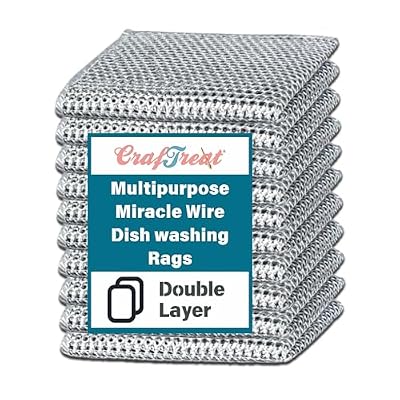
CrafTreat 10-Pack Double Layer Wire Dishcloths
The double-layer silver mesh offers a robust scrubbing surface for burnt-on food on pots and pans without scratching.
Read the detailsAll products, in detail

Wangjinpeng 12PK 3-Layer Wire Dishcloths
This 12-pack of 7.87-inch cloths features a triple-layer mesh design intended to lift grease and stuck-on residue from cookware and sinks. The open construction allows for quick rinsing and drying, making it suitable for wet or dry use on counters and grills. It is a practical choice for busy households or food-service areas that need a rotation of reusable scrubbing cloths.
- Triple-layer mesh design for lifting grease and residue
- 12-pack of 7.87 x 7.87 inch cloths

1/2 inch Galvanized Hardware Cloth Roll
This 16-inch by 6-foot roll of welded wire mesh is made from low-carbon steel with a hot-dip galvanization process for rust resistance. The 1/2-inch aperture is designed to block rodents and protect poultry or garden plants. It is a free-cutting material that can be spliced for larger coverage areas, making it useful for outdoor fencing and soil sifting.
- 1/2 inch aperture with hot-dip galvanization
- 16 inch x 6 foot roll size

304 Stainless Steel 20 Mesh Screen
This 15.7-inch by 59-inch sheet of 304 stainless steel mesh features a 1mm hole size and 0.3mm wire diameter. The material is resistant to high temperatures and acid or alkali corrosion, making it suitable for filtration, ventilation, and fireplace applications. The sheet is easy to cut into various shapes, though users should handle the edges with care.
- 1mm aperture with 0.3mm wire diameter
- 304 stainless steel material

XANGNIER 8-Piece Non-Scratch Wire Dishcloths
This 8-pack of 7.8-inch cloths combines wire structure with fiber material to remove stains without scratching surfaces. The design is highly absorbent and easy to rinse, allowing for reuse on dishes, sinks, and even fruits. It is a versatile option for kitchen cleaning that aims to replace disposable wipes and traditional steel wool balls.
- 8-pack of 7.8 x 7.8 inch cloths
- Wire and fiber material for non-scratch cleaning
5 inch x 30 ft Stainless Steel Rodent Mesh
This 5-inch by 30-foot roll of 304 stainless steel mesh is designed as a flexible barrier for rodent exclusion. The double-layer knitted construction is intended to prevent mice and gophers from entering holes in gardens or houses. It is a durable alternative to steel wool for filling gaps, offering rust resistance and ease of installation for DIY projects.
- 5 inch x 30 foot roll of 304 stainless steel
- Double-layer knitted design for rodent exclusion
Pterying 1/2 inch x 48 inch Hardware Cloth
This 48-inch by 100-foot roll of 19-gauge hardware cloth features post-weld hot-dip galvanization for long-term outdoor durability. The 1/2-inch openings are suitable for securing chicken coops, rabbit hutches, and garden trees against predators and gnawing animals. It is a heavy-duty fencing option that can be cut with scissors or pliers for custom installations.
- 48 inch x 100 foot roll of 19-gauge wire
- Post-weld hot-dip galvanization for rust resistance
CrafTreat 10-Pack Double Layer Wire Dishcloths
This 10-pack of silver mesh cloths is designed for heavy-duty cleaning of pots, pans, and sinks without scratching. The double-layer wire mesh provides a powerful scrubbing action for grease and burnt food while remaining washable and reusable. It is a multipurpose tool for both wet and dry cleaning on stainless steel and non-stick cookware.
- 10-pack of double-layer silver mesh cloths
- Designed for non-scratch cleaning of cookware

NSKONGDODO 120 Mesh Stainless Steel Screen
This 12-inch by 40-inch sheet of 304 stainless steel mesh features a fine 0.13mm aperture and 0.09mm wire diameter. The high mesh count makes it suitable for fine filtration and ventilation applications where small particles need to be isolated. The material is strong and resistant to corrosion, with smooth edges that allow for easy cutting and installation.
- 120 mesh count with 0.13mm aperture
- 12 inch x 40 inch sheet size
Head-to-Head Comparisons
Short Roll vs Long Roll Hardware Cloth
When choosing between the 16-inch by 6-foot roll and the 48-inch by 100-foot roll, the primary difference is scale and material weight. The shorter roll is made from low-carbon steel with a 1/2-inch aperture, making it suitable for smaller projects like tree guards or small animal hutches.
The longer roll uses 19-gauge wire with the same 1/2-inch opening, providing a heavier, more robust option for large-scale poultry fencing or extensive garden protection. If you are covering a large area, the 100-foot roll reduces the need for splicing, while the 6-foot roll is easier to handle for small, precise cuts.
Coarse vs Fine Stainless Steel Mesh
These two stainless steel sheets serve very different filtration and ventilation needs. The 20-mesh screen has a 1mm aperture and 0.3mm wire diameter, making it suitable for general drainage, fireplace protection, or coarse liquid filtration. In contrast, the 120-mesh screen features a 0.13mm aperture and 0.09mm wire diameter, which is designed for isolating very small particles or fine dust.
If your application requires blocking tiny debris, the 120-mesh option is the appropriate choice, whereas the 20-mesh screen is better for air circulation or larger particle separation.
Triple-Layer vs Fiber-Blended Dishcloths
Both the Wangjinpeng and XANGNIER cloths are designed for non-scratch kitchen cleaning, but they differ in construction and pack size. The Wangjinpeng cloths use a triple-layer mesh design that focuses on lifting grease and stuck-on messes, available in a 12-pack. The XANGNIER cloths combine wire with fiber material to absorb moisture and grease, available in an 8-pack.
The Wangjinpeng option may appeal to those who want a thicker, more robust scrubbing surface, while the XANGNIER option offers a blend of scrubbing and absorption. Both are reusable and easy to rinse, but the specific layering and material blend determine the feel and cleaning style.
Buying Guide
Material Selection for Environment
The material of the mesh determines its durability in specific environments. Galvanized steel, such as the hardware cloth options, is treated with a zinc coating to resist rust, making it ideal for outdoor use in gardens or animal enclosures. Stainless steel, particularly 304 grade, offers inherent corrosion resistance and is better suited for indoor applications, high-temperature environments like fireplaces, or chemical exposure.
Choose galvanized for outdoor weather resistance and stainless steel for indoor or high-heat applications.
Aperture Size and Function
The size of the holes, or aperture, dictates what the mesh can block or filter. A 1/2-inch aperture is standard for hardware cloth used to exclude rodents and protect poultry. For filtration, the mesh count is more important; a 20-mesh screen has larger holes than a 120-mesh screen.
If you are filtering fine liquids or dust, you need a higher mesh count with a smaller aperture. For physical barriers, ensure the aperture is smaller than the head or body of the animal or object you are trying to exclude.
Roll Length and Sheet Size
Consider the total area you need to cover when selecting a roll or sheet. A 6-foot roll is manageable for small projects but may require splicing for larger areas. A 100-foot roll is more efficient for long fences or large enclosures, reducing the number of seams.
Sheets, such as the 15.7-inch by 59-inch or 12-inch by 40-inch options, are better for specific, smaller applications like filter inserts or small ventilation covers. Match the physical dimensions to your project to minimize waste and installation time.
Cleaning vs Structural Use
Wire cloths for cleaning are designed to be flexible and reusable, often featuring multiple layers or fiber blends to scrub without scratching. These are not intended for structural support. Hardware cloth and welded wire mesh are designed for rigidity and load-bearing, making them suitable for fencing and cages.
Do not use cleaning cloths for structural purposes, and do not use rigid hardware cloth for delicate kitchen cleaning, as it may damage surfaces or be difficult to handle.
Frequently Asked Questions
Can I cut these mesh products with standard tools?
Most of the listed products are designed to be cut with standard tools. Hardware cloth can typically be cut with scissors or pliers, while stainless steel sheets can be cut with scissors. Always wear gloves when handling cut edges, as they can be sharp and may cause scratches.
What is the difference between woven and welded mesh?
Woven mesh, like the stainless steel screens, is created by interlacing wires, which allows for very fine apertures and flexibility. Welded mesh, like the hardware cloth, is created by welding wires at intersections, providing a rigid structure suitable for fencing and heavy-duty barriers.
Are the wire dishcloths safe for non-stick cookware?
The CrafTreat and XANGNIER cloths are specifically marketed as non-scratch options for non-stick cookware and stainless steel. The Wangjinpeng cloths are also described as non-scratch. However, always check the manufacturer's recommendations for your specific cookware to ensure compatibility.
How do I maintain galvanized hardware cloth?
Galvanized hardware cloth is designed to resist rust through a zinc coating. To maintain it, keep it clean and dry when possible. If the coating is damaged, rust may form over time. For long-term outdoor use, ensure the galvanization is intact and consider storing it in a dry place if not in use.
This article is part of our complete guide Industrial & Scientific — browse all our comparisons and buying guides.
Last update on 2026-11-23 / Affiliate links / Images from Amazon Product Advertising API