
Choosing the right microphone element depends on your specific application, whether you are repairing a consumer device, building a DIY audio project, or replacing a part in a professional system. The options range from small analog electret condensers to digital MEMS modules and specialized lavalier mics.
Each product in this comparison serves a distinct purpose. Some are designed for through-hole PCB installation, while others feature specific connectors for wireless transmitters. Understanding the physical dimensions, interface type, and compatibility requirements is essential for selecting the correct component for your needs.
Our pick: Shure Compatible Lavalier Pair. This lavalier pair is specifically designed for Shure transmitters, making it the direct choice for users needing to replace existing wireless mic elements.
Our 3 picks for different needs

Shure Compatible Lavalier Pair
This lavalier pair is specifically designed for Shure transmitters, making it the direct choice for users needing to replace existing wireless mic elements.
Read the details
EC Buying INMP441 MEMS Module
The INMP441 module provides a digital output via I2S, which is ideal for connecting directly to microcontrollers like the ESP32 without analog codecs.
Read the details
uxcell 6×3.5mm Electret Mic 10-Pack
The 10-pack of 6mm electret mics offers a standard size and quantity for technicians or hobbyists needing multiple analog replacements for general devices.
Read the detailsAll products, in detail
Shure Compatible Lavalier Pair
This pair of lavalier microphones features a back electret condenser element with an omnidirectional polar pattern. It is designed specifically for Shure wireless transmitters, including the L1, LX1, and ULX1 series. The 47-inch cable includes windscreens and a detachable tie-clip for secure mounting. This option suits users who need a direct replacement for Shure wireless systems and require broadcast-quality audio from a compact form factor.
- Features a 4-pin mini XLR TA4F plug connector
- Compatible with Shure transmitters L1, LX1, SC1, U1, UC1, UT1, T1, ULX1, UR1, and PGX
uxcell 6×3.5mm Electret Mic 10-Pack
These small electret condenser microphones measure 6mm in diameter and 3.5mm in height. They come with 2-wire cables and 3.5mm jack connectors, making them suitable for general use in telephones, MP3 players, and laptops. The package includes ten units, providing a bulk supply for hobbyists or repair technicians.
Their high sensitivity and low noise profile support stereo recording applications in compact devices.
- Dimensions are 6mm diameter by 3.5mm height
- Includes 10 microphones with 40mm wire length
EC Buying INMP441 MEMS Module
The INMP441 is a digital output MEMS microphone module that connects directly to processors via a 24-bit I2S interface. It eliminates the need for separate audio codecs by integrating signal conditioning and analog-to-digital conversion. With a signal-to-noise ratio of 61dBA and a flat broadband frequency response, it is well-suited for near-field applications and ESP32 projects.
This module is ideal for developers building digital audio systems.
- Uses a 24-bit I2S interface for digital output
- Features a signal-to-noise ratio of 61dBA
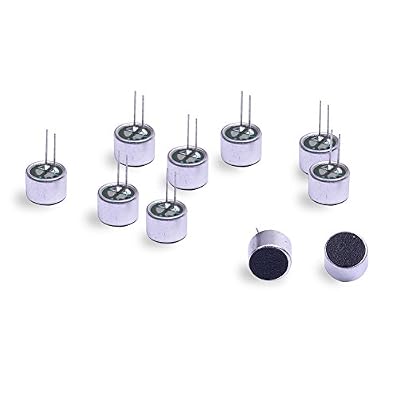
Cylewet 9x7mm Electret Mic 10-Pack
These cylindrical electret condenser microphones measure 9mm in diameter and 7mm in length. They feature two pins for through-hole installation and are compatible with Arduino projects. The sensitivity range is listed between -48 and -66dB, with a frequency response from 50Hz to 20kHz. The pack of ten allows for multiple builds or replacements.
This size is slightly larger than standard 6mm mics, offering a different physical footprint for PCB design.
- Dimensions are 9mm diameter by 7mm length
- Frequency range spans 50Hz to 20kHz

uxcell 10x7mm Electret Mic 8-Pack

This pack contains eight cylindrical electret condenser microphones measuring 10mm in diameter and 7mm in height. They are designed for through-hole PCB installation with 9mm pin length. The microphones offer high sensitivity and low noise, making them suitable for DIY audio projects and professional equipment.
The 85dB sensitivity specification indicates a strong output signal. This option is useful for builders needing a slightly larger element than the standard 6mm size.
- Dimensions are 10mm diameter by 7mm height
- Sensitivity is specified at 85dB

TEAMWILL Shure SM58 Capsule 2-Pack
These are replacement capsule cartridges designed specifically for the Shure SM58 dynamic microphone. The package includes two capsules, allowing for immediate replacement or spare storage. They are not compatible with other microphone models. This product is intended for users who have a Shure SM58 and need to restore its audio performance.
It is a consumable part rather than a standalone microphone element for general electronics.
- Compatible only with Shure SM58 microphones
- Package includes 2 replacement capsule cartridges

E-outstanding 6027 Electret Mic 10-Pack
The 6027 model is a small electret condenser microphone measuring 4mm in diameter and 1.5mm in height. It features dual-track stereo audio and a sensitivity range of -40 to -3dB. The 60mm cable length and 1.25mm terminal spacing make it suitable for compact devices like phones and walkie-talkies.
The pack of ten provides a bulk supply for manufacturing or repair. Its small size allows for integration into very tight spaces.
- Dimensions are 4mm diameter by 1.5mm height
- Features dual-track stereo audio capability

Dahszhi 6×3.5mm Electret Mic 5-Pack
These electret condenser microphones measure 6mm in diameter and 3.5mm in height, matching the size of many standard components. They are back electret type sensors that convert sound into electrical signals. The package includes five units with 45mm wire length. They are widely applied in telephones, laptops, and digital cameras.
This smaller pack size is suitable for individual repair jobs or small-scale hobby projects.
- Dimensions are 6mm diameter by 3.5mm height
- Package includes 5 microphones with 45mm wire length
Head-to-Head Comparisons
uxcell 10-Pack vs Dahszhi 5-Pack: Quantity and Wire Length
Both the uxcell and Dahszhi microphones share the same 6mm by 3.5mm physical dimensions, making them physically interchangeable in many standard applications. The primary difference lies in the package quantity and wire length. The uxcell pack includes ten units with 40mm wires, while the Dahszhi pack contains five units with 45mm wires.
If you need a larger supply for multiple repairs or a production run, the uxcell option provides more units. If you prefer slightly longer leads for easier soldering or routing, the Dahszhi version offers that advantage. Both are back electret type sensors suitable for general use in phones and laptops.
Cylewet 9mm vs uxcell 10mm: Size and Sensitivity
These two options offer larger cylindrical elements than the standard 6mm size. The Cylewet microphones measure 9mm in diameter and 7mm in length, with a sensitivity range of -48 to -66dB. The uxcell microphones are slightly larger at 10mm diameter and 7mm height, with a specified sensitivity of 85dB.
The uxcell model also features 9mm pin length for through-hole installation. The difference in diameter is minor, but the sensitivity specifications vary significantly in how they are presented. Choose the Cylewet option if you need a 9mm footprint, or the uxcell option if you require the 10mm size and the specific 85dB sensitivity rating.
INMP441 Digital vs 6027 Analog: Interface Type
The EC Buying INMP441 and the E-outstanding 6027 represent two different approaches to microphone integration. The INMP441 is a digital MEMS microphone that outputs data via a 24-bit I2S interface, allowing direct connection to digital processors. The 6027 is a small analog electret condenser microphone that outputs an electrical signal via 2-wire leads.
The INMP441 is better suited for projects using microcontrollers that can handle digital audio streams, while the 6027 is appropriate for analog circuits or devices that require a simple voltage signal. The 6027 is also physically smaller at 4mm diameter compared to the module form factor of the INMP441.
Buying Guide
Check Physical Dimensions
Microphone elements come in various sizes, and physical compatibility is critical. Standard electret mics are often 6mm in diameter, but options range from 4mm to 10mm. Measure your existing component or check your PCB design before purchasing. The height and pin spacing also matter for through-hole installations.
Ensure the new element fits within the enclosure and aligns with the mounting holes or pads on your circuit board.
Identify the Interface Type
Determine whether your project requires an analog or digital signal. Electret condenser microphones typically output an analog voltage signal, while MEMS modules like the INMP441 provide digital output via I2S. Analog mics are simpler to integrate into basic circuits, while digital mics offer higher precision and easier connection to modern microcontrollers.
Check the interface requirements of your target device or processor to ensure compatibility.
Verify Connector Compatibility
For lavalier microphones, the connector type is a key factor. The Shure-compatible pair uses a 4-pin mini XLR TA4F plug, which is specific to certain Shure transmitters. If you are using a different wireless system, this connector will not fit. Always verify the connector type and pinout against your transmitter model.
For PCB-based mics, check the pin count and spacing to ensure they match your board design.
Consider Sensitivity and Noise
Sensitivity indicates how strongly a microphone responds to sound. Higher sensitivity can be beneficial for quiet environments but may also pick up more background noise. Check the specified sensitivity in dB and the signal-to-noise ratio if available. For near-field applications, a higher signal-to-noise ratio is generally preferred.
Ensure the sensitivity level matches the requirements of your audio application, whether for voice recording or general ambient sound capture.
Frequently Asked Questions
Can I use a 6mm mic in a 10mm slot?
No, physical dimensions must match. A 6mm microphone will not fit securely in a 10mm mounting hole or enclosure. You must select a microphone element that matches the physical size of your device or PCB design to ensure proper installation and acoustic performance.
What is the difference between analog and digital mics?
Analog electret mics output a voltage signal that requires amplification and conversion. Digital MEMS mics like the INMP441 output data via I2S, connecting directly to processors. Digital mics are often preferred for modern microcontroller projects due to their ease of integration and higher precision.
Are these mics compatible with Shure wireless systems?
Only the lavalier pair with the 4-pin mini XLR TA4F plug is compatible with specific Shure transmitters like the L1 and ULX1. The other electret and MEMS microphones are standalone components for PCBs and are not compatible with Shure wireless transmitters.
How many mics do I need for a stereo setup?
For a stereo setup, you typically need two microphone elements. Some products, like the E-outstanding 6027, are listed as dual-track stereo, which may imply a stereo configuration in a single package. Check the specific product details to see if it provides a single element or a stereo pair.
This article is part of our complete guide Electronics — browse all our comparisons and buying guides.
Last update on 2026-11-18 / Affiliate links / Images from Amazon Product Advertising API