
Choosing the right topographic map depends on your specific destination and how you plan to use the map in the field. Some maps are designed for detailed trail navigation, while others provide broader regional overviews or focus on specific wilderness areas. The scale, durability, and format of the map will influence how useful it is for your trip.
This comparison looks at eight different options, ranging from compact pocket maps to large-format state guides. We examine the documented features of each, such as scale, contour intervals, and physical dimensions, to help you select the tool that fits your outdoor recreation needs.
Our 3 picks for different needs

Flat Tops Wilderness Hiking Map
The Flat Tops Wilderness map folds to 4 by 7 inches, making it ideal for hikers who need a compact, tear-resistant map for on-trail use.
Read the details
Superstition Wilderness Topographic Map
The Superstition Wilderness map is made of waterproof plastic, offering durability for hikers in the Arizona wilderness.
Read the details
John Muir Trail Topographic Map Guide
The John Muir Trail guide provides topographic details specific to that famous route, researched with local land management agencies.
Read the detailsAll products, in detail

Wind River Range Topographic Map
This map focuses on the Wind River Range, providing a shaded relief view of the terrain. It is designed for outdoor recreation in this specific Wyoming region. The shaded relief helps visualize elevation changes and landforms, which is useful for route planning in mountainous areas.
Buyers interested in the Wind River Range will find this a dedicated resource for exploring the area's topography.
- Covers the Wind River Range
- Features shaded relief
Superstition Wilderness Topographic Map
Beartooth Publishing offers this waterproof plastic map of the Superstition Wilderness, which also covers the Four Peaks Wilderness. It uses a 1:45,000 scale with a 50-foot contour interval, providing detailed elevation data. The map unfolds to 25.2 by 39.2 inches, offering a large format for detailed study.
This durable format is suitable for hikers who need a map that can withstand outdoor conditions in the Arizona wilderness.
- Waterproof plastic construction
- Scale of 1:45,000 with 50-foot contours
Flat Tops Wilderness Hiking Map
Outdoor Trail Maps presents a compact 2022 edition of the Flat Tops Wilderness in Colorado. This map is waterproof and tear-resistant, folding down to a pocket-sized 4 by 7 inches. It features a 1:60,000 scale and includes segment distances for all trails. GPS coordinates for trailheads and junctions are provided for device compatibility.
This design prioritizes portability for on-trail use, making it ideal for hikers who prefer a lightweight, easy-to-carry map.
- Folds to 4 x 7 inches
- Includes GPS coordinates for trailheads

Utah Recreation Map 2024
This 2024 edition map covers the state of Utah, highlighting parks, monuments, and natural wonders. It includes details on boating and fishing access, historic sites, museums, campgrounds, and RV parks. The map serves as a broad recreational guide for the state, useful for planning trips that involve multiple types of outdoor activities.
It is a good choice for travelers who want a single reference for various recreational opportunities across Utah.
- Covers parks, monuments, and historic sites
- Includes boating and fishing access points
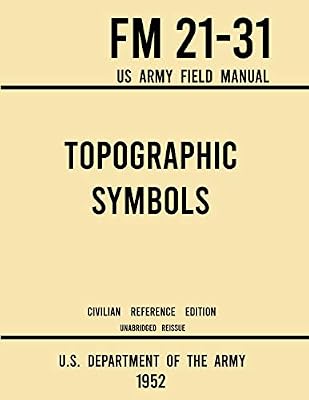
Topographic Symbols Field Manual

Doublebit Press publishes this unabridged handbook based on the US Army Field Manual FM 21-31. It details over 200 symbols used in map reading. This reference is useful for anyone looking to understand the technical symbols found on topographic maps. It serves as a civilian reference for military-style map reading skills.
Buyers who want to deepen their understanding of map symbology will find this a comprehensive educational tool.
- Based on US Army Field Manual FM 21-31
- Covers over 200 map symbols

Idaho Topographic Recreation Map
This map provides a topographic view of the state of Idaho. It unfolds to 27 by 39 inches and folds to 4-1/8 by 9-1/4 inches. The scale is 1 inch equals 12.5 miles, offering a regional overview rather than a detailed trail-level view. This format is suitable for planning broader trips across the state.
It is a practical choice for those who need a large-format map that can be stored compactly in a vehicle or pack.
- Unfolds to 27 x 39 inches
- Scale of 1 inch = 12.5 miles
John Muir Trail Topographic Map Guide
National Geographic provides this topographic map guide for the John Muir Trail. It is researched in partnership with local land management agencies. The guide is designed to help navigators traverse one of the most famous trails in the United States. It offers detailed topographic information specific to the trail route.
This is a specialized resource for thru-hikers or day hikers planning to use the John Muir Trail.
- Published by National Geographic
- Specific to the John Muir Trail

Wind River Range South Topographic Map
Beartooth Publishing offers this topographic shaded relief map of the Wind River Range South in Wyoming. It focuses on the southern portion of the range, providing detailed terrain visualization. The shaded relief feature helps users understand the landscape's elevation and shape. This map is a dedicated resource for exploring the southern Wind River Range.
It is suitable for hikers and outdoor enthusiasts targeting this specific region.
- Covers Wind River Range South, Wyoming
- Features shaded relief
Head-to-Head Comparisons
Superstition Wilderness vs Flat Tops Wilderness: Durability vs Portability
The Beartooth Publishing Superstition Wilderness map is constructed from waterproof plastic, emphasizing durability for rugged conditions. It unfolds to a large 25.2 by 39.2 inches, providing a detailed view of the terrain. In contrast, the Outdoor Trail Maps Flat Tops Wilderness map is designed for portability, folding down to a compact 4 by 7 inches.
While the Superstition map offers a larger format for detailed study, the Flat Tops map is lighter and easier to carry in a pocket. Choose the Superstition map if you prioritize a durable, large-format reference, or the Flat Tops map if you need a lightweight, pocket-sized tool for on-trail use.
Idaho Topographic Map vs Utah Recreation Map: Terrain vs Amenities
The Idaho topographic map focuses on terrain, using a scale of 1 inch equals 12.5 miles to show the state's physical landscape. It is a large-format map that unfolds to 27 by 39 inches. The Utah Recreation Map, however, emphasizes amenities and points of interest, such as parks, campgrounds, and fishing access.
While the Idaho map is better for understanding the physical terrain, the Utah map is more useful for planning logistics and finding services. If your primary need is navigating the landscape, the Idaho map is the better fit. If you are planning a trip that involves staying at campgrounds or visiting historic sites, the Utah map provides more relevant information.
John Muir Trail Guide vs Topographic Symbols Manual: Practical vs Educational
The National Geographic John Muir Trail guide is a practical tool for navigating a specific, famous trail. It provides topographic details tailored to the route, helping hikers plan their journey. The Doublebit Press Topographic Symbols manual, on the other hand, is an educational resource that explains over 200 map symbols.
It does not cover a specific trail but rather teaches the user how to read any topographic map. If you are preparing for a specific hike on the John Muir Trail, the guide is the essential companion. If you want to improve your general map-reading skills, the symbols manual is the better choice.
Buying Guide
Understanding Map Scale
The scale of a map determines how much detail it shows. A smaller scale, like 1:60,000, covers a larger area but with less detail. A larger scale, like 1:45,000, covers a smaller area but provides more precise information. For detailed trail navigation, a larger scale is often preferred.
For regional planning, a smaller scale is sufficient. Consider the size of the area you are exploring when choosing a scale.
Durability and Weather Resistance
Maps used in the field are exposed to the elements. Some maps are printed on waterproof paper, while others are made from plastic. Plastic maps are generally more durable and tear-resistant. If you expect wet conditions, a waterproof map is essential. Check the material of the map to ensure it can withstand the conditions you will encounter.
A durable map will last longer and remain legible in wet weather.
Folded Size and Portability
The folded size of a map affects how easily you can carry it. Some maps fold down to a pocket size, while others remain large even when folded. If you are hiking with a small pack, a compact map is preferable. If you are driving to your destination, a larger map may be easier to read.
Consider how you will transport the map and choose a size that fits your needs. A compact map is easier to access quickly on the trail.
Specific vs Regional Coverage
Some maps focus on a specific wilderness area or trail, while others cover an entire state. A specific map provides detailed information for that area, such as trail distances and GPS coordinates. A regional map provides a broader overview, useful for planning multiple trips. If you are planning a single trip to a specific location, a dedicated map is often more useful.
If you are exploring a large region, a state map may be more versatile. Choose based on the scope of your travel.
Frequently Asked Questions
What is the difference between a topographic map and a recreation map?
A topographic map focuses on the physical terrain, showing elevation and contour lines. A recreation map often includes additional information such as trails, campgrounds, and points of interest. Some maps combine both features, providing terrain data along with recreational amenities.
Are these maps suitable for GPS devices?
Some maps, like the Flat Tops Wilderness map, include GPS coordinates for trailheads and junctions. This makes them compatible with GPS devices. Other maps may not include specific GPS data. Check the product details to see if GPS coordinates are provided.
How do I choose the right scale for my trip?
Choose a scale based on the level of detail you need. A larger scale, such as 1:45,000, is better for detailed trail navigation. A smaller scale, such as 1:60,000, is better for covering larger areas. Consider the size of the area you are exploring and the precision you require.
Do these maps come with a case or pouch?
The provided data does not specify if any of these maps come with a case or pouch. Some maps are designed to fold into a compact size for easy storage. You may need to purchase a separate map case or pouch to protect the map.
This article is part of our complete guide Books & Media — browse all our comparisons and buying guides.
Last update on 2026-11-21 / Affiliate links / Images from Amazon Product Advertising API