
Selecting the right fuel line for your powersports equipment depends on the specific engine type, fuel compatibility, and routing requirements. Whether you are servicing a lawn mower, an ATV, or a generator, the material and dimensions of the hose play a critical role in system performance.
This comparison examines eight fuel line options, ranging from multi-size NBR kits to single-length silicone and TPU hoses. We look at inner and outer diameters, temperature ratings, and included hardware to help you identify the best fit for your maintenance needs.
Our pick: Tanbupu 5-Size NBR Fuel Line Kit. The Tanbupu kit includes five different hose diameters, making it ideal for buyers who need to service multiple engine types or are unsure of their exact size requirement.
Our 3 picks for different needs

Tanbupu 5-Size NBR Fuel Line Kit
The Tanbupu kit includes five different hose diameters, making it ideal for buyers who need to service multiple engine types or are unsure of their exact size requirement.
Read the details
YAMAKATO 10-Ft 1/4" Fuel Line
The YAMAKATO 10-foot hose provides ample length for complex routing in lawn mowers and generators, featuring a two-layer compound structure for durability.
Read the details
SSFOLPFEE TPU Fuel Line Kit
The SSFOLPFEE TPU kit offers three sizes in a flexible thermoplastic material, suitable for buyers seeking a durable alternative to traditional rubber or PVC hoses.
Read the detailsAll products, in detail
Tanbupu 5-Size NBR Fuel Line Kit
This Tanbupu kit provides five different inner diameters, ranging from 1/8 inch to 5/16 inch, each measuring 3.3 feet in length. The hoses are constructed from NBR nitrile butadiene rubber, which the seller notes offers oil and heat resistance. The package includes 50 hose clamps with matching inner diameters to secure the connections.
This multi-size bundle is ideal for buyers who need to service multiple small engines or are uncertain about their specific hose diameter requirement.
- Includes five hose sizes: 1/8", 3/16", 0.22", 1/4", and 5/16" ID
- Made of NBR nitrile butadiene rubber with 50 matching clamps

KVAEY Red Silicone Fuel Line
The KVAEY fuel line is a single 3.28-foot hose made from flexible silicone material. It features a 0.2-inch inner diameter and a 0.31-inch outer diameter. The seller highlights its anti-corrosion properties and resistance to high and low temperatures. This red-colored hose is designed for easy bending and storage, making it a suitable replacement for heat-damaged or aging gas hoses in small engines like chainsaws and blowers.
- 3.28 ft length with 0.2 inch ID and 0.31 inch OD
- Flexible silicone construction with anti-corrosion properties
YAMAKATO 10-Ft 1/4" Fuel Line
This YAMAKATO hose is a 10-foot, non-pressure fuel line with a 1/4-inch inner diameter and 7/16-inch outer diameter. It features a two-layer compound structure and is rated for temperatures from -22F to 338F. The kit includes 20 steel clamps with a 10mm inner diameter. It is designed for conveying gasoline, E-85, diesel, and bio-diesel in a wide range of small engines, including lawn mowers and generators.
- 10 ft length with 1/4 inch ID and 7/16 inch OD
- Two-layer compound structure rated for -22F to 338F

Tnisesm 10-Ft 1/4" Fuel Line
The Tnisesm fuel line is a 10-foot hose with a 1/4-inch inner diameter and 10.4mm outer diameter. It is oil, cold, and ethanol resistant, operating within a temperature range of -22F to 338F. The package includes 20 fuel hose clips to assist with installation. This hose is suitable for conveying various fuels in lawn mowers, tractors, and generators, offering a long length that can be cut to fit specific application needs.
- 10 ft length with 6.4mm ID and 10.4mm OD
- Includes 20 fuel hose clips for secure installation

Hipa 4-Size Tygon Fuel Line Kit
This Hipa kit contains four different sizes of Tygon fuel line tubing, each measuring 4 feet in length. The sizes range from .08 inch to 1/8 inch inner diameters, catering to smaller engine components like weedeaters and chainsaws. The seller describes the material as oil, gas, and corrosion resistant.
These lines are designed to be easily cut and bent to fit barbed connections, simplifying the repair process for small engine fuel systems.
- Four sizes: .08", 3/32", 1/8", and 1/8" ID
- 4 ft length per hose, made of Tygon material
SSFOLPFEE TPU Fuel Line Kit
The SSFOLPFEE kit offers three TPU fuel line sizes: 3mm, 5mm, and 6mm inner diameters. Each hose is 6.6 feet long and is crafted from thermoplastic polyurethane for flexibility and durability. The package includes 12 steel spring-type clamps to ensure secure connections. This kit is suitable for gas and diesel applications on 2-stroke and 4-stroke engines, providing a universal fit for outdoor power equipment repairs.
- Three TPU sizes: 3mm, 5mm, and 6mm ID
- 6.6 ft length per hose with 12 steel clamps included
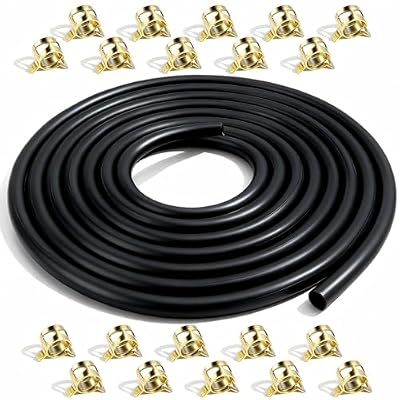
10-Ft 1/4" Rubber Fuel Line Kit
This 10-foot fuel line features a 1/4-inch inner diameter and a two-layer rubber construction. It is rated for temperatures from -22F to 338F and is resistant to oil, cold, and ethanol blends. The kit includes 20 stainless steel clamps with a 10mm inner diameter. It is a non-pressure line designed for small engines, generators, and powersports vehicles, offering a durable solution for fuel and vapor emission lines.
- 10 ft length with 1/4 inch ID and two-layer rubber
- Includes 20 stainless steel clamps with 10mm ID

10-Ft 1/4" Fuel Line with Clamps
This fuel line is a 10-foot hose with a 1/4-inch inner diameter and 7/16-inch outer diameter. It is engineered for reliable fuel transfer in lawnmowers, tractors, and off-road vehicles. The hose is heat and cold resistant, operating from -22F to 338F. The package includes 20 fuel hose clamps.
It is a non-pressurized line suitable for conveying gasoline, E-85, diesel, and biodiesel in various small engine applications.
- 10 ft length with 1/4 inch ID and 7/16 inch OD
- Heat and cold resistant from -22F to 338F
Head-to-Head Comparisons
Tanbupu vs Hipa: Multi-Size NBR vs Tygon Kits
Both the Tanbupu and Hipa kits offer multiple hose sizes in a single package, but they differ in material and size range. The Tanbupu kit uses NBR nitrile butadiene rubber and includes five sizes ranging from 1/8 inch to 5/16 inch inner diameter, with each hose measuring 3.3 feet.
The Hipa kit uses Tygon material and includes four sizes ranging from .08 inch to 1/8 inch inner diameter, with each hose measuring 4 feet. Buyers needing larger diameters for main fuel lines should consider the Tanbupu kit, while those servicing smaller components like weedeaters or chainsaws may find the Hipa kit's smaller range more appropriate.
YAMAKATO vs Tnisesm: 10-Foot 1/4" Rubber Lines
The YAMAKATO and Tnisesm products are both 10-foot, 1/4-inch inner diameter fuel lines designed for small engines. The YAMAKATO hose features a two-layer compound structure and includes 20 steel clamps with a 10mm inner diameter. The Tnisesm hose also includes 20 clamps and is rated for temperatures from -22F to 338F.
Both are suitable for conveying gasoline, diesel, and ethanol blends. The primary distinction lies in the specific clamp specifications and the seller's description of the hose construction, with YAMAKATO emphasizing its two-layer wrapping.
KVAEY vs SSFOLPFEE: Silicone vs TPU Materials
The KVAEY and SSFOLPFEE products utilize different synthetic materials for their hoses. The KVAEY line is made from flexible silicone and is sold as a single 3.28-foot hose with a 0.2-inch inner diameter. The SSFOLPFEE kit is made from thermoplastic polyurethane (TPU) and includes three different sizes, each 6.6 feet long.
The KVAEY option is a single-size replacement, while the SSFOLPFEE kit offers size variety. Buyers should choose based on their preference for silicone versus TPU material and whether they need a single specific size or a multi-size kit.
Buying Guide
Match Inner Diameter to Your Engine
The inner diameter (ID) of the fuel line must match the barbed fittings on your engine's carburetor or fuel pump. Common sizes for small engines include 1/8 inch, 3/16 inch, and 1/4 inch. If you are unsure of your required size, a multi-size kit like the Tanbupu or Hipa option allows you to test different diameters.
Always measure your existing hose or fitting to ensure a secure, leak-free connection.
Consider Material for Fuel Compatibility
Different hose materials offer varying levels of resistance to specific fuels. NBR nitrile butadiene rubber is known for oil and heat resistance, making it a common choice for gasoline applications. Silicone offers flexibility and temperature resistance, while TPU provides durability and resistance to cracking. Ensure the material is compatible with the fuel you use, such as ethanol blends or diesel, to prevent degradation over time.
Check Temperature Ratings for Your Climate
Fuel lines are exposed to varying temperatures, from cold winters to hot engine bays. Many of the listed rubber and TPU hoses are rated for a wide range, such as -22F to 338F. If you operate your equipment in extreme cold or heat, verify that the hose's temperature rating covers your environment.
This ensures the material remains flexible and does not crack or become brittle.
Verify Pressure Rating for Your System
It is crucial to distinguish between non-pressure and pressurized fuel lines. Several products in this comparison, such as the YAMAKATO and Tnisesm lines, are explicitly noted as non-pressure fuel lines and are not designed for engines with fuel pumps. If your engine uses a pressurized fuel system, you must select a hose specifically rated for pressure to ensure safety and prevent leaks.
Frequently Asked Questions
Can I cut these fuel lines to length?
Yes, most of the listed fuel lines, including the YAMAKATO, Tnisesm, and SSFOLPFEE options, are designed to be cut to the required length. Use a sharp knife or scissors to make a clean cut, and ensure the end is smooth to prevent leaks when connecting to barbed fittings.
Are these fuel lines compatible with ethanol blends?
Many of the listed hoses, such as the YAMAKATO and Tnisesm lines, are described as ethanol-resistant or ethanol-tolerant. This makes them suitable for conveying fuels like E-85 or standard gasoline with ethanol content. Always check the specific product description for fuel compatibility details.
Do these kits include hose clamps?
Most of the kits in this comparison include hose clamps. For example, the Tanbupu kit includes 50 clamps, while the YAMAKATO and Tnisesm kits include 20 clamps each. The SSFOLPFEE kit includes 12 steel clamps. Check the package contents to ensure the included clamps match your hose diameter.
What is the difference between NBR and TPU fuel lines?
NBR nitrile butadiene rubber is a traditional material known for oil and heat resistance. TPU thermoplastic polyurethane is a synthetic material that offers high flexibility and resistance to cracking and aging. Both are suitable for small engine applications, but TPU may offer longer durability in some environments.
This article is part of our complete guide Automotive — browse all our comparisons and buying guides.
Last update on 2026-11-19 / Affiliate links / Images from Amazon Product Advertising API