
Selecting the right mechanical balance for a science lab depends on the specific educational goals and the range of masses you need to measure. These eight options range from simple wooden fulcrum balances for physics demonstrations to high-capacity triple beam scales for analytical work.
Each product offers distinct features, such as varying capacities, precision levels, and included accessories. By understanding the differences in beam types and weight sets, you can choose a tool that fits your classroom or laboratory needs effectively.
Our 3 picks for different needs

HeyJiaYu 2610g/0.1g Triple Beam Balance
The HeyJiaYu triple beam balance offers 2610g capacity with 0.1g accuracy, suitable for heavier analytical tasks.
Read the details
HHNIULI 100g/0.1g Double Pan Balance
The HHNIULI balance provides 0.1g readability within a 100g range, ideal for precise small-scale measurements.
Read the details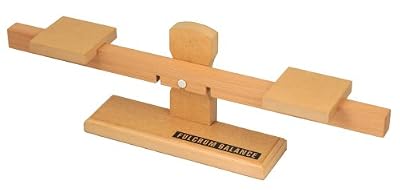
Eisco Labs Fulcrum Balance
The Eisco Labs fulcrum balance is a wooden simple machine designed to teach mechanical advantage rather than mass.
Read the detailsAll products, in detail

TADA 200g/0.2g Mechanical Balance
This compact mechanical balance is designed for classroom demonstrations and basic lab work. It measures up to 200g with 0.2g precision and includes a set of calibration weights ranging from 5g to 100g. The lightweight construction makes it easy to store in lab cabinets or transport between rooms.
It is a suitable tool for teaching measurement principles to students who are new to laboratory equipment.
- Measures up to 200g with 0.2g precision
- Includes a set of weights (5g, 10g, 20g×2, 50g, 100g)
HHNIULI 100g/0.1g Double Pan Balance
The HHNIULI balance offers higher readability at 0.1g within a 100g maximum capacity. It features a double pan design with 85mm diameter trays. The product description suggests clamping weights with tweezers to keep them clean and accurate, and notes that weights are stored in a box for better protection.
The compact size of 7.80 inches in length makes it easy to operate and carry. This model is well-suited for precise measurements in smaller educational settings or specific lab tasks requiring finer resolution.
- 100g maximum weighing with 0.1g readability
- Includes tweezers and a storage box for weights

200g/0.2g Stainless Steel Pan Balance
This mechanical balance shares the 200g capacity and 0.2g precision of the TADA model but distinguishes itself with a stainless steel weighing pan. The durable pan is designed to withstand frequent educational use and resist wear. It includes the same set of calibration weights and is built for portability.
This option is ideal for buyers who prioritize the durability of the weighing surface in a high-traffic classroom environment.
- Features a durable stainless steel weighing pan
- Measures up to 200g with 0.2g precision

MYBS Supplies 200g/0.2g Tray Balance
The MYBS Supplies balance is a laboratory teaching tool with a 200g capacity and 0.2g readability. It comes with tweezers and various weights stored in a protective box to ensure clean and accurate results. The product dimensions are 7.80 inches long, making it easy to carry.
Users should remove the black protective cover from the trays before use. This model provides a standard setup for demonstrating balance principles in a lab setting.
- 200g maximum weighing with 0.2g readability
- Includes tweezers and a weight storage box
Eisco Labs Fulcrum Balance
Unlike traditional pan balances, this wooden fulcrum balance is a simple machine designed to teach mechanical advantage. It allows students to study how changing the distance from the fulcrum affects balance. The apparatus includes an instruction manual and is made of particle board and wooden components.
It is not a precision weighing scale but an educational tool for physics concepts. This is the right choice for teaching lever principles rather than mass measurement.
- Wooden simple machine for studying mechanical advantage
- Includes an instruction manual for student and teacher use
HeyJiaYu 2610g/0.1g Triple Beam Balance
This triple beam balance offers a high capacity of 2610g with 0.1g accuracy. It includes two 1000g and one 500g weight to extend the measuring range. The built-in magnetic damping helps stabilize the pointer for quick readings, and a zero adjustment knob reduces systematic error.
The metal base and stainless steel platform provide stability and rust resistance. It is a robust option for analytical applications in schools or labs.
- 2610g capacity with 0.1g accuracy
- Includes 2x 1000g and 1x 500g weights

QWORK 2610g/0.1g Triple Beam Balance
The QWORK triple beam balance features 0.1g accuracy and a zero adjustment knob for precise measurements. It uses magnetic damping to keep the pointer balanced for fast reading. The scale requires no battery or power source, making it reliable for any location. The 6-inch diameter platform is suitable for placing various items.
Buyers should note that transportation may require recalibration to zero, as described in the product instructions.
- 0.1g accuracy with a zero adjustment knob
- No battery or power source required

2610g/0.1g Triple Beam Scale MB2610
This triple beam scale supports a capacity of 2610g with a resolution of 0.1g. It includes two 1000g and one 500g weight, allowing for the simultaneous hanging of two attachment weights. The sturdy base and clear display facilitate fast and easy reading. The built-in magnetic damping system stabilizes the pointer after a minimum swing.
It is designed for durability and long-lasting use in analytical applications without the need for frequent adjustment.
- Capacity of 2610g with 0.1g resolution
- Includes 2x 1000g and 1x 500g weights
Head-to-Head Comparisons
TADA vs Stainless Steel Pan Balance: Durability Focus
Both the TADA and the stainless steel pan balance offer 200g capacity with 0.2g precision. The primary difference lies in the weighing surface. The stainless steel pan model is explicitly described as more durable, which is a significant advantage for high-traffic classrooms where the pan may be subjected to frequent use.
The TADA model uses high-grade materials but does not specify the pan material as stainless steel. If you anticipate heavy daily use, the stainless steel pan version may offer better longevity.
HeyJiaYu vs QWORK Triple Beam: Calibration and Weights
The HeyJiaYu and QWORK balances both feature 2610g capacity and 0.1g accuracy. The HeyJiaYu model includes a specific set of weights (two 1000g and one 500g) and highlights a metal base for stability. The QWORK model emphasizes the zero adjustment knob and notes that transportation may require recalibration.
Both use magnetic damping for quick readings. The choice may depend on whether you prefer the explicit weight set details of the HeyJiaYu or the calibration notes of the QWORK.
HHNIULI vs MYBS Supplies: Precision vs Capacity
The HHNIULI balance offers 0.1g readability but is limited to a 100g maximum capacity. In contrast, the MYBS Supplies balance provides a 200g capacity with 0.2g readability. If your primary need is measuring small masses with high precision, the HHNIULI is the better fit. However, if you need to weigh heavier items and can accept slightly lower precision, the MYBS Supplies balance offers more versatility in terms of maximum load.
Both include tweezers and weight storage boxes.
Buying Guide
Capacity and Precision Needs
Determine the maximum mass you need to weigh and the level of precision required for your experiments. Balances in this range offer capacities from 100g to 2610g. Precision varies from 0.1g to 0.2g. For analytical work, 0.1g accuracy is standard, while 0.2g may suffice for general classroom demonstrations.
Consider the typical samples you will handle to avoid over- or under-specifying the balance.
Beam Type and Reading Method
Triple beam balances allow for direct reading of the result using sliding weights on three beams. This method is efficient and does not require a separate set of weights for every measurement, though some models include additional weights for higher capacities. Double pan balances require placing weights on one side and the object on the other.
Choose the reading method that best suits your teaching style and the skills you want to develop in students.
Included Accessories and Weights
Check what accessories are included with the balance. Some models come with tweezers for handling weights, which helps maintain cleanliness and accuracy. Others include a set of calibration weights, such as 5g to 100g or larger 1000g weights. Having the right weights included can save time and ensure you have the necessary tools for calibration and measurement.
Verify that the included weights match your capacity needs.
Durability and Maintenance
Consider the build quality and maintenance requirements of the balance. Look for features like stainless steel platforms or metal bases that provide stability and rust resistance. Magnetic damping systems can help stabilize the pointer for quicker readings. Some models may require recalibration after transportation. Choose a balance that is easy to maintain and robust enough to withstand frequent use in an educational environment.
Frequently Asked Questions
Do mechanical balances require batteries?
The HeyJiaYu and QWORK triple beam balances are explicitly described as not requiring batteries or any other power source. For the other models listed, the provided data does not specify power requirements. Mechanical balances generally operate using physical principles, but you should verify the specific power needs of each model in its full documentation.
What is the difference between a triple beam and a double pan balance?
A triple beam balance uses three sliding weights on beams to measure mass directly. A double pan balance requires placing weights on one pan and the object on the other. Triple beam balances are often faster to read, while double pan balances are useful for teaching the concept of equilibrium.
Can I use these balances for cooking?
Some of the triple beam balances, such as the HeyJiaYu model, are listed as suitable for cooking weighing in addition to lab and classroom use. However, they are primarily designed for educational and analytical purposes. For dedicated kitchen use, you might consider a digital kitchen scale, but these mechanical options can function for basic weight measurements.
How do I calibrate a mechanical balance?
Most mechanical balances include a zero adjustment knob that allows you to set the pointer to zero before measuring. This helps reduce systematic errors. Some models may require recalibration after transportation. Always refer to the specific instructions provided with your balance for the correct calibration procedure.
This article is part of our complete guide Toys & Games — browse all our comparisons and buying guides.
Last update on 2026-11-20 / Affiliate links / Images from Amazon Product Advertising API