
Selecting the correct quantitative filter paper depends on the specific particle size you need to retain and the flow rate required for your experiment. The six options listed here range from extremely fast 20-micron filters to slower 3-micron clarifying papers, each with distinct diameter and grade specifications.
Whether you are performing boiler water analysis or air pollution monitoring, matching the paper's micron rating to your sample's precipitate size is essential. Review the flow rates and diameters below to find the cellulose media that fits your funnel setup and analytical goals.
Our 3 picks for different needs
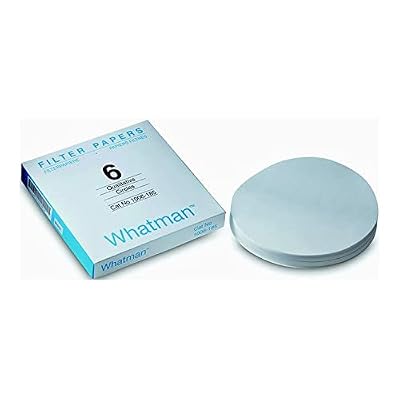
Whatman 70mm Grade 6 3 Micron Filter Paper
Whatman Grade 6 paper retains 3-micron particles, making it suitable for clarifying cloudy suspensions and boiler water analysis.
Read the details
Whatman 55mm Grade 4 20-25 Micron Filter Paper
Whatman Grade 4 paper offers an extremely fast flow rate of 3.7 seconds, ideal for air pollution monitoring where fine particle collection is not critical.
Read the details
Whatman 110mm Grade 2 8 Micron Filter Paper
The 110 mm diameter of this Whatman Grade 2 paper provides a large surface area for 8-micron particle retention in high-volume tasks.
Read the detailsAll products, in detail

StonyLab 94mm Slow Flow 10 Micron Filter Paper
This StonyLab cellulose filter paper is designed for slow filtration with a 10-micron particle retention rating. It features a 94 mm diameter and is compatible with StonyLab Buchner filtering funnels. The paper has an ash content of 0.01% or less, making it suitable for quantitative analysis where low residue is critical.
Buyers needing a slower filtration speed of 70 to 140 seconds should consider this option for finer particle retention.
- 10 micron particle retention
- 94 mm diameter

StonyLab 94mm Medium Flow 20 Micron Filter Paper
StonyLab offers this 94 mm cellulose filter paper with a 20-micron particle retention rating for medium filtration speeds. It is compatible with StonyLab porcelain Buchner funnels and maintains an ash content of 0.01% or less. The filtration speed ranges from 35 to 70 seconds, providing a balance between flow rate and particle capture.
This option is suitable for users requiring a larger diameter with coarse particle retention.
- 20 micron particle retention
- 35 to 70 second filtration speed

StonyLab 74mm Medium Flow 20 Micron Filter Paper
This 74 mm StonyLab cellulose filter paper provides 20-micron particle retention with a medium filtration speed of 35 to 70 seconds. It is designed for use with StonyLab porcelain Buchner funnels and features an ash content of 0.01% or less. The smaller diameter compared to the 94 mm variant makes it suitable for smaller funnel setups.
Buyers needing coarse particle retention in a compact format should evaluate this option.
- 74 mm diameter
- 20 micron particle retention
Whatman 70mm Grade 6 3 Micron Filter Paper
Whatman Grade 6 filter paper offers excellent fine particle filtration with a 3-micron rating. It has a flow rate of 35 seconds per 100 mL per square inch and a 70 mm diameter. This paper is often specified for boiler water analysis and is capable of retaining fine precipitates encountered in chemical analysis.
It serves as an excellent clarifying filter for cloudy suspensions and water or soil analysis.
- 3 micron particle retention
- Grade 6 cellulose paper
Whatman 55mm Grade 4 20-25 Micron Filter Paper
Whatman Grade 4 filter paper provides extremely fast filtering with a flow rate of 3.7 seconds per 100 mL per square inch. It retains coarse particles of 20 to 25 microns and gelatinous precipitates such as ferric hydroxide. The 55 mm diameter is suitable for high-flow applications where the collection of fine particles is not critical.
This option is used in air pollution monitoring and qualitative analytical techniques.
- 20 to 25 micron particle retention
- 3.7 second flow rate
Whatman 110mm Grade 2 8 Micron Filter Paper
This Whatman Grade 2 filter paper features an 8-micron particle retention rating and a large 110 mm diameter. It has a flow rate of 21 seconds per 100 mL per square inch. The paper is noted for being more absorbent than Grade 1 options. This large diameter makes it suitable for high-volume filtration tasks where a larger surface area is required for the specified micron rating.
- 110 mm diameter
- 8 micron particle retention
Head-to-Head Comparisons
StonyLab 10 Micron vs 20 Micron: Retention vs Speed
Both StonyLab options share a 94 mm diameter and an ash content of 0.01% or less, but they differ significantly in filtration speed and particle retention. The 10-micron version has a slower filtration speed of 70 to 140 seconds, allowing it to capture finer particles.
The 20-micron version filters faster, at 35 to 70 seconds, but retains only coarser particles. If your sample contains fine precipitates that must be captured, the 10-micron paper is the appropriate choice despite the longer filtration time. If you need to process larger volumes quickly and only need to remove coarse debris, the 20-micron paper is more efficient.
Whatman Grade 6 vs Grade 4: Fine vs Coarse Filtration
Whatman Grade 6 and Grade 4 papers serve different analytical purposes based on their micron ratings and flow rates. Grade 6 paper has a 3-micron rating and a flow rate of 35 seconds, making it an excellent clarifying filter for cloudy suspensions and fine precipitates.
Grade 4 paper has a 20 to 25-micron rating and an extremely fast flow rate of 3.7 seconds. The Grade 4 paper is used when high flow rates are required, such as in air pollution monitoring, where collecting fine particles is not critical. Choose Grade 6 for detailed chemical analysis requiring fine particle retention and Grade 4 for rapid processing of coarse samples.
StonyLab 94mm vs 74mm: Diameter Selection
These two StonyLab options are identical in micron rating (20 microns), filtration speed (35 to 70 seconds), and ash content (0.01% or less). The primary difference is the diameter: the first option is 94 mm, while the second is 74 mm. The choice between them depends entirely on the size of your Buchner funnel.
If you use a larger funnel that requires a 94 mm circle, select the first option. If your setup uses a smaller funnel requiring a 74 mm circle, select the second. Both papers are compatible with StonyLab porcelain Buchner funnels, so ensure your specific funnel size matches the paper diameter to prevent leaks or inefficient filtration.
Buying Guide
Match Micron Rating to Particle Size
The micron rating determines the smallest particle the paper can retain. A 3-micron paper like Whatman Grade 6 is suitable for fine precipitates in chemical analysis. A 20-micron paper like StonyLab or Whatman Grade 4 is better for coarse particles. Selecting a paper with a micron rating larger than your target particles will result in them passing through the filter.
Always choose a paper with a micron rating smaller than the particles you intend to capture.
Consider Filtration Speed Requirements
Filtration speed varies significantly between products. Whatman Grade 4 offers an extremely fast flow rate of 3.7 seconds, ideal for high-throughput applications. StonyLab 10-micron paper is slower, taking 70 to 140 seconds. If your experiment requires rapid processing, look for papers with lower flow rate times.
If you need maximum retention of fine particles, a slower flow rate may be necessary to ensure all particles are captured.
Verify Funnel Compatibility and Diameter
Filter paper diameter must match your funnel size. StonyLab papers come in 74 mm and 94 mm sizes, while Whatman options range from 55 mm to 110 mm. Using a paper that is too small will leave gaps, while one that is too large may not fit properly.
Check the specifications of your Buchner funnel or other filtration apparatus to ensure the paper diameter is correct. Compatibility with specific funnel materials, such as porcelain, is also noted for StonyLab products.
Evaluate Ash Content for Quantitative Analysis
For quantitative analysis, the ash content of the filter paper is critical. StonyLab papers have an ash content of 0.01% or less, which minimizes residue that could interfere with weight-based measurements. While ash content is not specified for all Whatman options in the provided data, low ash content is a standard requirement for quantitative filter papers.
Ensure the paper's ash content is low enough to not affect the accuracy of your gravimetric analysis.
Frequently Asked Questions
What is the difference between Grade 2 and Grade 6 Whatman paper?
Grade 6 paper has a 3-micron rating for fine particle retention, while Grade 2 has an 8-micron rating. Grade 2 is suitable for medium particle retention with a flow rate of 21 seconds.
Can I use StonyLab paper with non-StonyLab funnels?
The data states StonyLab paper is compatible with StonyLab Buchner funnels. While the diameter is the primary factor for fit, it is recommended to verify compatibility with your specific funnel brand and material to ensure proper sealing and filtration performance.
Which paper is best for air pollution monitoring?
Whatman Grade 4 paper is specified for air pollution monitoring. It has an extremely fast flow rate of 3.7 seconds and retains coarse particles of 20 to 25 microns. This makes it suitable for high-flow applications where fine particle collection is not the primary goal.
How do I choose between 74mm and 94mm StonyLab paper?
Choose based on your funnel size. The 74 mm paper fits smaller funnels, while the 94 mm paper fits larger ones. Both have the same 20-micron retention and filtration speed, so the diameter is the only deciding factor for your specific laboratory setup.
This article is part of our complete guide Toys & Games — browse all our comparisons and buying guides.
Last update on 2026-11-18 / Affiliate links / Images from Amazon Product Advertising API