
Selecting the right sheet gasket material depends on the specific demands of your repair, including temperature exposure, chemical resistance, and the required thickness. Whether you are resealing a small engine, creating a custom exhaust gasket, or needing industrial insulation, the material composition and dimensions play a critical role in the longevity of the seal.
This comparison examines eight different sheet gasket options, ranging from non-asbestos fiber sheets to neoprene and silicone rubber. Each product offers distinct thicknesses and sizes, allowing you to match the material to your specific project needs, from delicate household machinery to heavy-duty industrial applications.
Our 3 picks for different needs

Nuanchu 12-Piece Non-Asbestos Gasket Sheet Set
The 12-sheet kit provides sufficient quantity for multiple gasket projects or complex rebuilds.
Read the details
Red Silicone Rubber Sheet 9×12 Inch
The silicone sheet is rated for temperatures up to 450 degrees Fahrenheit, suitable for demanding heat applications.
Read the details
Shop Craft 9×36 Inch Fiber Gasket Material
The 1/32 inch fiber material is ideal for applications requiring a thin, cut-to-fit seal on vehicles or tractors.
Read the detailsAll products, in detail

HTJZWG 3-Piece Non-Asbestos Gasket Sheet Set
This set provides three sheets of non-asbestos material in varying thicknesses, ranging from 0.8mm to 1.2mm. The material is described as uniformly dense with high mechanical strength, designed to maintain a tight fit in vibrating environments. It is suitable for resealing small engines, lawn mowers, and generators.
The sheets measure 15 inches by 11.8 inches, offering ample surface area for tracing and cutting custom shapes with scissors or a knife.
- Includes three thickness options: 1/32 inch, 1/25 inch, and 3/64 inch
- Sheets measure 15 inches by 11.8 inches
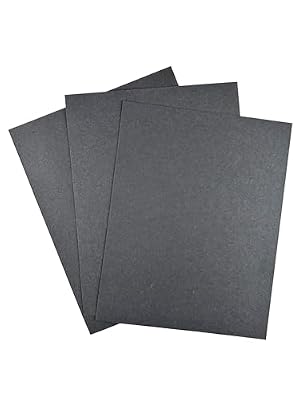
YAMAKATO 3-Piece Non-Asbestos Gasket Sheet Set
The YAMAKATO set includes three sheets of non-asbestos material in 0.8mm, 1mm, and 1.2mm thicknesses. Each sheet measures approximately 14.5 inches by 11.9 inches. The material is marketed for heavy-duty industrial applications involving oils, acids, and steam, as well as general home and garden uses like vibration reduction and leveling.
The sheets are designed to be cut easily with standard tools for custom gasket creation.
- Sheets measure 14-9/16 inches by 11-27/64 inches
- Material is described as extra thick and heavy duty

HTJZWG 2-Piece Neoprene Rubber Sheet Set
This kit contains two sheets of neoprene rubber in 1.0mm and 1.6mm thicknesses. The material is uniformly dense and flexible, allowing it to recover its shape after compression for shock absorption. It offers resistance to oil, water, and weathering, making it suitable for weather stripping, pipe resealing, and surface protection.
The 12-inch by 11-inch sheets are easy to trace and cut with a utility knife or heavy-duty scissors.
- Includes two thickness options: 1/25 inch and 1/16 inch
- Sheets measure 12 inches by 11 inches

Terixe 3-Piece Non-Asbestos Gasket Sheet Set
The Terixe set features three 15-inch by 11.8-inch sheets of non-asbestos material in 0.8mm, 1mm, and 1.2mm thicknesses. The material is highlighted for its resistance to oil, high pressure, and heat, making it ideal for engine gaskets and exhaust systems. It is compatible with gasoline, diesel, and oil applications.
The sheets are designed to be easy to cut with scissors or cutters while maintaining sealing performance.
- Sheets measure 15 inches by 11.8 inches
- Material resists oil, high pressure, and heat
Shop Craft 9×36 Inch Fiber Gasket Material
This single roll of fiber gasket material measures 9 inches by 36 inches and is 1/32 inch thick. It is designed to stop leaks at the source for permanent repairs on vehicles, tractors, and other machinery. The cut-to-fit sheet allows for unlimited shapes and coverage, supporting universal installation.
The material is specifically formulated for fiber-based sealing applications where a thin profile is required.
- Roll measures 9 inches by 36 inches
- Thickness is 1/32 inch
Nuanchu 12-Piece Non-Asbestos Gasket Sheet Set
This large kit includes twelve sheets of non-asbestos gasket material, divided into four sheets each of 0.8mm, 1mm, and 1.2mm thicknesses. Each sheet measures approximately 11.8 inches by 15 inches. The material is described as durable and robust, resisting high temperatures, pressures, and oil. It is suitable for DIY gasoline and diesel rebuild sealing projects, offering ample quantity for multiple repairs or complex gasket fabrication.
- Includes 12 total sheets across three thicknesses
- Sheets measure 11.81 inches by 14.96 inches
Red Silicone Rubber Sheet 9×12 Inch
This commercial-grade silicone rubber sheet measures 9 inches by 12 inches and is 1/16 inch thick. It is rated for temperatures ranging from -80 to 450 degrees Fahrenheit and has a tensile strength of 700 psi. The material resists oil, acids, acetone, and most chemicals, as well as ozone and salt water.
It is manufactured in the USA and is suitable for industrial, marine, and automotive applications where high-temperature resistance is critical.
- Temperature range is -80 to 450 degrees Fahrenheit
- Sheet measures 9 inches by 12 inches

Black Neoprene Rubber Sheet 16×30 Inch
This solid neoprene rubber sheet measures 16 inches wide by 30 inches long and is 1/8 inch thick. It is not sponge or foam, but a solid material with good electrical insulation properties. The sheet is black, smooth on both sides, and remains firm and flexible in a wide range of temperatures.
It is suitable for DIY gaskets, pads, seals, flooring, and anti-vibration cushioning in commercial and industrial settings.
- Sheet measures 16 inches by 30 inches
- Thickness is 1/8 inch (3mm)
Head-to-Head Comparisons
HTJZWG vs YAMAKATO: Sheet Size and Thickness Options
Both the HTJZWG and YAMAKATO sets offer three sheets of non-asbestos material in 0.8mm, 1mm, and 1.2mm thicknesses. The primary difference lies in the sheet dimensions. The HTJZWG sheets measure 15 inches by 11.8 inches, while the YAMAKATO sheets are slightly smaller at approximately 14.5 inches by 11.9 inches.
If your project requires a larger continuous surface area for tracing complex shapes, the HTJZWG provides a marginally larger canvas. Both materials are described as dense and resistant to oil and heat, making them suitable for similar small engine and garden machinery applications.
HTJZWG Neoprene vs Black Neoprene: Thickness and Application
The HTJZWG neoprene set includes two sheets in 1.0mm and 1.6mm thicknesses, measuring 12 inches by 11 inches. In contrast, the Black Neoprene sheet is a single 1/8 inch (3mm) thick piece measuring 16 inches by 30 inches. The Black Neoprene is thicker and larger, and the source notes it has good electrical properties and is suitable for laying the ground of power distribution facilities.
The HTJZWG set offers two thickness options for gasket making, while the Black Neoprene is described as solid rubber with good insulation properties.
Terixe Non-Asbestos vs Red Silicone: Material Composition
The Terixe set uses non-asbestos material, which is highlighted for its resistance to oil, high pressure, and heat, specifically for engine and exhaust gaskets. The Red Silicone sheet, however, is a commercial-grade silicone rubber rated for temperatures up to 450 degrees Fahrenheit. Silicone generally offers superior flexibility and recovery properties compared to fiber-based non-asbestos materials.
If your application involves extreme heat or requires a material that resists ozone and salt water, the silicone sheet is the appropriate choice. For standard engine sealing where oil resistance is the primary concern, the Terixe non-asbestos sheets are a suitable option.
Buying Guide
Match Thickness to the Gap
The thickness of the gasket sheet must correspond to the gap between the mating surfaces. Most non-asbestos sheets come in 0.8mm, 1mm, and 1.2mm options. Measure the existing gasket or the gap carefully before cutting. Using a sheet that is too thick can prevent the flanges from closing properly, while a sheet that is too thin may not compress enough to create a seal.
Sets with multiple thicknesses allow you to test the fit before committing to a cut.
Consider Chemical and Heat Resistance
Identify the fluids and temperatures your gasket will encounter. Non-asbestos fiber sheets are generally resistant to oil and moderate heat, making them suitable for engine oil pans and small engines. Silicone rubber offers higher temperature resistance, often up to 450 degrees Fahrenheit, and better resistance to chemicals like acetone and acids.
For applications involving steam or aggressive chemicals, choose a material explicitly rated for those conditions. Check the specific resistance properties listed for each product.
Evaluate Sheet Size and Quantity
Determine how many gaskets you need to make and their approximate size. A single 9-inch by 36-inch roll is efficient for multiple small gaskets, while a 15-inch by 11.8-inch sheet is better for larger, single-piece gaskets. If you are undertaking a full engine rebuild, a kit with 12 sheets provides the quantity needed for various components.
For a one-off repair, a 3-sheet set may be sufficient. Consider the total surface area required to avoid running out of material mid-project.
Select the Right Material for the Environment
The environment in which the gasket will operate dictates the material choice. Neoprene rubber is excellent for weather stripping and applications involving water and weathering, as it resists abrasion and maintains flexibility. Solid rubber sheets are also good for electrical insulation and anti-vibration padding. For industrial settings involving high pressure or corrosive substances, verify that the material is rated for those specific conditions.
Do not assume that all rubber sheets are suitable for every industrial application.
Frequently Asked Questions
Can I cut these sheets with standard scissors?
Yes, most of the listed gasket materials are designed to be cut with standard scissors, utility knives, or heavy-duty shears. The descriptions for the non-asbestos and neoprene sheets specifically mention ease of cutting. For thicker silicone or solid rubber sheets, a sharp utility knife may provide a cleaner edge, but scissors are generally sufficient for most DIY projects.
Are non-asbestos gasket sheets safe for the environment?
The product descriptions for the non-asbestos sheets state that they are less harmful to the environment than traditional asbestos-based options. They are designed to be safe and durable for industrial and household use. However, always follow local disposal regulations for any waste material generated during your gasket fabrication process.
What is the difference between neoprene and silicone rubber sheets?
Neoprene is known for its resistance to oil, water, and weathering, making it good for general sealing and weather stripping. The silicone sheet listed is rated for temperatures from -80 to 450 degrees Fahrenheit and resists ozone and salt water. Choose neoprene for applications involving water and weathering, and silicone for high-temperature or chemical-resistant applications.
How do I know which thickness to choose?
Measure the gap between the two surfaces you are sealing or the thickness of the old gasket. If you are unsure, a set with multiple thicknesses allows you to test the fit. The gasket should compress slightly when the flanges are bolted together to create a seal.
Avoid using a sheet that is too thick, as it may prevent the bolts from tightening fully.
This article is part of our complete guide Industrial & Scientific — browse all our comparisons and buying guides.
Last update on 2026-11-18 / Affiliate links / Images from Amazon Product Advertising API