
Choosing the right solder wire depends on the specific alloy ratio, wire diameter, and flux content required for your project. These eight options cover a range of configurations, from fine 0.3mm wires for detailed electronics to thicker 1.0mm wires for heavier gauge work.
The primary differences lie in the tin-lead ratio, with 63/37 and 60/40 alloys offering slightly different melting points and flow characteristics. Wire diameter also plays a crucial role, as finer wires are better for tight spaces while thicker wires provide more material for larger joints. Reviewing these specifications will help you select the appropriate tool for your electrical repair or DIY needs.
Our 3 picks for different needs

HengTianMei 63/37 Rosin Core Solder Wire 0.3mm 50g

The 0.3mm diameter is suitable for detailed circuit board work where a finer wire is needed.
Read the details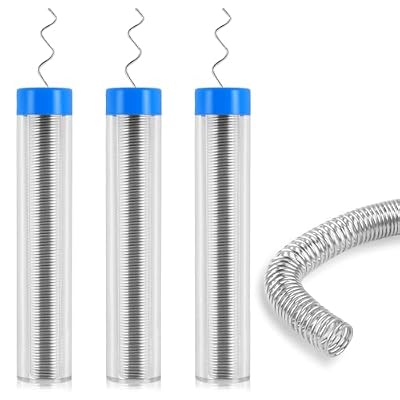
Rindion 60/40 Solder Wire 4 Pack Assortment
The 4-piece assortment includes both 0.8mm and 1mm wires, useful for stained glass and general repair.
Read the details
MAIYUM 63-37 Rosin Core Solder Wire 0.8mm 100g
The 100g weight provides more solder material per spool for projects requiring longer continuous use.
Read the detailsAll products, in detail

MAIYUM 63-37 Rosin Core Solder Wire 0.8mm 50g
This MAIYUM solder wire uses a 63/37 tin-lead alloy with a 0.8mm diameter and 50g weight. It features a 1.8% flux content and a low melting point of 361°F, which supports smooth flow and fast soldering. The compact size is suitable for pocket storage. It is designed for circuit boards, DIY projects, and repairing household electronics like radios and TVs.
Buyers should note the Proposition 65 warning regarding lead exposure.
- 63/37 tin-lead alloy with 1.8% flux content
- 0.8mm diameter and 50g gross weight

TOWOT 63-37 High Purity Tin Lead Solder Wire 1.0mm 50g
TOWOT offers a 63/37 tin-lead solder wire with a 1.0mm diameter and 50g weight. The 1.8% flux content aids in cleaning the soldering surface and reducing oxidation. This wire has a low melting point that allows for fast soldering speed and strong joints. It is suitable for circuit boards, TV, radio, and home appliance repair.
The thicker 1.0mm diameter may be preferred for larger joints or heavier gauge work.
- 1.0mm diameter and 50g weight
- 63/37 alloy with 1.8% flux content

Twocorn 63/37 Solder Wire 0.8mm 50g
Twocorn provides a 63/37 tin-lead solder wire with a 0.8mm diameter and 50g weight. It contains 1.8% flux and is described as having a low melting point and good fluidity. The wire is suitable for beginners and experienced users alike. Applications include circuit boards, radios, TVs, refrigerators, and air conditioning units.
The listing includes a Proposition 65 warning regarding lead exposure in California.
- 0.8mm diameter and 50g weight
- 63/37 alloy with 1.8% flux content
MAIYUM 63-37 Rosin Core Solder Wire 0.8mm 100g
This MAIYUM solder wire features a 63/37 tin-lead alloy with a 0.8mm diameter and a 100g gross weight. The 1.8% flux content supports smooth flow and strong soldering points. The 100g weight offers more material per spool compared to 50g options. It is designed for circuit boards, DIY projects, and repairing cable, TV, radio, and stereo equipment.
The listing includes a Proposition 65 warning regarding lead exposure.
- 0.8mm diameter and 100g gross weight
- 63/37 alloy with 1.8% flux content

WLUOGCU 60/40 Rosin Core Solder Wire 0.8mm & 1.0mm 27g
WLUOGCU offers a 60/40 tin-lead solder wire in 0.8mm and 1.0mm diameters with a 27g weight. The rosin core cleans the soldering surface and reduces oxidation. It is designed for electrical soldering to create firm and durable joints. The precise melting point ensures quick and uniform melting, which helps protect components from heat damage.
It is suitable for both DIY projects and professional repairs.
- 60/40 alloy with rosin core
- Available in 0.8mm and 1.0mm diameters, 27g weight
Rindion 60/40 Solder Wire 4 Pack Assortment
Rindion provides a 4-piece assortment of 60/40 tin-lead solder wire, including two 0.8mm/12g and two 1mm/15g spools. The 1.8% flux content ensures a smooth soldering experience. The melting point range is 183°C-266°C. This wire is suitable for stained glass, electrical soldering, component repair, and telephone repair.
The listing includes safety warnings regarding lead exposure and ventilation.
- 4-piece assortment: 2x 0.8mm/12g and 2x 1mm/15g
- 60/40 alloy with 1.8% flux content

HGMZZQ 60/40 Tin Lead Solder Wire 0.8mm 50g
HGMZZQ offers a 60/40 tin-lead solder wire with a 0.8mm diameter and 50g weight. It features a 2.2% flux content, which is higher than some other options. The low melting point of 361°F supports easy soldering and smooth flow. The wire is described as producing less smoke and reliable, beautiful solder joints.
It is applicable to household appliances, stereos, headsets, toys, and circuit boards.
- 0.8mm diameter and 50g weight
- 60/40 alloy with 2.2% flux content
HengTianMei 63/37 Rosin Core Solder Wire 0.3mm 50g
HengTianMei provides a 63/37 tin-lead solder wire with a fine 0.3mm diameter and 50g weight. The 1.8% flux content supports a smoother welding process. The low melting point of 361°F allows for fast soldering and strong points. The fine 0.3mm diameter is suitable for detailed work on circuit boards, radios, televisions, and motors.
The listing emphasizes the optimal 63/37 ratio for use.
- 0.3mm diameter and 50g weight
- 63/37 alloy with 1.8% flux content
Head-to-Head Comparisons
MAIYUM 50g vs 100g: Volume and Portability
Both MAIYUM options use a 63/37 tin-lead alloy with a 0.8mm diameter and 1.8% flux content. The primary difference is the gross weight, with one option at 50g and the other at 100g. The 50g version is described as a good size for pocket storage, making it convenient for quick repairs or travel.
The 100g version offers double the material, which may be preferable for larger projects or those who prefer to change spools less frequently. Both share the same low melting point of 361°F and are suitable for similar applications like circuit boards and household electronics.
TOWOT 1.0mm vs HengTianMei 0.3mm: Diameter Selection
TOWOT offers a 1.0mm diameter wire, while HengTianMei provides a 0.3mm diameter wire. Both use a 63/37 alloy with 1.8% flux content and a 50g weight. The 1.0mm wire from TOWOT is thicker, which may be better for larger joints or when more material is needed per pass.
The 0.3mm wire from HengTianMei is significantly finer, making it suitable for detailed work on circuit boards or small components where space is limited. The choice between these two depends on the scale of the soldering task and the size of the joints being made.
HGMZZQ 60/40 vs WLUOGCU 60/40: Flux and Weight
Both HGMZZQ and WLUOGCU offer 60/40 tin-lead solder wires. HGMZZQ features a 0.8mm diameter, 50g weight, and 2.2% flux content. WLUOGCU offers 0.8mm and 1.0mm diameters with a 27g weight and does not specify a flux percentage in the same way, though it mentions rosin core cleaning.
The HGMZZQ option has a higher stated flux content, which may aid in cleaning the soldering surface. The WLUOGCU option is lighter at 27g, which might be preferable for portability. Both are designed for electrical soldering and creating durable joints.
Buying Guide
Alloy Ratio: 63/37 vs 60/40
The tin-lead ratio affects the melting point and flow of the solder. A 63/37 alloy has a eutectic composition, resulting in a sharp melting point of 361°F (183°C). A 60/40 alloy has a slightly higher melting range, typically starting around 361°F but solidifying over a range.
The 63/37 ratio is often preferred for its consistent melting behavior, while 60/40 is also widely used for general electrical work. Choose based on your preference for melting characteristics.
Wire Diameter Selection
Wire diameter determines the amount of solder deposited per pass. Finer wires, such as 0.3mm or 0.8mm, are suitable for detailed work on circuit boards and small components. Thicker wires, such as 1.0mm, are better for larger joints or when more material is needed quickly.
Consider the size of the joints you are making and the space available. A finer wire offers more control, while a thicker wire may be faster for larger connections.
Flux Content and Cleaning
Flux helps clean the soldering surface and prevent oxidation. Most of these options contain rosin core flux, with content levels ranging from 1.8% to 2.2%. Higher flux content may provide better cleaning action, but it can also produce more smoke. The rosin core is designed to clean the surface during soldering, reducing the need for additional cleaning in many cases.
Check the specific flux percentage to understand the cleaning capability of the wire.
Weight and Portability
The weight of the solder spool affects portability and convenience. Options range from 12g to 100g. Lighter spools, such as 12g or 27g, are easy to carry and suitable for small projects or travel. Heavier spools, such as 50g or 100g, provide more material and may be more convenient for larger projects or workshop use.
Consider how much solder you typically use and whether you need to carry the wire with you.
Frequently Asked Questions
What is the difference between 63/37 and 60/40 solder?
The 63/37 alloy has a eutectic composition with a sharp melting point of 361°F. The 60/40 alloy has a slightly higher melting range. Both are suitable for electrical soldering, but the 63/37 ratio may offer more consistent melting behavior for some users.
Is rosin core solder suitable for stained glass?
Yes, some of these options, such as the Rindion 60/40 solder, are explicitly listed as suitable for stained glass work. The rosin core helps clean the surface and create a strong bond, which is important for stained glass projects.
What does the flux content percentage mean?
The flux content percentage indicates the amount of flux in the solder wire. Higher percentages, such as 2.2%, may provide more cleaning action. The flux helps remove oxidation from the metal surface, allowing the solder to flow and bond properly.
Are these solder wires safe to use?
These solder wires contain lead, which is known to cause health issues if inhaled or ingested. Always use adequate ventilation, wash hands after handling, and avoid exposure for pregnant individuals, minors, and pets. Follow all safety warnings provided in the product listings.
This article is part of our complete guide Tools & Home Improvement — browse all our comparisons and buying guides.