
Selecting the right optoisolator depends on whether you need to isolate digital logic, analog signals, or AC power. The options in this comparison range from individual components in bulk packs to pre-assembled breakout boards with multiple channels.
Each product serves a distinct purpose, from zero-cross triac drivers for AC control to linear optocouplers for analog precision. Understanding the specific output type and channel count is essential for ensuring your circuit functions correctly and safely.
Our 3 picks for different needs

DBParts MOC3041 Zero-Cross Triac Driver
The MOC3041 is specifically designed for zero-cross triggering, making it the appropriate choice for AC circuits where minimizing interference is a priority.
Read the details
Treedix 2-Channel Opto-Isolator Breakout Board
The Treedix board is explicitly designed to protect microcontrollers from electromagnetic interference when driving high-voltage motors or servos.
Read the details
DBParts PC817 Transistor Optoisolator
The 50-pack of PC817 optoisolators provides a large quantity of standard digital isolators, suitable for projects requiring many channels of basic signal separation.
Read the detailsAll products, in detail

DBParts MOC3021 Random-Phase Triac Driver
This package contains ten MOC3021 optoisolators in a DIP-6 package. It is designed as a random-phase triac driver, making it suitable for applications where the triac needs to be triggered at any point in the AC cycle. The listing notes that the components are brand new and come with a six-month warranty.
This option is well-suited for hobbyists or engineers building AC control circuits who need a small quantity of these specific random-phase drivers for prototyping or repair work.
- Includes 10 MOC3021 units in DIP-6 package
- Functions as a random-phase triac driver
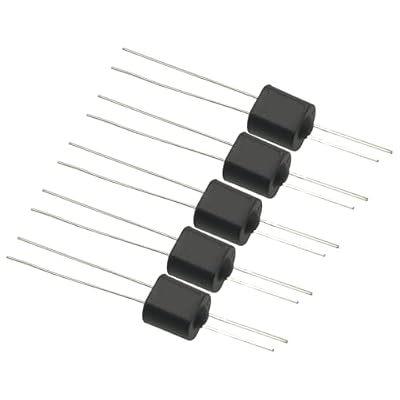
GODIYMODULES VTL5C Linear Optocoupler
This listing offers five VTL5C linear optocouplers in a DIP-4 package. Unlike standard digital optoisolators, the VTL5C is an analog device that uses photoconductive cells, allowing for a linear relationship between input and output. This makes it appropriate for applications requiring analog signal isolation, such as audio circuits or precision control loops.
The brand is GODIYMODULES, and the package provides a small quantity for testing or small-scale projects involving analog isolation.
- Includes 5 VTL5C units in DIP-4 package
- Uses photoconductive cells for analog isolation
DBParts MOC3041 Zero-Cross Triac Driver
This package includes ten MOC3041 optoisolators in a DIP-6 package. It is specifically designed as a zero-cross triac driver, meaning it triggers the triac only when the AC voltage crosses zero. This characteristic is often preferred for reducing electromagnetic interference in AC control applications. The components are listed as brand new with a six-month warranty.
This is a direct alternative to the random-phase MOC3021, offering a different triggering behavior for AC circuits.
- Includes 10 MOC3041 units in DIP-6 package
- Functions as a zero-cross triac driver
DBParts PC817 Transistor Optoisolator
This listing provides a larger quantity of fifty optoisolators in a DIP-4 package. The title lists compatible part numbers including EL817C, PC817, PC817C, FL817C, and FL817, while the feature description specifies the package includes 50 pieces of PC817 optocouplers. This bulk option is ideal for projects requiring a significant number of standard digital isolators, such as building custom interface boards or replacing failed components in existing hardware.
- Includes 50 units in DIP-4 package (title lists EL817C/PC817/FL817 variants; features specify PC817)
- Standard transistor-output digital optocoupler
Treedix 2-Channel Opto-Isolator Breakout Board
The Treedix board is a breakout module featuring two channels of optical isolation. It uses the ILD213T opto-isolator IC along with discrete transistors to calibrate logic levels. The board includes built-in LEDs and photodiodes, allowing a low-voltage controller to safely interface with high-voltage or noisy systems.
It is designed to protect microcontrollers from electromagnetic interference when driving motors or servos. The module supports data rates up to 9600bps and is compatible with standard soldering methods.
- Features 2 channels with ILD213T IC
- Supports data rates up to 9600bps

Comimark 4-Channel Opto-Isolator Module
This Comimark module provides four channels of optical isolation on a single expansion board. It is designed to connect to high-voltage anodes and grounds, allowing for the isolation of multiple signals simultaneously. The package includes two of these 4-channel modules, providing a total of eight isolated channels.
This is useful for applications where a microcontroller needs to interface with multiple high-voltage or noisy inputs without risking damage to the logic circuitry. The module is a compact solution for multi-channel isolation needs.
- Provides 4 channels of isolation per module
- Package includes 2 modules for 8 total channels

Reland Sung D213 Breakout Board
This is a breakout board for the D213 or ILD213T optoisolator, designed for use with microcontrollers. The listing is brief, identifying the product as an opto-isolator breakout board module. It serves as a convenient interface for the ILD213T component, which is a common choice for isolating digital signals.
While the specific features are not detailed in the source, the form factor suggests it is intended for breadboard or PCB prototyping where a single-channel isolation interface is required for a microcontroller project.
- Breakout board for D213/ILD213T IC
- Designed for microcontroller interfacing

DONGKER 12V PC817 Signal Converter
The DONGKER module is a photoelectric optoisolator. The title identifies it as a PC817 optocoupler, while the feature description specifies it uses an EL817 photoelectric isolator. It is designed to convert signal levels and provide isolation, with a specified isolation voltage of more than 3000V.
The module supports PNP and NPN configurations and can be used to invert input signals. It is suitable for applications involving inverters or driving motors where anti-interference and protection of the SCM (Single Chip Microcomputer) are needed. The input current is specified at a maximum of 50mA.
- Uses PC817 optocoupler with >3000V isolation
- Supports PNP/NPN signal conversion and inversion
Head-to-Head Comparisons
DBParts MOC3021 vs MOC3041: Random-Phase vs Zero-Cross
Both DBParts options are triac drivers in a DIP-6 package, but they trigger the AC load differently. The MOC3021 is a random-phase driver, allowing the triac to be turned on at any point in the AC cycle. This is useful for dimming or phase-control applications.
The MOC3041 is a zero-cross driver, which only triggers the triac when the voltage crosses zero. This reduces electromagnetic interference and is better for simple on/off AC control. Choose the MOC3021 for phase control and the MOC3041 for clean switching.
Treedix 2-Channel vs Comimark 4-Channel Modules
These two breakout boards offer different channel counts for isolating signals. The Treedix board provides two channels using the ILD213T IC and includes built-in LEDs for debugging. It is designed for protecting microcontrollers from noisy systems like motors. The Comimark module offers four channels per board, and the package includes two boards, totaling eight channels.
If you need to isolate a small number of signals with clear debugging aids, the Treedix board is a good fit. If you need to isolate many signals simultaneously, the Comimark module provides higher density.
GODIYMODULES VTL5C vs DBParts PC817: Analog vs Digital
These two optocouplers serve fundamentally different signal types. The VTL5C is a linear optocoupler using photoconductive cells, which allows for analog signal isolation. It is suitable for applications where the output voltage is proportional to the input current, such as in audio or precision control.
The PC817 is a standard transistor-output optocoupler designed for digital signals, providing a sharp on/off switch. Use the VTL5C for analog circuits and the PC817 for digital logic isolation. They are not interchangeable for the same application.
Buying Guide
Determine Your Signal Type
The first step is identifying whether you are isolating a digital or analog signal. Digital signals require a transistor-output optocoupler like the PC817, which acts as a switch. Analog signals require a linear optocoupler like the VTL5C, which maintains a proportional relationship between input and output.
For AC power control, you need a triac driver like the MOC3021 or MOC3041. Selecting the wrong type will result in a non-functional circuit.
Choose the Right Channel Count
Consider how many signals you need to isolate. Individual components like the PC817 are best for single-channel applications or when you are building a custom PCB. Breakout boards like the Treedix 2-channel or Comimark 4-channel modules are convenient for prototyping or when you need to isolate multiple signals without soldering individual components.
If you need more than four channels, the Comimark package, which includes two 4-channel boards, offers a higher total count.
Consider the Form Factor
Decide whether you need a bare component or a breakout board. Bare components in DIP-4 or DIP-6 packages, such as the MOC3041 or PC817, are suitable for soldering directly onto a PCB. Breakout boards, like the DONGKER or Reland Sung modules, provide pin headers and often include additional components like resistors or LEDs, making them easier to use in breadboards or for quick testing.
The form factor should match your project's stage and complexity.
Check Isolation Voltage and Current Ratings
Ensure the optoisolator's isolation voltage and current ratings meet your application's requirements. The DONGKER module specifies an isolation voltage of more than 3000V, which is important for high-voltage applications. Also, check the input and output current limits. For example, the DONGKER module has a maximum input current of 50mA.
Exceeding these ratings can damage the component. Always verify that the component's specifications align with your circuit's operating conditions.
Frequently Asked Questions
What is the difference between a triac driver and a standard optocoupler?
A standard optocoupler isolates digital or analog signals between two circuits. A triac driver, like the MOC3021 or MOC3041, is specifically designed to trigger a triac for AC power control. Triac drivers have specific triggering characteristics, such as random-phase or zero-cross, which are not present in standard digital optocouplers.
Can I use a digital optocoupler for analog signals?
No, a standard digital optocoupler like the PC817 acts as a switch and will not accurately reproduce an analog signal. For analog isolation, you need a linear optocoupler like the VTL5C, which uses photoconductive cells to maintain a proportional relationship between input and output.
Are breakout boards easier to use than bare components?
Breakout boards are generally easier for prototyping because they include pin headers and often additional components like resistors or LEDs. Bare components require you to design and solder your own circuit, including any necessary resistors. Breakout boards are ideal for testing, while bare components are better for final PCB designs.
What does zero-cross triggering mean in a triac driver?
Zero-cross triggering means the triac is only turned on when the AC voltage crosses zero. This reduces electromagnetic interference and is suitable for simple on/off control. Random-phase triggering, as in the MOC3021, allows the triac to be turned on at any point in the cycle, which is used for dimming or phase control.
This article is part of our complete guide Electronics — browse all our comparisons and buying guides.
Last update on 2026-11-18 / Affiliate links / Images from Amazon Product Advertising API