
Selecting the right capillary tubes depends on whether you need them for chemical analysis, medical sampling, or physics demonstrations. Consumable glass tubes vary significantly in length, diameter, and quantity, while demonstration kits include specialized hardware for visual teaching.
This comparison covers seven distinct options, ranging from bulk packs of standard glass tubes to complete apparatuses for classroom use. We examine the specific dimensions, materials, and intended applications to help you match the product to your laboratory or educational needs.
Our 3 picks for different needs

Eisco 4" Borosilicate Melting Point Tubes (100 Pack)
The 4-inch borosilicate tubes with a dispensing lid are ideal for precise melting point tests in educational or research settings.
Read the details
EISCO Capillary Pressure Demonstration Apparatus
The EISCO apparatus with its metal frame and six varying-diameter tubes is specifically designed for demonstrating capillary pressure relationships.
Read the details
Karter Scientific Plain and Heparinized Set (200)
The Karter Scientific set provides both heparinized and plain tubes, covering a wider range of sampling applications in one package.
Read the detailsAll products, in detail

Generic Multi-Size Capillary Action Kit
This kit focuses on demonstrating capillary action rather than chemical analysis. It includes multi-size tubes and a support rack, making it suitable for physics or general science classrooms. The clear materials allow students to observe liquid movement easily. The lightweight design with a holding tray simplifies storage and transport between labs.
It is a good choice for educators who need a visual demonstration tool for teaching physical principles.
- Includes multi-size capillary tubes with a support rack
- Designed for demonstrating capillary action phenomena
Eisco 4" Borosilicate Melting Point Tubes (100 Pack)
These 4-inch borosilicate glass tubes are designed for melting point determinations. The 0.05-inch diameter provides consistent results for precise applications. A dispensing lid allows for one-at-a-time retrieval, keeping the workspace organized. The borosilicate construction offers chemical resistance and high-temperature resilience. This 100-pack is well-suited for educational facilities or research labs requiring a reliable supply for repeated thermal testing.
- 4-inch length with 0.05-inch diameter
- Includes a dispensing lid for single-tube retrieval
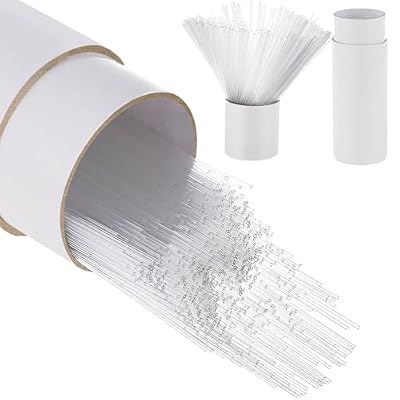
Reallnaive 100mm Glass Capillary Tubes (1000 Pack)
This large 1000-piece pack offers a bulk supply of 100mm glass capillary tubes. The tubes feature a 0.3mm inner diameter and 0.5mm outer diameter, suitable for thin-layer chromatography spotting and melting point detection. The transparent glass allows for easy visual inspection of samples. Due to the glass composition, the tubes are fragile and require careful handling.
This option is ideal for high-volume laboratory environments that need a substantial stock of standard-sized tubes.
- 1000-piece pack of 100mm tubes
- 0.3mm inner diameter and 0.5mm outer diameter

Kimble Chase Heparinized Red Tip Tubes (200/Bottle)
These are heparinized capillary tubes with red tips, sold in bottles of 200. The listing provides minimal detail beyond the quantity and type. Heparinized tubes are typically used for blood sampling to prevent clotting. The red tip indicates the anticoagulant coating. This product is specific to medical or biological sampling applications rather than general chemistry or physics demonstrations.
Buyers should verify specific diameter and length specifications for their workflow.
- Heparinized red tip design
- Sold in bottles of 200

Reallnaive 75mm Glass Capillary Tubes (200 Pack)

This 200-piece set features 75mm glass tubes with a 1.1mm inner diameter and 1.5mm outer diameter. They are designed for sampling small volume reaction vessels and TLC plates. The clear glass material allows for easy observation and cleaning. The compact length makes them suitable for precise sample collection in analytical chemistry.
This pack offers a versatile option for organic and analytical lab work where standard 75mm tubes are required.
- 75mm length with 1.1mm inner diameter
- 200-piece pack for sampling and TLC
EISCO Capillary Pressure Demonstration Apparatus
This apparatus is a complete demonstration unit featuring a metal frame and base trough. It holds six capillary tubes of varying bore diameters, allowing users to observe the relationship between capillary pressure and tube size. The frame is approximately 7.5 inches tall. The included tubes range from 1mm to 4mm inner diameters.
This is a specialized teaching tool for physics or fluid dynamics classes, distinct from consumable glass tubes used for chemical analysis.
- Includes metal frame, trough, and six tubes
- Tubes range from 1mm to 4mm inner diameter
Karter Scientific Plain and Heparinized Set (200)
This set includes 200 borosilicate glass capillary tubes, split evenly between 100 red (heparinized) and 100 blue (plain) tips. The tubes measure 75mm in length with a 1.1-1.2mm inner diameter. The mixed set allows for both blood sampling and general liquid handling in a single package.
The borosilicate glass ensures durability. This is a practical option for labs that need both anticoagulated and plain tubes for various sampling tasks.
- Set of 200: 100 red and 100 blue tips
- 75mm length with 1.1-1.2mm inner diameter
Head-to-Head Comparisons
Eisco 4" Tubes vs Reallnaive 100mm Bulk Pack
The Eisco 4-inch tubes and the Reallnaive 100mm tubes serve different primary functions. The Eisco tubes are 4 inches long with a 0.05-inch diameter, specifically marketed for melting point determinations. They include a dispensing lid for organized retrieval. In contrast, the Reallnaive pack offers 1000 tubes of 100mm length with a 0.3mm inner diameter.
These are better suited for thin-layer chromatography spotting and general bulk usage. If you need precise melting point testing, the Eisco option is more targeted. If you require a large volume of tubes for TLC or general lab work, the Reallnaive bulk pack provides greater quantity and a different diameter profile.
Reallnaive Plain Tubes vs Karter Scientific Mixed Set
Both the Reallnaive 200-pack and the Karter Scientific set feature 75mm tubes. The Reallnaive tubes have an inner diameter of 1.1 mm, while the Karter Scientific set lists an inner diameter range of 1.1 – 1.2 mm. The key difference lies in the tip coating.
The Reallnaive tubes are plain glass, suitable for general sampling and TLC. The Karter Scientific set includes 100 red heparinized tubes and 100 blue plain tubes. The heparinized tubes are designed to prevent clotting in blood samples. If your workflow involves only general liquid handling, the plain Reallnaive tubes are sufficient.
If you need to sample blood or other fluids where anticoagulation is required, the Karter Scientific mixed set offers the necessary variety in a single package.
Generic Capillary Action Kit vs EISCO Pressure Apparatus
Both products are designed for demonstrating capillary action, but they differ in complexity and specific focus. The Generic kit includes multi-size tubes and a support rack, focusing on the visual observation of liquid movement. It is lightweight and portable. The EISCO apparatus is a more structured unit with a metal frame, base trough, and six tubes of specific bore diameters.
It is explicitly designed to demonstrate the relationship between capillary pressure and bore diameter. The EISCO unit is a more specialized physics teaching tool, while the Generic kit is a simpler, more portable option for general science lessons.
Buying Guide
Determine Your Primary Application
Identify whether you need tubes for chemical analysis, medical sampling, or physics demonstrations. Melting point tests require specific lengths and diameters, often found in borosilicate glass. Thin-layer chromatography spotting requires tubes that can hold small volumes of liquid for precise application. Medical sampling may require heparinized tubes to prevent clotting.
Physics demonstrations may require a complete apparatus with a frame and trough. Matching the tube type to the specific experiment ensures accurate results and efficient workflow. Consider the precision dispensing devices that might accompany these tubes in a full lab setup.
Check Dimensions and Diameter
The inner and outer diameters of capillary tubes significantly affect their function. A smaller inner diameter allows for more precise control of liquid volume, which is crucial for TLC spotting. A larger diameter may be necessary for certain sampling tasks or for visual clarity in demonstrations.
Length also matters; 75mm tubes are common for standard lab work, while 4-inch tubes are often used for melting point determinations. Always verify that the dimensions match your specific experimental requirements and the size of your sample vessels.
Consider Quantity and Storage
The number of tubes in a pack should align with your usage frequency. High-volume labs may benefit from bulk packs of 1000 tubes to reduce frequent reordering. Smaller educational settings might prefer packs of 100 or 200 tubes. Storage is also a factor; some packs include dispensing lids or racks to keep tubes organized and clean.
Glass tubes are fragile, so consider how they will be stored and transported. A well-organized storage solution can minimize breakage and maintain the integrity of your supply.
Material and Chemical Resistance
Most capillary tubes are made from borosilicate glass, which offers good chemical resistance and thermal stability. This material is suitable for a wide range of laboratory applications, including exposure to various chemicals and temperature changes. Some tubes may have coatings, such as heparin, which alters their chemical properties for specific biological uses.
Ensure the material is compatible with the substances you will be handling. For general chemistry and physics, standard borosilicate glass is a reliable choice.
Frequently Asked Questions
What is the difference between plain and heparinized capillary tubes?
Plain tubes are standard glass used for general liquid handling and chemistry. Heparinized tubes have a red tip coated with heparin, an anticoagulant, which prevents blood samples from clotting. Use plain tubes for general lab work and heparinized tubes for blood sampling.
Are these capillary tubes suitable for classroom demonstrations?
Yes, several options are designed for education. The Generic kit and the EISCO apparatus are specifically built for demonstrating capillary action and pressure. Consumable glass tubes can also be used for simple experiments, but dedicated demonstration kits provide better visual clarity and structure.
How many tubes do I need for a standard lab?
This depends on your usage. High-volume research labs may need bulk packs of 1000 tubes. Educational settings or smaller labs might find packs of 100 or 200 sufficient. Consider your frequency of use and the specific experiments you perform to determine the appropriate pack size.
Can I use these tubes for melting point determinations?
Yes, if they are the correct size. The Eisco 4-inch tubes are specifically marketed for melting point tests. Other tubes, such as the 75mm or 100mm options, can also be used if their dimensions match your melting point apparatus requirements. Check the length and diameter compatibility.
This article is part of our complete guide Toys & Games — browse all our comparisons and buying guides.
Last update on 2026-11-18 / Affiliate links / Images from Amazon Product Advertising API