
Selecting the right science lab needle depends on whether you are performing biological dissection or transferring fluids. Dissecting needles are typically reusable stainless steel tools with handles, designed for manipulating tissues and specimens. In contrast, dispensing needles are sterile, disposable accessories that attach to syringes for precise liquid handling.
This comparison covers six options ranging from multi-piece dissecting sets to bulk packs of sterile syringe tips. By understanding the differences in gauge, length, and material, you can choose the appropriate tool for your specific classroom, laboratory, or industrial needs.
Our pick: Lind Kitchen 5PCS Stainless Steel Dissecting Needles. The stainless steel construction and knurled handles provide a secure grip for dissecting biological tissues.
Our 3 picks for different needs

Lind Kitchen 5PCS Stainless Steel Dissecting Needles
The stainless steel construction and knurled handles provide a secure grip for dissecting biological tissues.
Read the details
100 Pack 21 Gauge 1 Inch Sterile Dispensing Needles
The 21-gauge sterile needles are compatible with luer slip and lock ports for accurate fluid dispensing.
Read the details
100 Pack 18 Gauge 1.5 Inch Sterile Dispensing Needles
The 18-gauge 1.5-inch needles offer a larger bore for thicker liquids or faster transfer rates.
Read the detailsAll products, in detail
Lind Kitchen 5PCS Stainless Steel Dissecting Needles
This five-piece set features stainless steel single-ended needles with knurled metal handles designed for a non-slip grip. The sharp tips are intended for dissecting biological tissues, sampling, and cutting during biology experiments. The durable construction resists rust, making it a practical choice for students and educators who need reliable tools for segmentation and fixation tasks in a classroom or lab setting.
- Includes five stainless steel needles with knurled handles
- Designed for dissection, sampling, and cutting biological tissues
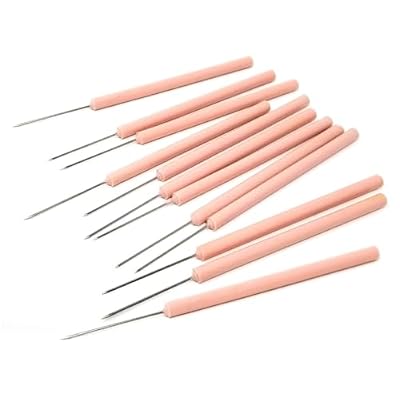
IMED Scientific 12-Pack Straight Lab Dissecting Probes
The IMED Scientific pack contains twelve straight probes with plastic handles, suitable for detailed tasks under magnification. These tools are designed for separating, lifting, and positioning small components in labs, classrooms, and hobby stations. The high-grade material is built for durability and resistance to corrosion, offering a lightweight and easy-to-clean option for micro-assembly, electronics repair, and fine detail work in various technical environments.
- Pack of 12 straight probes with plastic handles
- Suitable for micro-assembly, electronics repair, and craft projects
100 Pack 21 Gauge 1 Inch Sterile Dispensing Needles
This 100-pack of sterile, individually packaged needles features a 21-gauge, 1-inch length with a cap for safe storage. The sharp tips are designed for accurate liquid transfer and are compatible with both luer slip and luer lock syringe ports. Ideal for scientific, industrial, and art craft applications, these disposable accessories allow for the handling of various liquids, inks, and adhesives without the risk of leakage between uses.
- 100 sterile needles, 21 gauge, 1 inch length
- Compatible with luer slip and luer lock syringe ports

MerciL 20pcs Straight Stainless Steel Dissecting Needles
The MerciL set includes twenty straight, single-ended micro fine precision probe teasing needles made of stainless steel. These anatomy pins are designed for students and lab specimens, supporting biology class experiments and science projects. The fine tips allow for precise manipulation of tissues, making them a suitable addition to educational kits where detailed dissection and specimen handling are required.
- Pack of 20 straight stainless steel needles
- Designed for anatomy pins and biology class specimens

HaBeuniver 100 Pack 21 Gauge 1 Inch Dispensing Needles
HaBeuniver offers a box of 100 individually wrapped 21-gauge needles, each 1 inch or 25mm in length. These lab syringe needle tools are designed for use with both straight and threaded openings, and each includes a cover to seal the tip. The individual packaging ensures easy access and hygiene, making them a convenient accessory for industrial and science lab experiments requiring precise fluid dispensing.
- 100 individually wrapped 21-gauge needles
- Designed for straight and threaded syringe openings
100 Pack 18 Gauge 1.5 Inch Sterile Dispensing Needles
This 100-pack features 18-gauge needles that are 1.5 inches or 38mm long, equipped with a luer lock design. Each needle is individually sealed and includes a safe sealing cap for protection. The thickened stainless steel material provides long-lasting durability, making these sterile disposable supplies suitable for scientific and industrial dispensing tasks where a larger bore and secure connection are needed.
- 100 sterile needles, 18 gauge, 1.5 inch length
- Features luer lock design with safe sealing caps
Head-to-Head Comparisons
Lind Kitchen vs MerciL: Stainless Steel Dissecting Sets
Both the Lind Kitchen and MerciL sets feature stainless steel straight needles designed for biological dissection. The Lind Kitchen set includes five needles with knurled metal handles, which may offer a more secure grip during detailed tissue manipulation. The MerciL set provides twenty needles, offering a larger quantity for classroom use or group projects.
While both are made of rust-resistant stainless steel, the Lind Kitchen emphasizes the non-slip nature of its handles, whereas the MerciL listing focuses on the fine precision of the tips for anatomy pins.
21 Gauge Dispensing Needles: Lind vs HaBeuniver
The 21-gauge 1-inch needles from the unnamed brand and HaBeuniver are both sterile and individually packaged. The first option highlights compatibility with both luer slip and luer lock syringe ports, ensuring a wide range of syringe compatibility. The HaBeuniver pack also specifies compatibility with straight and threaded openings and includes a cover for each needle.
Both are suitable for scientific and industrial dispensing, but the specific mention of luer lock compatibility in the first listing may be a deciding factor for users with specific syringe types.
21 Gauge vs 18 Gauge: Bore Size and Length
Choosing between the 21-gauge 1-inch needles and the 18-gauge 1.5-inch needles depends on the viscosity of the liquid and the required flow rate. The 21-gauge needles are thinner and shorter, suitable for precise, small-volume transfers of thin liquids. The 18-gauge needles are thicker and longer, featuring a luer lock design and thickened stainless steel material.
This larger bore is better suited for thicker fluids or situations where a more secure connection is needed to prevent leakage during dispensing.
Buying Guide
Dissecting vs Dispensing Needles
Dissecting needles are reusable tools with handles, used for cutting, lifting, and positioning tissues. Dispensing needles are sterile, disposable tips that attach to syringes for fluid transfer. If you are conducting biology experiments involving specimens, choose a dissecting set. If you are handling liquids, inks, or adhesives, select sterile dispensing needles compatible with your syringes.
Understanding Gauge and Length
Gauge refers to the diameter of the needle; a lower number indicates a thicker needle. An 18-gauge needle has a larger bore than a 21-gauge needle, allowing for faster flow of thicker liquids. Length also matters: 1-inch needles are standard for many syringes, while 1.5-inch needles may reach deeper into containers.
Match the gauge and length to your specific fluid and syringe setup.
Handle Material and Grip
For dissecting needles, the handle material affects comfort and control. Knurled metal handles, like those on the Lind Kitchen set, provide a non-slip grip that is easy to clean. Plastic handles, as seen on the IMED Scientific probes, are lightweight and durable. Consider the duration of your tasks and the environment; a secure grip is essential for precise work under magnification.
Compatibility with Syringes
When buying dispensing needles, verify compatibility with your syringe ports. Luer lock syringes require needles with a threaded connection, while luer slip syringes use a friction fit. Some needles are designed for both, offering greater flexibility. Check the packaging for specific compatibility notes to ensure a secure connection that prevents leakage during use.
Frequently Asked Questions
Are dissecting needles reusable?
Yes, dissecting needles are typically made of stainless steel and are designed for repeated use. They can be cleaned and sterilized between experiments. Dispensing needles, however, are sterile and disposable, intended for single-use to maintain hygiene and prevent cross-contamination.
What is the difference between luer lock and luer slip?
Luer lock syringes have a threaded port that screws onto the needle for a secure connection. Luer slip syringes use a friction fit that slides onto the needle. Ensure your dispensing needles are compatible with your specific syringe type to avoid leakage.
Can I use dispensing needles for dissection?
No, dispensing needles are designed for fluid transfer and lack the handle and structural strength required for dissecting tissues. Dissecting needles have handles and are made to withstand the force needed for cutting and lifting specimens.
How many needles do I need for a classroom?
For a classroom, consider the number of students and the type of experiment. A set of 20 dissecting needles may be sufficient for a small group, while bulk packs of 100 dispensing needles are better for fluid transfer activities involving many students.
This article is part of our complete guide Toys & Games — browse all our comparisons and buying guides.
Last update on 2026-11-18 / Affiliate links / Images from Amazon Product Advertising API