
Selecting the right science lab pump bottle depends on the specific fluids you handle and the environment in which you work. Whether you are dispensing laundry detergent, cleaning solvents, or sensitive electronics fluids, the material and pump mechanism matter.
This guide compares six distinct options, ranging from glass dispensers for household use to ESD-safe HDPE bottles for professional lab settings. We examine capacity, material compatibility, and pump precision to help you find the tool that fits your workflow.
Our pick: Dirty Labs Erlenmeyer Glass Dispenser. The glass construction and included measuring beaker make it ideal for mess-free laundry detergent dispensing.
Our 3 picks for different needs

Dirty Labs Erlenmeyer Glass Dispenser
The glass construction and included measuring beaker make it ideal for mess-free laundry detergent dispensing.
Read the details
Menda 35730 Blue 6oz ESD Bottle
The dissipative static properties and HCS compliance suit environments handling static-sensitive circuitry.
Read the details
Menda 35510 Square HDPE 8oz Bottle
The 0.2cc per pump rate offers precise control for applications requiring small, measured doses.
Read the detailsAll products, in detail
Dirty Labs Erlenmeyer Glass Dispenser
This reusable glass dispenser is designed specifically for Dirty Labs liquid laundry detergent. It features a stainless steel pump and a silicone protective case to keep the glass safe. The included silicone measuring beaker allows for mess-free dosing directly into the beaker. The 375 mL capacity holds over 40 standard loads of detergent.
It is machine washable, making it easy to clean when switching scents. This option is ideal for laundry enthusiasts who want a stylish, plastic-free solution for their detergent.
- Holds 375 mL of liquid, sufficient for over 40 standard loads
- Includes a reusable silicone measuring beaker and protective case

Menda 35601 HDPE 8oz Brown Bottle
This opaque brown HDPE bottle is designed for storing light-sensitive fluids like acetone and nail polish remover. The wide opening makes refilling simple, while the alcohol imprint provides clear demarcation for contents. The brown color protects the liquid from light degradation. It is a standard 8 oz container suitable for general astringent storage.
This bottle is a practical choice for users who need to store solvents that require protection from light exposure.
- Opaque brown construction protects light-sensitive fluids
- Wide opening facilitates easy refilling of the container
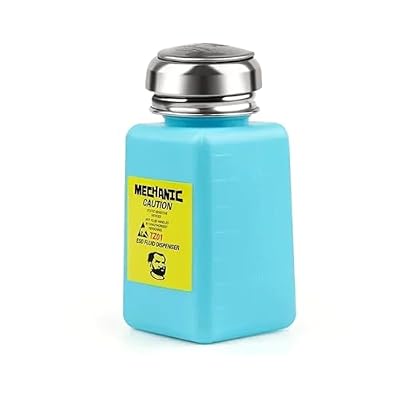
DIYPHONE 180ml ESD Push Down Bottle
This 180 ml plastic bottle is engineered for ESD-sensitive environments, specifically for cleaning cell phone PCB parts. It features a static dissipative body and a stainless steel pump cap. The clear bottle allows for easy viewing of the remaining liquid level. It is designed to dispense acetone and isopropanol alcohol for cleaning work.
This empty bottle is a specialized tool for electronics repair technicians who need to manage static electricity while dispensing solvents.
- ESD static dissipative plastic body protects sensitive electronics
- Clear 180 ml container with stainless steel push-down pump
Menda 35730 Blue 6oz ESD Bottle
This blue 6 oz HDPE bottle is ESD safe and features a stainless steel pump mechanism. It is printed with 'ACETONE' to indicate contents and includes volume markings on the side. The dissipative static electrical properties help protect static-sensitive printed circuitry. The pump has a well that drains back into the bottle to prevent drips.
It is HCS compliant and made in the United States. This is a robust option for lab environments requiring strict static control.
- ESD safe HDPE material with dissipative static properties
- Stainless steel pump with a drain-back well to prevent drips

Menda 35315 Amber Glass 4oz Bottle
This 4 oz amber glass bottle is constructed to store fluids that are not compatible with plastic. The translucent amber glass allows for easy viewing of contents while protecting them from light. It features a one-touch stainless steel pump that dispenses approximately 2cc per press.
The design is ideal for hand sanitizer or other sensitive liquids. Made in Santa Barbara, CA, this bottle offers a durable glass alternative for specific chemical storage needs.
- Amber glass construction for fluids incompatible with plastic
- One-touch pump dispenses approximately 2cc per press
Menda 35510 Square HDPE 8oz Bottle
This natural square HDPE bottle is designed for stability and space-saving storage. It holds 6 fl. oz. of liquid and features a translucent body for easy content viewing. The wide opening makes it easy to fill, and the square shape prevents rolling. It dispenses approximately 0.2cc per pump, offering fine control.
Custom imprinting is available for labeling. This is a versatile option for general solvent dispensing where precise, small-volume dosing is required.
- Square shape provides stability and saves storage space
- Dispenses approximately 0.2cc per pump for fine control
Head-to-Head Comparisons
Dirty Labs Glass vs Menda Amber Glass
Both the Dirty Labs and Menda 35315 bottles utilize glass construction, but they serve different purposes. The Dirty Labs dispenser is a 375 mL Erlenmeyer-style bottle designed for laundry detergent, featuring a silicone beaker for measuring. The Menda 35315 is a 4 oz amber glass bottle intended for fluids incompatible with plastic, such as certain sanitizers.
The Dirty Labs option offers a larger capacity and a more stylish design, while the Menda bottle provides a smaller, more traditional lab aesthetic with a 2cc pump rate.
Menda Blue ESD vs DIYPHONE Clear ESD
The Menda bottle is made of blue HDPE with dissipative static properties and is printed with 'ACETONE'. The DIYPHONE bottle is a clear plastic container with a stainless steel pump, specifically marketed for cell phone PCB cleaning. The Menda option offers a more robust, opaque container with volume markings, while the DIYPHONE bottle provides a clear view of the liquid level and a focus on electronics repair.
Menda Brown 8oz vs Menda Square 8oz
These two Menda bottles both offer 8 oz capacity but differ in shape and intended use. The 35601 is an opaque brown bottle designed to protect light-sensitive fluids like acetone. The 35510 is a translucent square bottle that dispenses a smaller 0.2cc per pump. The brown bottle is better for general solvent storage where light protection is key, while the square bottle offers stability and finer dispensing control for precise applications.
Buying Guide
Material Compatibility
Choose glass if your fluid is incompatible with plastic, as seen with the Menda 35315. HDPE is suitable for many solvents and offers durability. For ESD-sensitive work, look for dissipative static materials like the Menda 35730 or DIYPHONE 180ml. Always verify that the bottle material is compatible with your specific chemical to prevent degradation or contamination.
Pump Precision and Volume
Consider the volume dispensed per pump. The Menda 35510 dispenses 0.2cc, ideal for fine control, while the Menda 35315 dispenses 2cc for larger doses. The Dirty Labs dispenser uses a beaker for manual measurement. If you need precise, small-volume dosing, look for bottles with lower cc per pump rates.
For general use, a standard pump may suffice.
Light Sensitivity and Visibility
If your fluid degrades in light, choose an opaque or amber bottle like the Menda 35601 or 35315. Translucent bottles allow you to see the liquid level, which is useful for monitoring remaining quantity. Opaque bottles protect the contents but hide the level. Consider whether you need to see the fluid or protect it from light when selecting a bottle.
ESD Safety and Static Control
For electronics repair or lab work involving static-sensitive devices, ESD safe bottles are essential. These bottles help protect your valuable circuitry from electrostatic discharge. If you are not working with sensitive electronics, standard HDPE or glass bottles are sufficient and may be more cost-effective.
Frequently Asked Questions
Can I use these bottles for any liquid?
No, you must ensure the bottle material is compatible with your specific fluid. Glass is suitable for many chemicals, while HDPE is good for solvents. Always check the manufacturer's compatibility guidelines for your specific substance to avoid damage or contamination.
What does ESD safe mean?
ESD safe means the bottle material dissipates static electricity. This is crucial for handling static-sensitive electronics like circuit boards. ESD safe bottles prevent electrostatic discharge that could damage sensitive components during the dispensing process.
How do I clean a pump bottle?
Most pump bottles can be disassembled for cleaning. The Dirty Labs dispenser is machine washable. For other bottles, rinse the pump and bottle with a compatible solvent or water. Ensure all parts are dry before reassembling to prevent mold or contamination.
Are these bottles refillable?
They feature wide openings or pump mechanisms that allow you to add more liquid as needed. This makes them reusable and cost-effective for long-term use in labs or home settings.
This article is part of our complete guide Toys & Games — browse all our comparisons and buying guides.
Last update on 2026-11-18 / Affiliate links / Images from Amazon Product Advertising API