
Selecting the right scintillation vials depends on your laboratory's specific requirements for material composition, cap liner type, and packaging volume. While most options in this comparison are made from borosilicate glass, one alternative uses HDPE plastic, offering different durability and chemical resistance profiles.
The primary differences lie in the cap liners, which range from foamed polyethylene to aluminum foil, and the packaging configurations, which vary from small 10-piece packs to bulk cases of 1,000. These factors influence background noise, sample storage stability, and workflow efficiency in liquid scintillation counting.
Our 3 picks for different needs

ScitoLAB 20 mL Glass Sample Vials (500 Pcs)
ScitoLAB vials feature standardized dimensions and smooth interiors that support seamless integration with automated handling systems.
Read the details
Wheaton 20mL HDPE Plastic Vials (Case of 1000)
Wheaton offers a case of 1,000 HDPE plastic vials, providing a durable alternative for users who do not require glass.
Read the details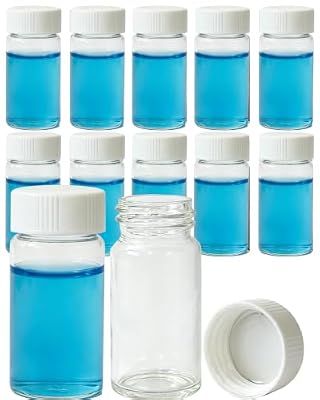
Gdncbm 20ml Borosilicate Glass Vials (10 Pcs)
Gdncbm 10-packs feature autoclavable caps with aluminum foil linings, suitable for users needing small quantities of sterilizable vials.
Read the detailsAll products, in detail

Gdncbm 20ml Borosilicate Glass Vials (500 Pcs)
This bulk pack of 500 vials is made from low-potassium borosilicate glass that complies with ASTM E438 Type I and USP Type I standards. The vials feature aluminum foil PE composite liners designed to block light and prevent solvent volatilization. Each vial is housed in an individual cell within a tray marked with alphanumeric coordinates.
This option is well-suited for laboratories requiring large quantities of vials with specific material compliance and light-shielding capabilities for long-term sample storage.
- Complies with ASTM E438 Type I, Class A and USP Type I standards
- Features aluminum foil PE composite liners for light shielding

FOUR E'S SCIENTIFIC 20mL Borosilicate Glass Vials (100 Pcs)
These vials are crafted from low-potassium borosilicate glass with a thermal expansion coefficient of 33, allowing them to withstand temperatures up to 300°C. They include 22-400 thread PP screw caps that are markable for sample identification. The set comes pre-assembled and shrink-wrapped onto a cellular tray with alpha-numeric coordinates.
The smooth inner surface is designed to reduce sample adhesion, which contributes to consistent counting reproducibility for researchers using liquid scintillation counters.
- Withstands temperatures up to 300°C with a thermal expansion coefficient of 33
- Includes 100 pre-assembled vials and 100 markable PP screw caps

LanJing 20mL Borosilicate Glass Vials (Case of 500)
This case contains 500 clear KG-33 borosilicate glass vials, packaged in five trays of 100 pieces each. The vials are shrink-wrapped to preserve cleanliness and are paired with white polypropylene caps featuring foamed polypropylene liners. These liners are suitable for use with mild acids, alkalis, solvents, alcohols, oils, and aqueous solutions.
The standardized 20 mL size and clear glass construction make these vials a practical choice for general laboratory sample storage and scintillation counting applications.
- Made from clear KG-33 borosilicate glass
- Includes white polypropylene caps with foamed polypropylene liners

UCEXPLAB 20ml Borosilicate Glass Vials (Pack of 100)
These vials are made from low-potassium borosilicate glass conforming to ASTM E438 Type I, Class A requirements. They can withstand 330°C thermal stress and feature 22-400 thread polypropylene caps with silver aluminum foil liners. The caps are pre-assembled and screwed onto the bottles, which are packaged in cellular trays with alphanumeric coordinates.
This configuration is ideal for researchers who need vials with high light transmission and low background counts for scintillation counting instruments.
- Conforms to ASTM E438 Type I, Class A requirements
- Features silver aluminum foil liners in pre-assembled caps

LanJing 20ml Borosilicate Glass Vials (Case of 500)
This case of 500 vials is constructed from clear KG-33 borosilicate glass and packaged in five trays of 100 pieces. The vials are shrink-wrapped to maintain cleanliness and are equipped with 22-400 Urea screw caps that have cone-shaped liners. These liners are designed for use with mild acids, alkalis, solvents, alcohols, oils, and aqueous solutions.
The cone-shaped liner design may be preferred by users who require specific cap geometries for their liquid handling workflows or sample storage needs.
- Features 22-400 Urea caps with cone-shaped liners
- Packaged in five shrink-wrapped trays of 100 vials each
Gdncbm 20ml Borosilicate Glass Vials (10 Pcs)
This small pack of 10 vials is made from low-potassium borosilicate glass that complies with ASTM E438 Type I and USP Type I standards. The vials feature 22-400 threaded PP caps with aluminum foil linings that are autoclavable. The caps are compatible with mild acids, alkalis, solvents, alcohols, oils, and aqueous solutions.
Each vial is housed in a cellular tray with alphanumeric coordinates. This option is suitable for users who need a small quantity of compliant vials for occasional use or specific autoclave-compatible workflows.
- Caps are autoclavable and feature aluminum foil linings
- Complies with ASTM E438 Type I, Class A and USP Type I standards
ScitoLAB 20 mL Glass Sample Vials (500 Pcs)
These vials are manufactured from low-potassium borosilicate glass with a thermal expansion coefficient of 33 × 10⁻⁷/°C, allowing them to maintain structural integrity up to 572°F. They include 22-400 thread polypropylene caps with foamed polyethylene liners, safe from 68°F to 212°F. The vials have a smooth, uniform interior to reduce sample sticking and are compatible with automated handling systems.
This case of 500 vials is a strong choice for high-throughput laboratories requiring standardized dimensions for seamless integration with liquid scintillation counters.
- Maintains structural integrity at temperatures up to 572°F
- Compatible with automated handling systems and liquid scintillation counters
Wheaton 20mL HDPE Plastic Vials (Case of 1000)
Unlike the glass options, these vials are built from durable HDPE plastic for chemical-resistant performance. They include polypropylene screw caps with foamed polyethylene liners that are packaged separately to maintain sterility. The case contains 1,000 individual 20 mL vials, making it ideal for high-volume research or environmental testing.
The compact dimensions of approximately 27 mm diameter and 61 mm height ensure a fit for most scintillation racks. This plastic alternative is suitable for users who prioritize durability and bulk availability over glass-specific optical properties.
- Constructed from durable HDPE plastic rather than glass
- Includes 1,000 vials with caps packaged separately
Head-to-Head Comparisons
Gdncbm vs ScitoLAB: Liner Material and Automation
Both Gdncbm and ScitoLAB offer 500-piece cases of 20 mL borosilicate glass vials, but they differ in cap liner composition and intended workflow. Gdncbm vials feature aluminum foil PE composite liners, which are specifically designed to block light and shield against scintillation solvent volatilization. In contrast, ScitoLAB vials use foamed polyethylene liners and emphasize compatibility with automated handling systems due to their standardized dimensions.
If your primary concern is light shielding for low background counts, the Gdncbm aluminum foil liner is a distinct feature. However, if your laboratory relies on automated liquid handling, the ScitoLAB vials are explicitly noted for seamless integration with these systems.
LanJing Foamed vs Cone Liners: Cap Geometry
These two LanJing options both provide cases of 500 clear KG-33 borosilicate glass vials, but they differ in the specific geometry of their cap liners. The first option features white polypropylene caps with foamed polypropylene liners, a common configuration for general chemical compatibility. The second option uses 22-400 Urea caps with cone-shaped liners.
Both are suitable for mild acids, alkalis, solvents, and aqueous solutions. The choice between them depends on whether your laboratory prefers the standard foamed liner or the specific cone-shaped geometry, which may affect how the cap seals or interacts with your specific rack or counter.
The supplied data does not establish a performance winner between the two liner shapes.
FOUR E'S vs UCEXPLAB: Thermal Limits and Standards
Both FOUR E'S SCIENTIFIC and UCEXPLAB offer 100-piece packs of low-potassium borosilicate glass vials with 22-400 thread caps. The FOUR E'S vials are documented to withstand temperatures up to 300°C, while the UCEXPLAB vials are stated to withstand 330°C thermal stress. Additionally, UCEXPLAB explicitly cites compliance with ASTM E438 Type I, Class A requirements, whereas FOUR E'S highlights a low expansion coefficient of 33.
Both brands include pre-assembled caps and cellular tray packaging with alphanumeric coordinates. The difference in stated thermal resistance limits is a concrete distinction for users who subject their vials to high-temperature processes, though both are designed for standard scintillation counting applications.
Buying Guide
Glass vs. Plastic Construction
Most scintillation vials are made from borosilicate glass, which offers excellent light transmission and low background counts. However, the Wheaton option in this comparison is made from HDPE plastic. Plastic vials are durable and chemical-resistant, making them suitable for high-volume applications where breakage is a concern.
Glass vials are generally preferred for optical clarity in scintillation counting. Choose plastic if you prioritize durability and bulk availability, or glass if you require specific optical properties for your counter.
Cap Liner Materials
The liner inside the cap affects sample stability and background noise. Aluminum foil liners, found in Gdncbm and UCEXPLAB options, block light and shield against solvent volatilization. Foamed polyethylene or polypropylene liners, seen in ScitoLAB and LanJing options, provide a tight seal and are compatible with various chemicals.
If you are working with light-sensitive samples or volatile solvents, an aluminum foil liner may be beneficial. For general aqueous or mild chemical storage, foamed liners are a standard and effective choice.
Packaging Volume and Organization
Packaging ranges from 10-piece packs to cases of 1,000. Small packs like the Gdncbm 10-pcs are ideal for occasional use or testing new workflows. Bulk cases of 500 or 1,000 vials are better for high-throughput laboratories. All options in this comparison use cellular trays with alphanumeric coordinates to help identify samples.
Consider your monthly usage rate to determine if a bulk case or a smaller pack is more practical for your inventory management.
Compatibility with Precision Dispensing
When integrating vials into a larger workflow, consider how they interact with other lab equipment. For example, if you are using precision dispensing devices or liquid handling systems, ensure the vial dimensions and cap threads are compatible. The ScitoLAB vials are explicitly noted for compatibility with automated handling systems.
Checking the specific dimensions and thread types of your existing equipment will help you select vials that fit seamlessly into your current laboratory setup.
Frequently Asked Questions
Are these vials compatible with all scintillation counters?
Most options are compatible with liquid scintillation counters designed to accommodate 20 mL vials. However, you should verify the specific dimensions and thread types of your counter to ensure a proper fit, especially if using automated handling systems.
What is the difference between aluminum foil and foamed liners?
Aluminum foil liners block light and shield against solvent volatilization, which can lower background noise. Foamed liners provide a tight seal and are compatible with a wide range of chemicals, including mild acids and solvents.
Can I autoclave these scintillation vials?
The Gdncbm 10-piece pack explicitly states that its caps are autoclavable. Other options do not specify autoclave compatibility in the provided data, so you should check the manufacturer's specifications for high-heat sterilization.
How many vials are included in each case?
The quantities vary by product. Gdncbm and ScitoLAB offer 500-piece cases, Wheaton offers 1,000, and LanJing offers 500. The FOUR E'S and UCEXPLAB options come in packs of 100, while the Gdncbm small pack contains 10.
This article is part of our complete guide Toys & Games — browse all our comparisons and buying guides.
Last update on 2026-11-20 / Affiliate links / Images from Amazon Product Advertising API