
Selecting the right science lab utensils depends on the specific tasks you plan to perform, from mixing solutions to dissecting specimens. Whether you are equipping a classroom, a home STEM station, or a professional laboratory, the material and shape of your tools matter. Stainless steel offers durability for general handling, while glass is preferred for chemical compatibility and heat resistance.
This comparison looks at five distinct options, ranging from single-purpose spoons to multi-piece kits. Each tool serves a different function, so consider whether you need precision gripping, broad mixing, or liquid measurement. By matching the tool to your specific experimental needs, you can build a functional and efficient science setup.
Our 3 picks for different needs

A2Z Scilab 11 Pcs Lab Micro Spatula Kit
The 11-piece A2Z Scilab kit provides spatulas, tweezers, and pipettes for a wide range of basic lab tasks.
Read the details
Burry Life Science 9-Piece Glass Stir Rod Set
The Burry Life Science set includes various glass rod lengths and graduated droppers for precise liquid handling.
Read the details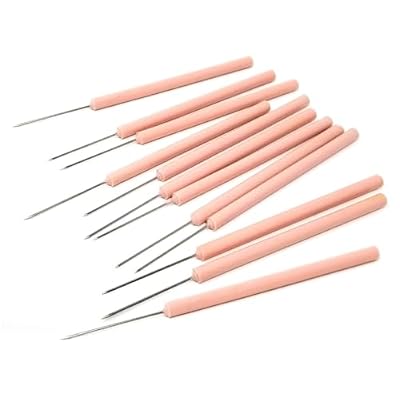
IMED Scientific 12-Pack Straight Dissecting Probes
The IMED Scientific probes offer a high quantity of straight tools for separating and guiding small components.
Read the detailsAll products, in detail

Set of 5 Fine Point Dissecting Tweezers
This set includes five stainless steel tweezers designed for fine point dissection work. The 4.5-inch length provides a balance between reach and control for detailed tasks. These tools are suitable for biology classrooms or home science kits where precise gripping of small specimens is required.
The stainless steel construction offers durability for repeated use in educational settings. Buyers looking for a basic set of forceps for general lab use will find this a straightforward option.
- Includes five 4.5-inch fine point tweezers
- Constructed from stainless steel
A2Z Scilab 11 Pcs Lab Micro Spatula Kit
This 11-piece kit combines micro spatulas, tweezers, and glass pipettes into a single starter package. The micro spatulas feature narrow handles to reach into flasks and beakers, while the tweezers include parallel groves for a non-slip grip. Transparent graduated glass pipettes allow for monitoring blend ratios.
Made from AISI 420 stainless steel, the tools are designed for transferring, mixing, and handling various materials. This kit is ideal for beginners or teachers needing a comprehensive set of basic instruments.
- 11-piece set including spatulas, tweezers, and pipettes
- Made from AISI 420 stainless steel

Eisco Labs 9" Laboratory Spoon Spatula
The Eisco Labs spoon is a 9-inch stainless steel tool with a dual-end design. One end is a flat spatula measuring 0.3 inches wide, while the other is a scoop-shaped end measuring 0.5 inches wide. This versatility makes it useful for mixing lab ingredients or household tasks.
The polished finish is suitable for professional laboratories, science classrooms, and even kitchen use. It is a practical choice for those who need a single, durable tool for general mixing and scooping.
- 9-inch length with dual flat and scoop ends
- Polished stainless steel construction
Burry Life Science 9-Piece Glass Stir Rod Set
This package contains nine glass items, including six stirring rods and three graduated droppers. The rods come in two lengths: three 10-inch and three 8-inch sticks, all with rounded, smooth ends from flamer polishing. The three 4-inch graduated droppers assist with liquid measurement. These glass tools are multifunctional, suitable for mixing chemicals, liquids, or kitchen ingredients.
The set provides a variety of sizes for different beaker and flask requirements.
- Includes 6 glass rods and 3 graduated droppers
- Rods available in 8-inch and 10-inch lengths
IMED Scientific 12-Pack Straight Dissecting Probes
This pack of twelve probes features needle points with plastic handles, designed for separating, lifting, and positioning small components. The straight design is ideal for detailed tasks, particularly when working under magnification. The high-grade material is resistant to corrosion and wear, ensuring durability in workshop or classroom environments.
These lightweight tools are easy to clean and maintain. They serve as a practical addition to kits for labs, hobby stations, or training environments requiring fine detail work.
- 12-pack of straight probes with plastic handles
- Designed for precision tasks under magnification
Head-to-Head Comparisons
Stainless Tweezers vs Plastic-Handled Probes
When choosing between the Set of 5 Fine Point Dissecting Tweezers and the IMED Scientific 12-Pack Straight Dissecting Probes, consider the material and quantity. The tweezers are made of stainless steel, offering a rigid grip for holding specimens, while the probes feature plastic handles and needle points for separating and guiding components.
The probe pack includes twelve units, which is advantageous for group classroom activities where multiple students need tools simultaneously. The tweezers set provides five units, which may be sufficient for smaller groups or individual use. If you need a higher volume of tools for a large class, the probes offer more units per pack.
If you prefer the tactile feel of metal for gripping, the tweezers are the better choice.
Multi-Piece Kit vs Single Dual-End Spatula
The A2Z Scilab 11 Pcs Lab Micro Spatula Kit and the Eisco Labs 9" Laboratory Spoon Spatula serve different needs. The A2Z kit is a comprehensive package that includes micro spatulas, tweezers, and glass pipettes, making it ideal for a starter collection that covers multiple functions.
It is designed for transferring, collecting, and blending various materials. In contrast, the Eisco Labs spoon is a single, robust tool with a flat end and a scoop end. It is better suited for those who already have a collection of tools and need a durable, long-handled spoon for mixing or scooping.
If you are starting from scratch, the kit provides more variety. If you need a specific, durable mixing tool, the single spoon is a focused choice.
Glass Stir Rods vs Stainless Steel Spatulas
Comparing the Burry Life Science 9-Piece Glass Stir Rod Set with the A2Z Scilab 11 Pcs Lab Micro Spatula Kit highlights the difference between glass and metal tools. The glass rods are ideal for mixing chemicals and liquids where chemical compatibility is a concern, as glass is inert and resistant to many substances.
The set includes graduated droppers, which add a measurement capability. The A2Z kit, primarily stainless steel, is better for handling solid materials, gels, and pastes, as well as for general stirring. If your experiments involve reactive chemicals, the glass rods are the safer choice. If you are handling a variety of materials including solids and powders, the stainless steel spatulas in the A2Z kit offer more versatility in texture handling.
Buying Guide
Material Compatibility
The material of your utensil should match the substances you are handling. Stainless steel tools, like the Eisco Labs spoon and A2Z Scilab kit, are durable and resistant to rust, making them suitable for general mixing and handling of solids. Glass tools, such as the Burry Life Science stir rods, are chemically inert and heat resistant, which is crucial for experiments involving reactive chemicals or high temperatures.
For precision dispensing, consider how the material interacts with your specific reagents to avoid contamination or reaction.
Quantity and Classroom Needs
If you are buying for a classroom, the number of tools per pack is a critical factor. The IMED Scientific 12-Pack Straight Dissecting Probes provides a high quantity, which is useful for ensuring every student has a tool. The Set of 5 Fine Point Dissecting Tweezers offers a smaller quantity, which may require sharing or additional purchases for large classes.
For individual home use, a smaller set or a single tool may be sufficient. Consider the size of your group when selecting between multi-packs and single units to ensure everyone can participate simultaneously.
Precision and Task Specificity
Different tasks require different levels of precision. Tweezers and probes are designed for fine detail work, such as dissecting or positioning small components under magnification. Spatulas and stir rods are better for broader tasks like mixing, stirring, and scooping. If your primary focus is on detailed biological work, prioritize tools with fine points or narrow tips.
If your focus is on chemistry or general mixing, look for tools with broader surfaces or graduated measurements. Matching the tool's design to the specific task ensures better results and safety.
Maintenance and Durability
Consider how easy the tools are to clean and maintain. Stainless steel tools are generally easy to clean and resistant to corrosion, making them low-maintenance for repeated use. Glass tools are also easy to clean but can be fragile and break if dropped. The IMED Scientific probes are described as lightweight and easy to clean, which is beneficial for frequent use.
Check the construction of the tools to ensure they can withstand the wear and tear of your specific environment, whether it is a busy classroom or a home lab.
Frequently Asked Questions
Are these tools suitable for home science experiments?
Yes, many of these tools are designed for both professional and home use. The Eisco Labs spoon and A2Z Scilab kit are explicitly mentioned as suitable for household use and home-schooled students. They provide safe and effective options for conducting basic science experiments at home.
What is the difference between a spatula and a stir rod?
A spatula, like the Eisco Labs spoon, is typically used for scooping, transferring, and mixing solid or semi-solid materials. A stir rod, such as the glass rods from Burry Life Science, is primarily used for stirring liquids and suspensions. Spatulas have broader ends, while stir rods are slender and designed for agitation.
Can I use stainless steel tools with all chemicals?
Stainless steel is resistant to many chemicals, but it is not inert to all substances. For highly reactive or corrosive chemicals, glass tools are often preferred because they do not react with the substance. Always check the compatibility of your specific chemicals with the tool material before use.
How many tools do I need for a classroom?
The number of tools needed depends on the class size and the specific experiment. For a standard classroom, you may need one set of tools per student or per pair of students. Packs like the IMED Scientific 12-Pack are useful for larger groups, while smaller sets may require additional purchases to ensure everyone has a tool.
This article is part of our complete guide Toys & Games — browse all our comparisons and buying guides.
Last update on 2026-11-18 / Affiliate links / Images from Amazon Product Advertising API