
Selecting the right storage microplate depends on your specific sample volume, well count, and environmental requirements. The four options here range from high-capacity 48-well plates to reusable ceramic spotting plates, each serving distinct laboratory functions.
Whether you need sterile conditions for biological assays or durable ceramic for qualitative chemistry, these products offer different configurations. Reviewing the well geometry, material, and capacity will help you match the plate to your experimental workflow.
Our pick: Polypropylene 96-Well 2.2mL V-Bottom Microplate. The 96-well V-bottom design and -120°C rating suit automated sampling and ultra-low temperature storage.
Our 3 picks for different needs

Polypropylene 96-Well 2.2mL V-Bottom Microplate
The 96-well V-bottom design and -120°C rating suit automated sampling and ultra-low temperature storage.
Read the details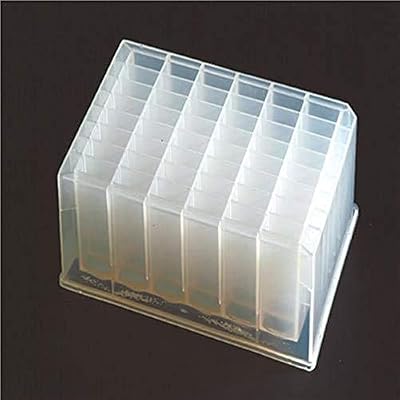
Axygen 48-Well 5mL Rectangular Pyramid Bottom Microplate
The 48-well 5mL capacity and sterile packaging fit applications requiring larger sample volumes.
Read the details
Ceramic Porcelain Spotting Plate Set
The reusable ceramic surface and 6/12-hole options support repeated color and precipitation experiments.
Read the detailsAll products, in detail
Polypropylene 96-Well 2.2mL V-Bottom Microplate
This 96-well storage microplate is crafted from transparent polypropylene, allowing for easy visual monitoring of samples. The V-bottom well design facilitates liquid collection, while the alphanumeric coding simplifies tracking and reduces identification errors. With a 2.2mL capacity per well, it supports a wide range of applications including high-throughput screening and mechanical sampling.
The plate is rated for use in ultra-low temperature environments down to -120°C, making it suitable for long-term sample storage. Its position notch design adds convenience for handling in automated systems.
- 96-well V-bottom design with 2.2mL capacity per well
- Transparent polypropylene construction with alphanumeric coding
- Rated for ultra-low temperature storage down to -120°C
Ceramic Porcelain Spotting Plate Set
This set includes 6-hole and 12-hole porcelain spotting plates designed for chemical qualitative analysis. The high-quality ceramic material offers a smooth surface that is easy to clean and maintain, ensuring reusability for repeated experiments. The plates are specifically suited for observing color changes or precipitation reactions in classroom or professional laboratory settings.
Each piece is individually wrapped and cased to prevent damage during transport. The distinct sizes allow for different sample volumes and observation scales, providing flexibility for various educational and analytical tasks.
- Includes 6-hole and 12-hole porcelain spotting plates
- Reusable ceramic material with smooth, easy-to-clean surface
- Designed for chemical qualitative analysis and color reactions
Axygen 48-Well 5mL Rectangular Pyramid Bottom Microplate
The Axygen P-5ML-48-C-S is a 48-well deep well plate featuring rectangular pyramid bottom wells. Made from clear polypropylene, it is supplied in a sterile condition, which is critical for sensitive biological assays. The 5mL total volume with a 4.6mL working volume provides ample space for larger sample volumes compared to standard 96-well plates.
This configuration is well-suited for applications requiring higher sample throughput or larger reagent volumes. The clear material allows for visual inspection, and the sterile packaging ensures immediate use without additional sterilization steps.
- 48-well rectangular pyramid bottom design
- 5mL total volume with 4.6mL working volume
- Clear polypropylene material supplied in sterile condition

Luxshiny 2-Set Plastic Spot Plate with Covers
This Luxshiny set includes two plastic spot plates with covers, designed for observing color reactions and chemical changes. The plates feature precise, clear numbering that is easy to read, aiding in accurate sample identification during experiments. The plastic material offers strong light transmittance, which facilitates the observation of reaction changes.
The included covers help maintain sample integrity by reducing contamination or evaporation. This configuration is suitable for general chemistry experiments where visual observation of color or appearance is the primary analytical method.
- Two plastic spot plates with included covers
- Precise, clear numbering for easy sample identification
- High light transmittance for observing color reactions
Head-to-Head Comparisons
96-Well V-Bottom vs 48-Well Pyramid Bottom
The Polypropylene 96-Well plate offers a higher well count with a 2.2mL capacity, ideal for high-throughput screening. The Axygen 48-Well plate provides a larger 5mL capacity per well, suitable for assays requiring more volume. The 96-well V-bottom design facilitates liquid collection, while the 48-well pyramid bottom offers a different geometry for specific assay types.
The 96-well plate is rated for -120°C storage, whereas the Axygen plate is sterile. The data does not establish which geometry is superior for all applications.
Ceramic Spotting Plates vs Plastic Spot Plates
The Ceramic Porcelain Spotting Plate set is made of high-quality ceramics, offering a smooth, reusable surface for qualitative analysis. The Luxshiny Plastic Spot Plate set includes covers and features high light transmittance for observing color reactions. The ceramic plates are available in 6-hole and 12-hole sizes, while the plastic set includes two plates with covers.
The ceramic material is noted for ease of cleaning, whereas the plastic plates emphasize light transmittance. The data does not specify the chemical resistance of the plastic material.
Polypropylene Microplates vs Ceramic Spotting Plates
The Polypropylene 96-Well plate is designed for automated systems and high-throughput storage, featuring alphanumeric coding. The Ceramic Porcelain Spotting Plate is intended for manual qualitative analysis, focusing on color or precipitation observation. The polypropylene plate is transparent and rated for ultra-low temperatures, while the ceramic plate is reusable and easy to clean.
The 96-well plate supports mechanical sampling, whereas the ceramic plate is suited for classroom experiments. The data does not compare the chemical compatibility of the two materials.
Sterile 48-Well Plates vs Plastic Spot Plates
The Axygen 48-Well plate is supplied sterile, making it suitable for sensitive biological assays without additional sterilization. The Luxshiny Plastic Spot Plate set includes covers to maintain sample integrity but is not described as sterile. The Axygen plate has a 5mL capacity, while the Luxshiny plates are designed for observing color reactions.
The Axygen plate features rectangular pyramid bottoms, whereas the Luxshiny plates have precise numbering. The data does not specify the well capacity of the Luxshiny plates.
Buying Guide
Matching Plate Type to Experimental Needs
For high-throughput screening or automated sampling, the Polypropylene 96-Well plate is a suitable choice due to its well count and V-bottom design. For applications requiring larger sample volumes, the Axygen 48-Well plate offers 5mL capacity per well.
If your focus is qualitative chemical analysis, the Ceramic Porcelain Spotting Plate provides a durable, reusable surface for observing color changes. For general chemistry experiments where visual observation is key, the Luxshiny Plastic Spot Plate set offers high light transmittance and included covers.
Consider whether you need sterile conditions, which the Axygen plate provides, or if reusable ceramic is sufficient for your workflow. Buyers should also evaluate the specific well geometry required for their liquid handling protocols, as different bottom shapes may influence how samples are collected or analyzed. Matching the plate material to the chemical nature of the samples is another important step in selecting the appropriate storage solution.
Material and Durability
Polypropylene plates are transparent and rated for low temperatures, making them suitable for storage. Ceramic plates are reusable and easy to clean, ideal for repeated qualitative tests. Plastic spot plates offer high light transmittance for observation. Choose based on whether you need durability for repeated use or specific material properties for storage.
Evaluating the transparency of the material can also help determine how easily you can monitor sample status without opening the plate. The smoothness of the ceramic surface may impact how quickly residues are removed during cleaning cycles between experiments.
Well Count and Capacity
The 96-well plate offers high throughput with 2.2mL capacity. The 48-well plate provides larger 5mL capacity for fewer samples. Spotting plates have fewer wells but are designed for visual analysis. Select the well count that matches your sample volume and throughput requirements. Thinking about the total number of samples you need to process in a single run will help narrow down the optimal plate size.
Larger well counts generally allow for more samples per plate, which can streamline workflow efficiency in busy laboratory environments.
Sterility and Packaging
The Axygen plate is supplied sterile, which is critical for biological assays. The other plates are not described as sterile. If your application requires sterile conditions, the Axygen plate is the appropriate choice. Check current prices on the live product cards when cost matters. Packaging integrity is also a factor to consider, as some plates are individually wrapped to prevent damage during transport.
Ensuring the plate arrives in good condition is important for maintaining the integrity of your experimental setup.
Frequently Asked Questions
Are these microplates reusable?
The Ceramic Porcelain Spotting Plate is described as reusable and easy to clean. The polypropylene and plastic plates are not explicitly stated as reusable in the provided data. Check the specific product details for reusability information. Reusability can be an important consideration for long-term cost savings and reducing waste in a laboratory setting.
Buyers should verify the specific material properties to ensure the plate can withstand repeated cleaning cycles without degradation.
What is the capacity of the 48-well plate?
The Axygen 48-Well plate has a total volume of 5mL and a working volume of 4.6mL. This larger capacity is suitable for assays requiring more sample volume compared to standard 96-well plates. The difference between total and working volume is important to note when planning sample loads.
Exceeding the working volume may lead to issues with liquid handling or assay performance, so careful measurement is recommended.
Can the 96-well plate be used in ultra-low temperature storage?
Yes, the Polypropylene 96-Well plate is rated for use in ultra-low temperature environments down to -120°C. This makes it suitable for long-term sample storage in freezers. The ability to withstand such low temperatures is a key feature for researchers who need to store samples for extended periods.
Ensuring the plate material remains stable at these temperatures is crucial for maintaining sample integrity over time.
Do the plastic spot plates come with covers?
Yes, the Luxshiny set includes two plastic spot plates with covers. The covers help maintain sample integrity by reducing contamination or evaporation during experiments. Having covers can be particularly useful for experiments that take longer to complete, as they help preserve the reaction conditions. The inclusion of covers in the set adds a layer of protection that may not be present in other spot plate options.
This article is part of our complete guide Toys & Games — browse all our comparisons and buying guides.
Last update on 2026-11-18 / Affiliate links / Images from Amazon Product Advertising API